400m Interval Workout BPM Guide: Lock Track Repeats To Music
Alex Chen, Certified Running Coach
2026年7月1日

TL;DR: 400m intervals are short track repeats at roughly 5K race effort (VO2 max zone), with 200m–400m easy jogging between reps. Lock work intervals to your measured cadence BPM (usually 172–185 for most recreational runners at 5K pace) and recovery jogs to 100–120 BPM. Synchronous music keeps turnover from collapsing when lactate spikes on rep 6—not because the beat makes you faster, but because it stops the cadence decay that turns a structured workout into a mess.
Why 400m repeats fall apart without a rhythm lock
Four hundred meters is the sweet spot of track misery. Long enough to hurt. Short enough that you can't hide behind fitness.
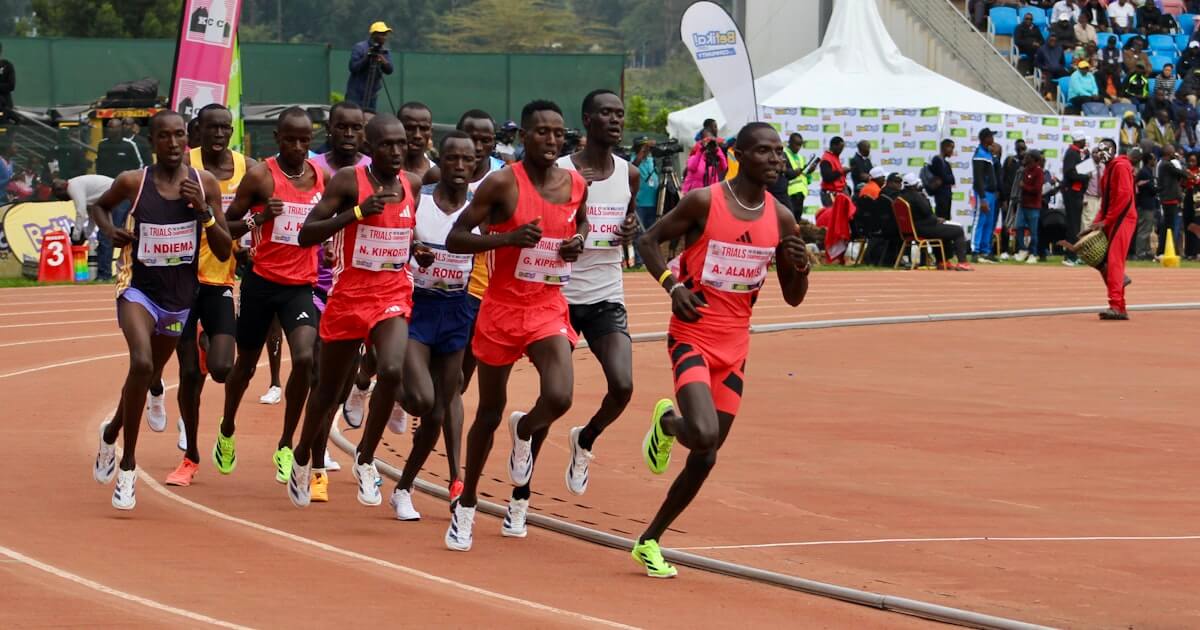
The workout looks clean on paper: 8–12 × 400m at 5K pace, jog the curves, repeat. Then rep 4 arrives and your brain starts negotiating. You bolt the first 100 meters because the straightaway feels easy. You tie up in the last 80. Recovery jog turns into a shuffle at 145 BPM because you're still breathing through your hair.
By rep 8 you're running four different workouts in one session—none of them the one your coach wrote.
Fixed BPM music removes the micro-surges. The beat is the governor for the full lap. Your job is to land on it from the stagger through the finish line.
What are 400m intervals?
400m intervals are track repeats where you run one lap at a prescribed pace, recover with easy jogging, then repeat. Most training plans use 6–12 reps per session, building from 4–6 early in a block.
| Goal | Typical 400m pace | Recovery | Reps (typical) |
|---|---|---|---|
| VO2 max / 5K sharpening | Current 5K race pace per lap | 200m jog or equal time | 8–12 |
| Early-season speed | 5K pace + 3–5 sec per lap | 400m jog | 4–6 |
| 10K / threshold touch | 10K race pace per lap | 200m jog | 6–8 |
Jack Daniels groups 400m work in the Interval (I) zone—roughly 3K to 5K race intensity, with reps lasting 3–5 minutes of total work time when you stack them. A classic 12 × 400m session hits that window without the mental weight of mile repeats.
They sit between Yasso 800s (longer, marathon-predictor reps) and all-out VO2 max intervals (often 3–4 minute blocks). Shorter than mile repeats, more repeatable than a single brutal tempo.
BPM targets: work vs recovery
Music BPM should match footstrike cadence (SPM), not lap time on your watch. At 400m repeat intensity, most recreational runners sit 8–15 SPM above their easy-run baseline—not automatically 180.
| 5K finish (example) | 400m target time | Typical work SPM | Work music BPM | Recovery BPM |
|---|---|---|---|---|
| Sub-20:00 | ~1:36/lap | 178–186 | 176–184 | 105–112 |
| 20–25:00 | ~1:36–2:00/lap | 172–180 | 170–178 | 100–110 |
| 25–30:00 | ~2:00–2:24/lap | 166–176 | 164–174 | 100–108 |
| 30+ min | ~2:24+/lap | 160–170 | 158–168 | 100–105 |
Calibration drill: After your 10-minute BPM warm-up, run one 400m at goal repeat effort. On the back straight, count steps for 20 seconds and multiply by 3. That number is your work BPM anchor. Recovery should feel almost embarrassingly slow—if you're still gasping after one lap of jogging, the recovery BPM is too high.
If your easy runs sit around 155 SPM, don't jump to 185 for 400s. Bump 5–10% for this session and see how your calves feel tomorrow. Forcing elite cadence at recreational pace is how people trade shin splints for slightly faster Strava segments.
The science: why beat-locked 400s survive rep 8
Three things actually help on rep 8, not just rep 1:
Auditory-motor synchronization at sprint distance. Hutchinson and colleagues trained active adults with synchronous music matched to individual stride rate over multiple 400m time trials. The music-trained group improved average 400m performance by roughly 5% versus controls—about 3.7 seconds on a ~74-second effort (International Journal of Sports Physiology and Performance, 2019). Shorter rep, same principle as longer intervals: external tempo stabilizes motor output when fatigue arrives.
Split-shape discipline. 400m repeats reward even pacing more than heroics on rep 1. A fixed BPM enforces the same turnover on rep 8 that you had on rep 2, which is how you absorb the VO2 stimulus instead of turning rep 6 into an accidental sprint and rep 7 into a jog.
Attention off the wrist. Checking pace every 100 meters on a 400m lap creates a sawtooth effort curve. Music keeps your eyes up and your corrections coarse-grained—good for track reps, bad for ego.
Simpson and Karageorghis showed faster 400m times when trained sprinters ran synchronously to motivational music versus a no-music control (PLOS ONE, 2012). At near-maximal effort, the benefit skews toward motivation and rhythm consistency rather than reduced RPE—above roughly 75% of VO2 max, your brain has less bandwidth to consciously sync gait to a beat. That's fine. On 400m repeats you're right at that ceiling. The beat still prevents the cadence collapse that wastes oxygen on overstriding.
Step-by-step: 400m intervals with BPM music
- Warm up 15–20 minutes at 115 BPM easy jog, then 4 × 20-second strides at work BPM minus 5 with full walk-back recovery.
- Set work playlist to your measured cadence from the test 400 (usually 172–185 BPM for 22–28 minute 5K runners).
- Run lap 1 to the beat from the stagger through the finish. Trust tempo; resist the adrenaline surge on the first straight.
- Switch to 100–120 BPM immediately at the finish line—before hands-on-knees. Jog easy 200m (half lap) or equal time to your work interval.
- Repeat until pace fails. Stop when two consecutive 400s miss target by more than 2 seconds, even if the plan called for twelve.
- Cool down 10 minutes at 110 BPM walk-jog.
Treadmill 400m equivalents
No track nearby? 400m ≈ 0.25 mile. Set treadmill speed to your goal lap time (e.g., 2:00 per 400m = 7.5 mph). Add 1% incline to mimic outdoor air resistance. BPM rules stay identical. Cross-check mph against SPM using our treadmill speed-to-cadence chart.
8-week progression (6–12 × 400m)
| Week | Structure | Notes |
|---|---|---|
| 1–2 | 6 × 400m @ 5K+5 sec/lap | Learn BPM lock; 400m recovery jog |
| 3–4 | 8 × 400m @ 5K pace | Same work BPM; trim recovery to 200m |
| 5–6 | 10 × 400m @ 5K pace | Benchmark week—note split consistency |
| 7 | 8 × 400m @ 5K−3 sec/lap | Slight pace creep; keep cadence BPM fixed |
| 8 | 6 × 400m @ 5K−5 sec/lap OR 4 × 400m @ 3K effort | Race sharpening; longer recovery (400m jog) |
Space 400m sessions every 7–10 days, not twice weekly. They pair well with a mid-week progression run and a weekend long run—not back-to-back hard days.
Workout comparison: when to pick 400m repeats
| Session | Primary stimulus | Best BPM strategy | Typical slot |
|---|---|---|---|
| 400m repeats | VO2 max / 5K leg speed | Fixed work BPM + slow recovery BPM | One quality day per 7–10 days |
| Yasso 800s | VO2-ish speed + marathon predictor | 172–182 work / 110–120 recovery | Marathon build |
| Mile repeats | Sustained threshold tolerance | 168–180 work / 110–120 recovery | Every 10–14 days |
| VO2 max intervals | Max aerobic power | 170–185 BPM, 3–4 min blocks | Alternate with 400s |
400m repeats are the entry point to track speed work. If your 5K race BPM plan depends on holding 170+ SPM for 3.1 miles, this is the session that teaches your legs what "another lap at race effort" feels like when lactate is already high.
Common mistakes (and how BPM fixes them)
Flying the first 100 meters every rep. Adrenaline is free; oxygen debt is not. Lock work BPM before the stagger and treat the first straight as rhythm practice, not a time trial.
Recovery jogs that aren't recovery. If your heart rate stays above 85% of max between reps, you're not doing VO2 intervals—you're doing a poorly paced time trial. Drop recovery BPM to 100–105 and jog the curves slowly enough to feel bored.
Chasing 180 BPM because marathon Twitter said so. 400m pace is hard. Forcing elite cadence on a 4:30 5K runner turns the workout into a coordination panic drill.
Starting with 12 reps in week one. Build from 6. Future, uninjured you will thank present you for being soft initially.
Skipping strides in the warm-up. Cold legs plus sudden 5K effort is how hamstrings become a six-week project. Four strides at sub-max effort prime turnover without adding fatigue.
Using GagaRun for 400m sessions
Manually building separate 175 BPM work playlists and 110 BPM recovery playlists works—until rep 5, when you're fumbling with your phone on the infield trying to switch tracks with chalky hands.
GagaRun filters your existing Apple Music or Spotify library by target BPM. Set 175 for work intervals, hit play at the stagger, and only songs at that tempo play. When recovery starts, switch to 110 before you bend over. No skipping. No accidental 140 BPM track that turns your recovery jog into another interval.
For the highest-intensity reps—last two 400s when you're above 95% max heart rate—some runners prefer turning audio off and running by feel. That's valid. The BPM lock matters most on reps 2–7, where pacing discipline actually builds fitness.

Frequently Asked Questions
How fast should I run 400m intervals?
Run each lap at your current 5K race pace per 400m. Example: a 24:00 5K is 7:44/mile, which breaks down to roughly 1:56 per 400m. Early in a block, add 3–5 seconds per lap until your BPM lock feels automatic.
How much rest between 400m repeats?
200m easy jog (half a lap) is the standard for VO2 work—roughly 60–90 seconds for most runners. If you're doing fewer, harder reps (4–6 at 3K effort), extend recovery to 400m jog or equal time to your work interval.
Can I do 400m intervals on a treadmill?
Yes. Run 0.25 mile repeats at your goal pace with 1% incline. BPM rules are identical to the track. The belt removes wind and terrain variables, which makes retests cleaner—just don't compare outdoor 5K times to treadmill interval paces without adjusting expectations.
Should I use a metronome instead of music for 400m repeats?
Metronomes excel at cadence consistency but don't provide the motivational lift that extends time-to-exhaustion in research. For 400m work, music with a clear downbeat at your measured work BPM gives you rhythm lock plus the psychological boost that keeps rep 9 from feeling optional. Our metronome vs music comparison breaks down the tradeoffs.
How often should I do 400m intervals?
Once every 7–10 days during a 5K or 10K build. Alternate with tempo runs and long runs. Two hard track sessions in one week is how recreational runners end up on the couch instead of the start line.