Running Strides Workout: BPM Music Guide For Leg Turnover
Alex Chen, Certified Running Coach
2026年5月28日
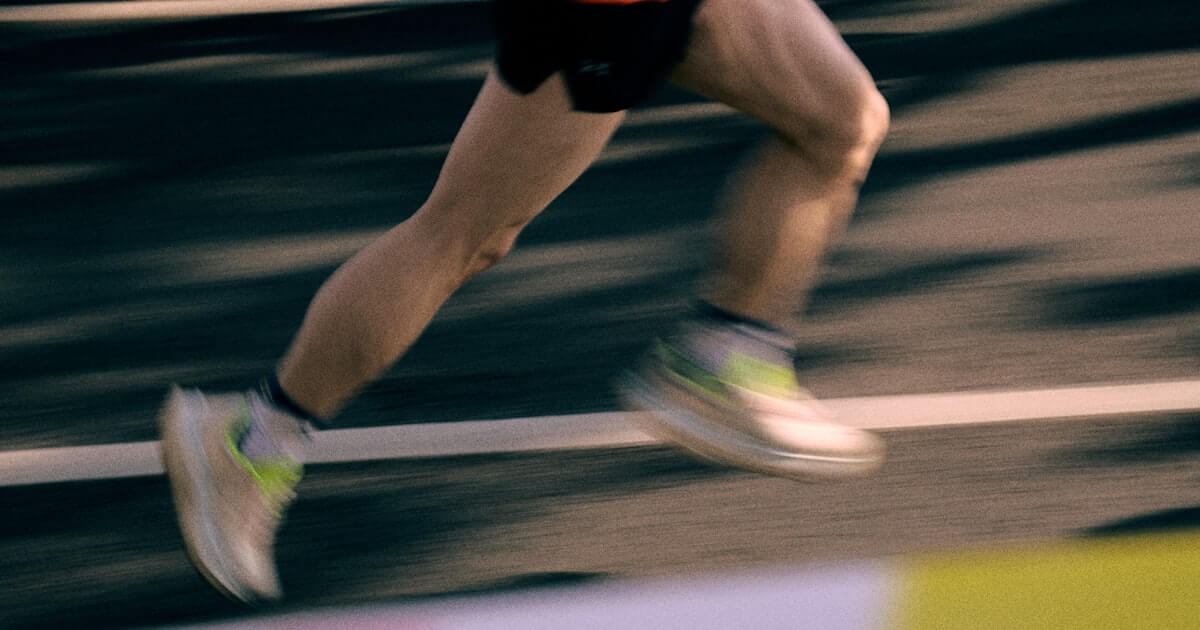
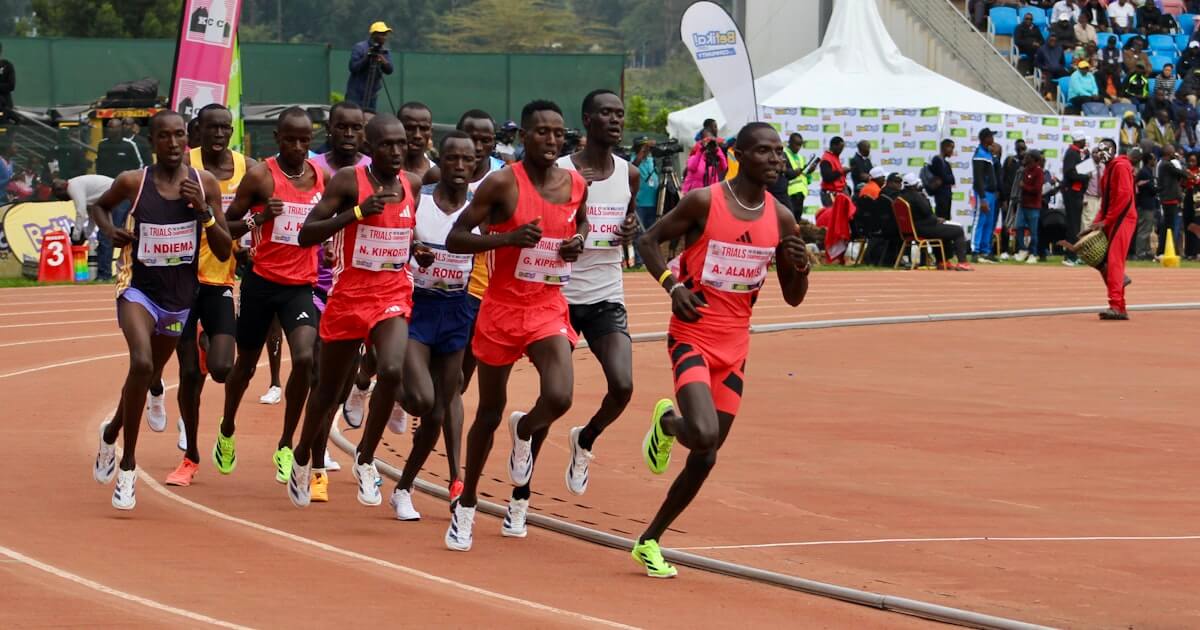
After an easy run, do 4–6 strides of 15–20 seconds each at a music tempo 8–15% faster than your normal cadence (roughly 170–185 BPM for most recreational runners). Strides are controlled accelerations, not sprints. Matching footfalls to the beat trains faster leg turnover and neuromuscular coordination without the fatigue cost of a full interval session.
What running strides actually are
Running strides (sometimes called "striders" or "pickups") are short, smooth accelerations where you gradually build to about 85–95% effort over 15–20 seconds, then float back down. You are teaching your nervous system to run fast while staying relaxed.
Wait, so strides aren't the same thing as sprint intervals?
Correct. Intervals are structured hard efforts with incomplete recovery. Strides are short enough that your heart rate barely spikes and your legs feel springier the next day, not wrecked. Coach Steve Magness describes them as a way to alter muscle tension and add "pop" without crossing into anaerobic territory.
Arthur Lydiard built his base phase around this idea: plenty of easy mileage, plus relaxed strides 2–3 days per week. The goal is form and recruitment, not exhaustion.
Why most runners do strides wrong
The two mistakes I see constantly:
- Sprinting from step one. You blast off like you're chasing a bus, arms flail, cadence goes chaotic, and you've turned a neuromuscular drill into a sloppy 100-meter dash.
- No pacing reference. Without a tempo cue, each stride feels different. Some are too slow to matter. Some are too fast to stay smooth.
Music fixes the second problem cleanly. It gives you an external metronome for the exact turnover you want without staring at a watch mid-stride.
The stride BPM zone map
Your stride tempo should sit above easy-run cadence but below an all-out sprint. For most recreational runners, natural easy cadence falls between 150 and 170 SPM. Strides typically land 8–15% higher.
| Session phase | Target cadence (SPM) | Music BPM | Effort | Duration |
|---|---|---|---|---|
| Easy run (approach) | Your normal easy pace | Your baseline BPM (e.g., 158) | Conversational | 20–45 min |
| Stride build-up | Baseline + 5% | Baseline + 5 (e.g., 166) | Smooth acceleration | First 5–8 sec of each stride |
| Stride peak | Baseline + 10–15% | Baseline + 12 (e.g., 172–178) | 85–95%, relaxed face | 15–20 sec total |
| Walk-back recovery | 100–120 | Silence or very slow walk music | Full recovery | 60–90 sec |
| Cool-down jog | Back to easy cadence | Baseline BPM minus 5 | Very easy | 3–5 min |
A quick reality check on the 180 BPM myth: 180 SPM is an elite marathon average, not a universal target. If your easy jog is 155 SPM, stride music at 172–178 BPM gives you the turnover bump you need. Forcing 180 on a 155 runner just makes the drill feel frantic. More on that in our guide to whether 160 SPM is a good cadence.
Why BPM-matched strides work (the science)
Neuromuscular pre-activation
When you increase step rate even modestly, your muscles fire differently before foot strike. Chumanov et al. (2012, Gait & Posture) tracked 45 recreational runners at preferred cadence, +5%, and +10%. Muscle activity rose mainly during late swing, preparing the limb for a cleaner landing. Gluteus medius and maximus activation increased at +10% — the same muscles that stabilize your hips when you pick up speed.
Strides rehearse that pattern on fresh legs — faster turnover, cleaner landing, no interval hangover.
Running economy without extra mileage
Skovgaard et al. (2018, Physiological Reports) had 20 trained runners complete 10 sessions of 5–10 × 30-second maximal efforts over 40 days, with total volume cut by 36%. Running economy improved by roughly 2%, and 10K time dropped 3.2% (45.2 to 43.7 minutes) despite unchanged VO2-max.
Strides are not 30-second max sprints — they are shorter and sub-maximal. But the underlying principle holds: brief fast running teaches your muscles to produce force more efficiently. You get speed skill without stacking junk fatigue.
Music as a turnover lock
Karageorghis and Priest (2012, Sports Medicine) reviewed decades of research on music and exercise. When movement synchronizes with an external beat, perceived exertion drops and movement efficiency improves — especially at moderate intensities. For strides, that means you can hit the right cadence without clenching your jaw and over-striding to "feel fast."
How to run a BPM stride workout (step by step)
1. Finish your easy run first. Strides belong at the end of an easy day, not after a hard workout. Your legs should be warm but not glycogen-depleted.
2. Find your baseline BPM. Count steps for 30 seconds during the last mile of your easy run and double it. If you land at 160 SPM, that is your easy-run tempo.
3. Calculate your stride BPM. Add 10–12% to baseline. A 160 SPM runner targets 176–178 BPM for peak stride turnover. Start the acceleration segment 5% below that.
4. Run 4–6 strides with full recovery. Each stride lasts 15–20 seconds. Walk back 60–90 seconds between reps. You should feel slightly faster and smoother on rep 4 than rep 1 — not more exhausted.
5. Cool down at easy cadence minus 5 BPM. Three minutes of easy jogging resets your legs. This mirrors the stride shakeout protocol in marathon race week prep.
6. Do this 2–3 times per week. After Tuesday easy run, Thursday easy run, and optionally Sunday long run (4 strides only, not 6). That frequency matches what Lydiard-era coaches used for base building.
Strides vs intervals vs fartlek: which needs BPM most?
| Workout type | Duration of fast segment | Recovery | Best BPM use |
|---|---|---|---|
| Strides | 15–20 sec | Full walk-back | Peak turnover lock at +10–15% above easy |
| Track intervals | 2–5 min | Jog 2–4 min | Fixed interval BPM for entire rep |
| Fartlek surges | 30 sec – 3 min | Easy jog | Two-tier playlist: recovery vs surge BPM |
| Tempo run | 20–40 min continuous | None mid-run | Single threshold BPM for whole block |
Strides need a tempo switch, not one static playlist. Easy-run music for 30 minutes, a higher BPM for 90 seconds of pickups, then silence on the walk-backs. Building that by hand in Spotify every Tuesday gets old fast.
GagaRun filters your Apple Music library to whatever BPM you set on the fly. Lock 158 for the easy miles, bump to 176 for strides, drop back to 158 on the cool-down. Your library, your songs — just at the tempo you actually need.

Strides on a treadmill: yes, but adjust the protocol
Treadmill strides work if you resist cranking the speed dial. The belt pulls your foot back, which tempts you to overstride when the pace jumps.
Better approach:
- Hold speed constant at your easy pace.
- Use BPM music to increase cadence only — take quicker, shorter steps without touching the speed button.
- For true stride pace, add 0.5–1.0 mph for 15 seconds, then return. Match that segment to your stride BPM target using the treadmill speed-to-cadence chart.
The music keeps your turnover honest even when the belt does half the pacing work.
Common stride mistakes (and the BPM fix)
Treating strides like hill sprints. If you are gasping at the end of a 20-second rep, you went too hard. Stride BPM should feel quick but controlled — like you could do ten more.
Skipping recovery walks. Partial recovery turns strides into mini-intervals. Walk until breathing normalizes. Silence during walk-backs is fine.
Doing strides before your run. Pre-run strides belong inside a structured warm-up, capped at 2–3 reps. The main stride session still goes at the end.
Chasing 180 BPM because an influencer said so. Increase cadence gradually — 5–10% above your baseline, not an arbitrary round number. Our guide on increasing cadence without running faster walks through the math.
How strides connect to race-day cadence
Strides teach your legs what race turnover feels like on tired legs — which is exactly what happens in the final kilometers of a 5K or half marathon. If your 5K race BPM plan calls for a 168 SPM average with a 175 SPM kick, strides at 172–178 BPM during base training make that kick feel familiar instead of foreign.
During taper week, cut to 4 strides twice per week. You are maintaining neuromuscular sharpness, not building fitness. The legs should feel poppy leaving the session, not heavy.
Frequently asked questions
How many strides should I do as a beginner?
Start with 4 strides once per week after an easy run. Add a second session after 3–4 weeks. Beginners do not need 10 × 100 m track repeats — they need smooth, repeatable turnover practice.
What BPM should I use if I don't know my cadence?
Run easy for 60 seconds and count steps. Double it. Add 10%. If you counted 78 steps in 30 seconds (156 SPM), stride music at 170–172 BPM is your starting point. Adjust after two sessions based on feel.
Can I do strides the day before a race or hard workout?
Yes — 4 relaxed strides the day before a race or tempo session is standard for many coaches. Keep peak effort at 85%, not 95%. You are reminding your legs what fast feels like, not digging a hole.
Are strides the same as A-skips and high knees?
No. Drills like A-skips are stationary or short-range plyometric patterns. Strides are full running mechanics at faster turnover over 15–20 meters. Both help coordination; strides transfer more directly to race pace. Drills fit your warm-up. Strides cap your easy run.
Should I use a metronome or music for strides?
Both work. Metronomes give precision but feel sterile for a 30-minute easy run plus six pickups. Music gives you the same cadence lock with better compliance. A 2020 meta-analysis in Frontiers in Psychology found rhythmic auditory stimulation improved gait cadence and reduced stride variability in healthy adults — the same mechanism strides rely on.