Best BPM For VO2 Max Intervals: Increase Running Economy
Dr. Michael Torres, Sports Science Contributor
2026年4月9日

For VO2 max intervals (Zone 5), the optimal music tempo is 170 to 180 BPM. Syncing your stride rate to this range stops you from overstriding, cuts down your bounce, and improves running economy. It lets you hold maximum effort longer before your legs give out.
Runners obsess over their cardiovascular engine. They track heart rate metrics and chase a higher VO2 max, assuming a bigger engine automatically means faster times. But I see this play out constantly on the track: raw speed requires mechanical efficiency just as much as aerobic capacity. If your form falls apart, you're leaking power.
What is VO2 Max Running?
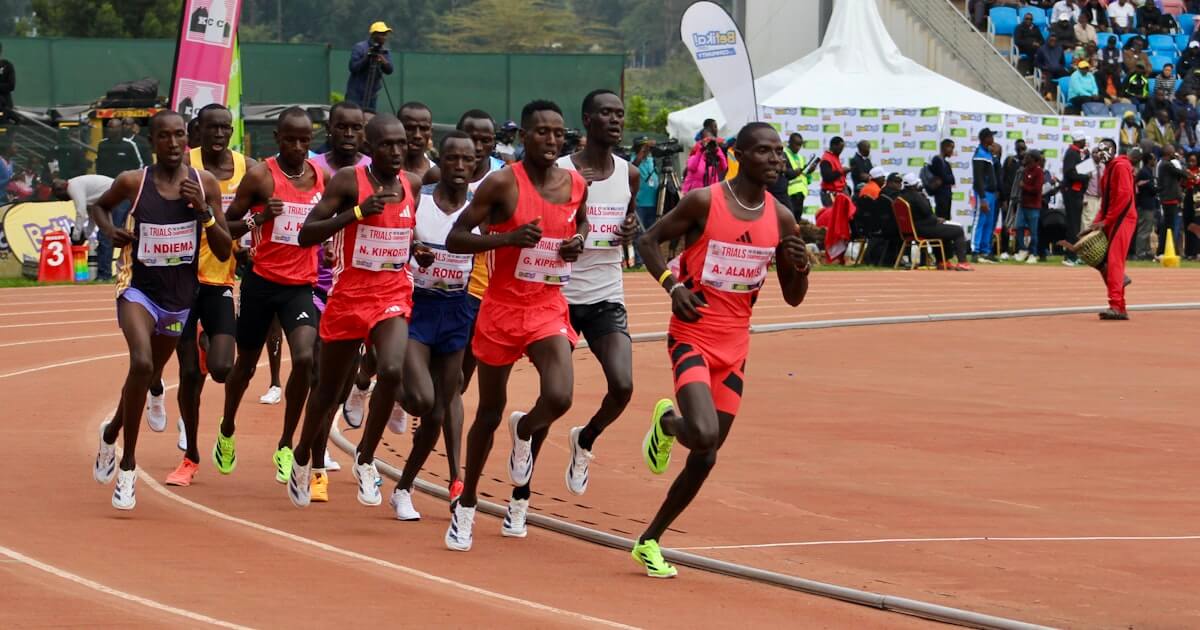
VO2 Max training (Zone 5) means running at 90-100% of your maximum heart rate. It's the absolute ceiling of oxygen your body can use during intense exercise. These intervals usually last 1 to 4 minutes. They hurt. They are designed to push your aerobic limits and build muscular power.
Why Running Economy Beats Aerobic Capacity
Most people think bumping their VO2 max by a few points will shave minutes off their 5K. The data tells a different story.
When you look at mixed-ability runners, velocity at VO2 max (which combines both aerobic capacity and running economy) accounts for up to 94% of performance variance. Even more striking: running economy can vary by up to 30% among athletes who have the exact same VO2 max on paper.
If your form breaks down during minute three of a brutal interval—if you start taking long, heavy, bouncy strides—you are burning massive amounts of oxygen just fighting gravity.
The research is blunt on this point: increasing cadence by just 5-10% brings the foot strike closer to your center of mass and substantially reduces the mechanical energy absorbed at the knee and hip (Heiderscheit et al., 2011, Medicine & Science in Sports & Exercise).
Music BPM vs. Training Zones Comparison
You shouldn't run a recovery jog and a track sprint at the same stride rate. Here is how I map playlist BPM to training intent:
| Training Zone | Target Effort | Recommended BPM / Cadence | Primary Biomechanical Benefit |
|---|---|---|---|
| Zone 2 (Base) | Easy, conversational | 150 - 165 BPM | Builds mitochondria, safe volume accumulation |
| Zone 4 (Threshold) | Comfortably hard | 165 - 170 BPM | Lactate clearance, forward momentum |
| Zone 5 (VO2 Max) | All-out, breathless | 170 - 185 BPM | Maximizes turnover, minimizes ground contact time |
Note: Please don't artificially force a 180 SPM cadence tomorrow if your natural baseline is 155. That's a recipe for Achilles pain. Instead, just try to increase your running cadence without running faster by about 5% above your normal baseline.
Using Music to Survive VO2 Max Intervals
When you hit 95% of your max heart rate, your brain actively looks for excuses to quit. High-tempo music acts as an external pacemaker. It triggers auditory-motor synchronization—your feet naturally want to land on the beat.
But fumbling with Spotify to skip tracks while sprinting at a 5:00/km pace is a nightmare. It ruins the interval.
This is where a tool like GagaRun actually makes a difference. It filters your existing playlists and only plays songs that match your target VO2 max cadence. It locks the music's BPM directly to your footstrikes. If you set your target to 175 SPM, the app just feeds you 175 BPM tracks. It keeps your turnover rate high and stops the exact form breakdown that usually ruins the final 30 seconds of a hard interval.
The Perfect VO2 Max BPM Workout
Try this standard 4x4 minute VO2 max protocol using cadence matching:
- Warm-up progressively: 10-15 minutes of easy jogging. Keep the music at 150-160 BPM so your stride stays light. Don't overstride.
- The Work Interval (4 minutes): Shift your music or GagaRun target to 175-180 BPM. Focus purely on quick, sharp foot turnovers. Don't reach forward with your legs.
- Active Recovery (3 minutes): Drop the tempo to a Zone 2 running playlist BPM (around 130-140 BPM). Walk or slow jog to clear lactate. Keep moving.
- Repeat: 4 total sets.
Frequently Asked Questions
Does faster music make you run faster?
Not necessarily faster, but more efficiently. High BPM music drives a faster step rate. Taking shorter, quicker steps cuts down your ground contact time and vertical bounce. You spend less energy to maintain the same high speed.
Can I do VO2 max intervals on a treadmill?
Absolutely. Treadmills are great for speedwork because they lock you into a pace. Set the incline to 1% to mimic outdoor wind resistance, and put on a 175+ BPM playlist to keep your feet from slapping the belt.
What happens if I lose my rhythm during an interval?
As fatigue hits, most runners drop their cadence and lengthen their stride. This spikes the impact forces on your knees and demands more oxygen. Having a 180 BPM track playing gives you a cognitive anchor. It helps you hold onto your mechanical efficiency even when your lungs are burning.