Yasso 800s BPM Guide: Lock Marathon Predictor Intervals
Alex Chen, Certified Running Coach
2026年5月26日

TL;DR: For Yasso 800s, run each 800-meter repeat in minutes:seconds that mirror your goal marathon in hours:minutes (a 3:30 marathon → 3:30 per 800m). Lock work intervals to 172–182 BPM music and recovery jogs to 110–120 BPM. Measure cadence on rep one—do not force 180 SPM if your body turns over slower at threshold effort.
Why Yasso 800s fall apart without a rhythm cue
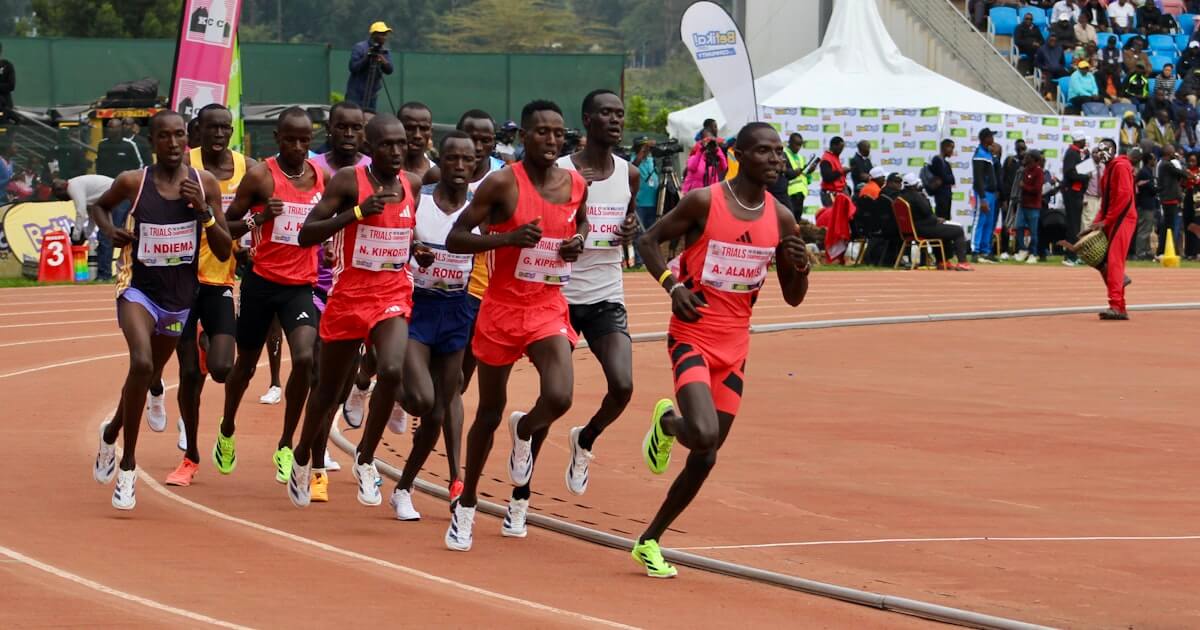
Bart Yasso's workout is simple on paper and brutal in practice: build up to 10 × 800m at a split that maps to your marathon goal, with equal-time recovery jogs between reps. Runner's World popularized the correlation—a 3:20 per 800 predicts roughly a 3:20 marathon for many endurance-focused athletes, though McMillan Running notes speed-dominant runners often finish 3–5 minutes slower than the prediction.
The problem is not the math. It is rep four.
You hit the track, nail the first 800, jog easy for 3:20, then glance at your watch on rep two. You are three seconds fast. You correct. You are four seconds slow. By rep six you are running by feel, which at VO2-ish effort means your cadence drifts down and your stride lengthens—exactly the overstriding pattern that makes the last two 800s feel like a different workout entirely.
Music at fixed BPM removes the micro-surge guessing. The beat is the pace governor.
What are Yasso 800s?
Yasso 800s are a marathon-training speed session consisting of repeated 800-meter intervals run at a target time where the minutes and seconds of each rep correspond to the hours and minutes of your goal marathon finish. Example: targeting a 3:45 marathon means running each 800m in 3 minutes 45 seconds, then jogging easily for 3:45 before the next rep.
Bart Yasso told the morning shakeout podcast he saw a correlation, not a physiological law. The workout still works because 800m at that intensity sits near 5K to 10K effort—short enough for leg speed, long enough to stress aerobic power. It belongs alongside marathon-pace long runs and tempo work, not as your only quality day.
Progression for most plans:
- Weeks 1–4: 4–6 × 800m
- Build phase: 6–8 × 800m
- Peak: 8–10 × 800m two to three weeks before the race
If you cannot hold goal splits past rep five, you are not ready for ten. Drop the rep count and try again next week.
BPM targets by marathon goal (work vs recovery)
Your music BPM should match footstrike cadence (SPM), not mile pace on a GPS watch. At Yasso intensity, most recreational runners sit 5–15 SPM above their easy-run baseline—not automatically 180.
| Goal marathon | 800m target | Typical work cadence (SPM) | Work music BPM | Recovery music BPM |
|---|---|---|---|---|
| 2:45 | 2:45 | 178–186 | 178–184 | 112–118 |
| 3:00 | 3:00 | 176–184 | 176–182 | 112–118 |
| 3:30 | 3:30 | 172–180 | 170–178 | 110–116 |
| 4:00 | 4:00 | 168–176 | 166–174 | 108–114 |
| 4:30+ | 4:30 | 162–172 | 160–170 | 105–112 |
How to calibrate: During your 10-minute BPM warm-up, run one test 800 at goal effort. Count steps for 20 seconds on the back straight, multiply by 3. That number plus 2–4 beats is your work BPM lock. Recovery should feel almost embarrassingly slow—if your heart rate is not dropping, the recovery BPM is too high.
If your easy runs sit around 155 SPM, do not jump to 180 tomorrow. Bump cadence 5–10% for this session and see how your calves feel the next morning.
The science: why beat-locked 800s survive rep 8
Here is what actually helps on rep 8, not just rep 1:
Auditory-motor synchronization. Your nervous system locks movement to external rhythm. Karageorghis and colleagues reported 18.1% and 19.7% longer time-to-exhaustion on treadmill running with synchronous motivational and neutral music versus no music (Journal of Sports Medicine and Physical Fitness, 2012). Yasso 800s are not a treadmill exhaustion test—but the same rhythm lock keeps turnover from collapsing when lactate spikes.
Attentional narrowing (early reps only). At submaximal efforts, music lowers RPE. Near VO2 max, internal fatigue cues dominate—music will not make rep 10 feel easy. What it still does: prevents cadence decay when your brain stops caring about form.
Pacing shape discipline. McMillan describes the session as racing a 10K effort curve—controlled early, harder middle, savage finish. Fixed BPM enforces that shape better than watch-checking every 200 meters.
Step-by-step: Yasso 800s with BPM music
- Warm up 15 minutes at 115 BPM easy jog, then 4 × 20-second strides at work BPM minus 5 with full walk-back recovery.
- Set work playlist or BPM lock to your measured cadence from the test rep (usually 170–182 BPM for 3:00–4:00 marathoners).
- Run 800m to the beat on a track or measured loop. Trust the tempo; resist speeding up when adrenaline hits on rep 1.
- Switch to 110–120 BPM the moment you finish—before you bend over hands-on-knees. Recovery duration equals work duration, not distance.
- Repeat until splits fail. Stop the set when two consecutive reps miss goal time by more than 3 seconds, even if the plan called for eight.
- Cool down 10 minutes at 110 BPM walk-jog.
Treadmill Yasso 800s (when no track exists)
Set treadmill speed to match your 800m goal (e.g., 8.0 mph ≈ 3:45 per 800m). Increase incline 0.5–1% only if you need slightly lower speed to hit HR target—do not simulate hills during a pacing session. BPM rules stay identical. See our treadmill speed-to-cadence chart if your console shows mph but your music is in SPM.
Workout structure comparison
| Session | Primary stimulus | Best BPM strategy | Weekly slot |
|---|---|---|---|
| Yasso 800s | VO2-ish speed + pacing discipline | Fixed work BPM + slow recovery BPM | One hard day, 48h from long run |
| VO2 max intervals | Max aerobic power | 170–185 BPM, shorter reps | Alternate weeks with Yassos |
| Tempo run | Lactate threshold | 165–175 BPM steady | Mid-week |
| 10K race pacing | Race rehearsal | Phase-based BPM ladder | Replace one Yasso block pre-10K |
Yasso 800s overlap 5K pace territory. If you are training for a 10K, the same BPM lock applies—only the rep count and recovery philosophy change.
Switching BPM without wasting recovery
The friction point is the work-to-recovery transition. You finish an 800 gasping, fumble Spotify, and pick a 145 BPM "easy" song that is still too aggressive. Forty seconds later you are jogging at tempo effort and rep 5 is cooked.
Two fixes:
Dual-playlist method: Work list at 175 BPM, recovery list at 115 BPM. Tap swap when you cross the finish line. Works until your hands shake on rep 7.
Single-stream BPM lock: GagaRun filters Apple Music or Spotify to one target tempo—you bump from 178 on the straightaway to 115 on the recovery jog without rebuilding playlists or skipping wrong-tempo tracks mid-set.

Either way, tempo change should be as automatic as starting your recovery jog.
Common mistakes
Chasing 180 BPM because marathon Twitter said so. Yasso pace is hard. Forcing elite cadence on a 4:15 marathoner turns the workout into a coordination panic drill.
Recovery jog too fast. If recovery BPM is above 130, you are not recovering—you are doing broken tempo runs.
Starting with 10 reps in week one. Build from 4–6. Yasso himself used the workout for leg speed and endurance, not as a one-session fitness test.
Treating prediction as guarantee. Marathon Handbook and McMillan both note long runs at marathon pace predict finish time better than 800s alone. Use Yassos as a progress marker, not a contract.
Skipping the warm-up BPM ramp. Going from desk chair to 178 BPM in rep 1 is how people pull calves on rep 3.
Frequently asked questions
How often should I do Yasso 800s during marathon training?
Once every 7–14 days during the build phase—typically 4–6 sessions total in a 16-week plan. Place them at least 48 hours before your long run. Taper the rep count (not the intensity) in the final two weeks.
Can Yasso 800s predict my marathon time accurately?
Sometimes. Endurance-oriented runners often land within a few minutes of the prediction. Speedsters may run 3–5+ minutes slower than their Yasso splits suggest at the same 800 times. Treat the workout as fitness feedback, not a fortune teller.
What if I cannot hit my goal 800 time on the track?
Your marathon goal may be aggressive for current fitness—or you need more aerobic base before speed. Drop to 4 reps at 5 seconds slower than goal, rebuild, and retest in three weeks.
Is 172 BPM too slow for a 2:50 marathon goal?
Measure, do not guess. Sub-3-hour marathoners often turn over 178–186 SPM on 800s. Run one test rep and lock music to measured SPM + 2–3 beats, not a generic chart cell.
Should I use a metronome instead of music for Yasso 800s?
Metronomes lock cadence but do not deliver the ~15–19% endurance boost synchronous music shows in research. For rep 8–10, music usually wins. See metronome vs music for the full tradeoff.