Walking In Place: Does It Actually Count As Cardio?
Sarah Jenkins, Fitness & Lifestyle Blogger
August 16, 2026
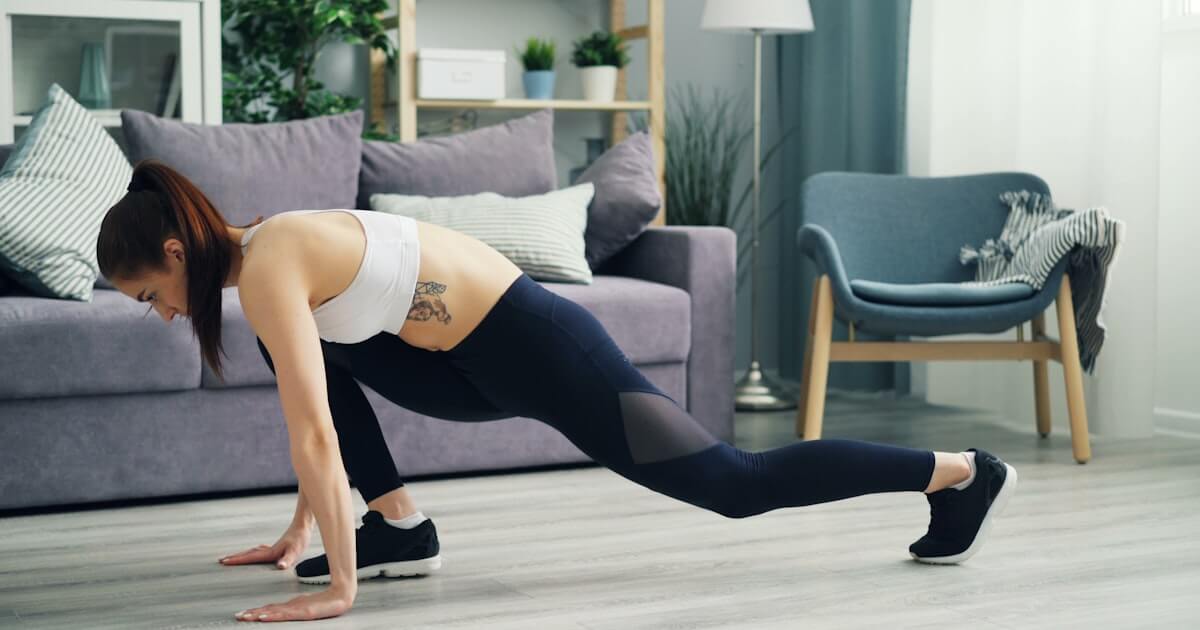
Walking in place is real cardio, not a consolation prize. Measured in a lab, stepping in place burns about 258 kcal per hour for an average adult, compared to 304 kcal walking at 3.0 mph on a treadmill and just 81 kcal sitting on the couch. That's roughly 85% of a "real" walk, with zero equipment, zero weather, and about one square meter of floor. The catch: you have to keep a steady cadence of 100-120 steps per minute and actually lift your feet. Shuffle, and the numbers collapse.
The study that settled it
The best data we have comes from researchers at the University of Tennessee, published in Medicine & Science in Sports & Exercise (Steeves, Bassett & Thompson, 2012). They measured 23 adults at rest, sitting, standing, stepping in place, and walking on a treadmill:
| Activity | Calories per hour |
|---|---|
| Sitting watching TV | 81 kcal |
| Standing | ~88 kcal |
| Stepping in place (continuous) | 258 kcal |
| Treadmill walking, 3.0 mph | 304 kcal |
| Stepping only during TV ad breaks | 148 kcal (~2,111 steps in 25 min) |
The same team then ran a 6-month randomized trial, published in the International Journal of Behavioral Nutrition and Physical Activity. One group walked 30 minutes a day; the other just stepped in place during TV commercials. Both groups went from about 4,600 daily steps to roughly 7,600-7,900, and both lost body fat and centimeters off the waist. No significant difference between them.
So the question isn't whether walking in place works. It's whether your version of it does.
Why most people do it wrong
Watch someone "walk in place" for two minutes and you'll usually see the intensity drain away. Feet barely leave the floor, arms hang, tempo drifts down. Without forward motion or a treadmill belt forcing your pace, your body quietly negotiates itself into a shuffle. It's like singing without a backing track: you go flat and never notice.
The study participants were given specific instructions for a reason: step at a moderate pace of 100-120 steps per minute, with each foot lifting 15-20 cm (6-8 inches) off the ground. Those two numbers are the whole workout. Lose either one and you're standing with extra steps.
Three form cues that keep the calorie burn honest:
- Lift your knees, not just your heels. Aim for mid-shin height minimum; waist height turns it into a march and pushes the burn toward 180+ kcal per 30 minutes.
- Swing your arms like you would on a brisk outdoor walk. Arm drive alone adds a meaningful chunk of energy cost and keeps your torso from slumping.
- Land midfoot, stay quiet. If your downstairs neighbor can hear you, you're stomping, not stepping. Quiet feet force control, and control costs calories.
The cadence problem (and the fix)
Here's the part nobody tells you: cadence drift is the reason walking in place feels useless for so many people. On a treadmill, the belt holds your pace. In your living room, nothing does — except a beat.
Music at 100-120 BPM maps one-to-one onto the 100-120 steps-per-minute target from the research. One beat, one footstrike. Once you lock in, holding pace stops being a willpower exercise; your feet just follow the song. It's the same trick that makes treadmill walking for fat loss sustainable, minus the treadmill.
The friction point is that a normal playlist jumps all over the tempo map — one song at 92 BPM, the next at 128. Every track change breaks your rhythm. You can hunt down ready-made 110 BPM playlists, or use GagaRun, which takes the playlists you already have on Spotify or Apple Music and plays every song at your target BPM. Set it to 110, press play, and a 40-minute session holds one steady pulse from the first track to the last.
Wait — does stepping in place even count on my watch? Mostly yes. Wrist-worn trackers count arm swings, so if your arms are moving naturally, steps register. If you're holding your phone, expect undercounting; a waistband or pocket placement fixes it.
A 30-minute session that actually does something
- Minutes 0-3 — warm-up: easy stepping at ~95-100 BPM, low knees, loose arms.
- Minutes 3-23 — steady state: 110 BPM, knees to mid-shin, arms swinging. This is your fat-burning block; you should be able to talk in short sentences, not paragraphs.
- Minutes 23-28 — intervals: 30 seconds of high-knee marching (aim for every beat at 120-125 BPM), then 60 seconds back at 110. Repeat three times.
- Minutes 28-30 — cool-down: drop back to ~95 BPM, let your heart rate settle.
Done daily, that's in the neighborhood of 130-180 kcal per session depending on your weight and knee height — comparable to the ad-break steppers in the Tennessee trial, who measurably reduced body fat over six months.
Who this is actually for
Walking in place earns its keep in specific situations: apartment dwellers with thin floors and no space for a walking pad, parents stuck indoors during nap time, anyone easing back into movement after a long sedentary stretch, and people in brutal summers or winters who keep skipping outdoor walks. It's also one of the lowest-impact cardio options that still counts toward your daily 10,000 steps.
It is not the best tool if you have space and joints for brisk outdoor walking — that still burns ~15-20% more per minute and engages more muscle. Think of stepping in place as the option that beats the couch every single time, not the option that beats everything.
FAQ
How many calories does 30 minutes of walking in place burn?
Roughly 100-180 kcal for most adults, depending on body weight, cadence, and knee height. The lab-measured average for continuous stepping is 258 kcal per hour; vigorous high-knee marching pushes higher, lazy shuffling falls well below.
Does walking in place count toward my 10,000 steps?
Yes, physiologically and on most trackers. In the Tennessee trial, participants stepping only during TV commercials logged over 2,000 extra steps per hour of viewing and raised their daily totals by about 3,000 steps.
What BPM should I step to?
Match music to your target cadence: 100-110 BPM for a moderate pace, 115-125 BPM if you want brisk-walk intensity. One beat equals one step. If your playlist tempos are all over the place, a BPM-matching tool keeps every song at your chosen pace.