Treadmill Walking For Fat Loss: Best BPM & Pace Guide
Sarah Jenkins, Fitness & Lifestyle Blogger
2026年6月1日
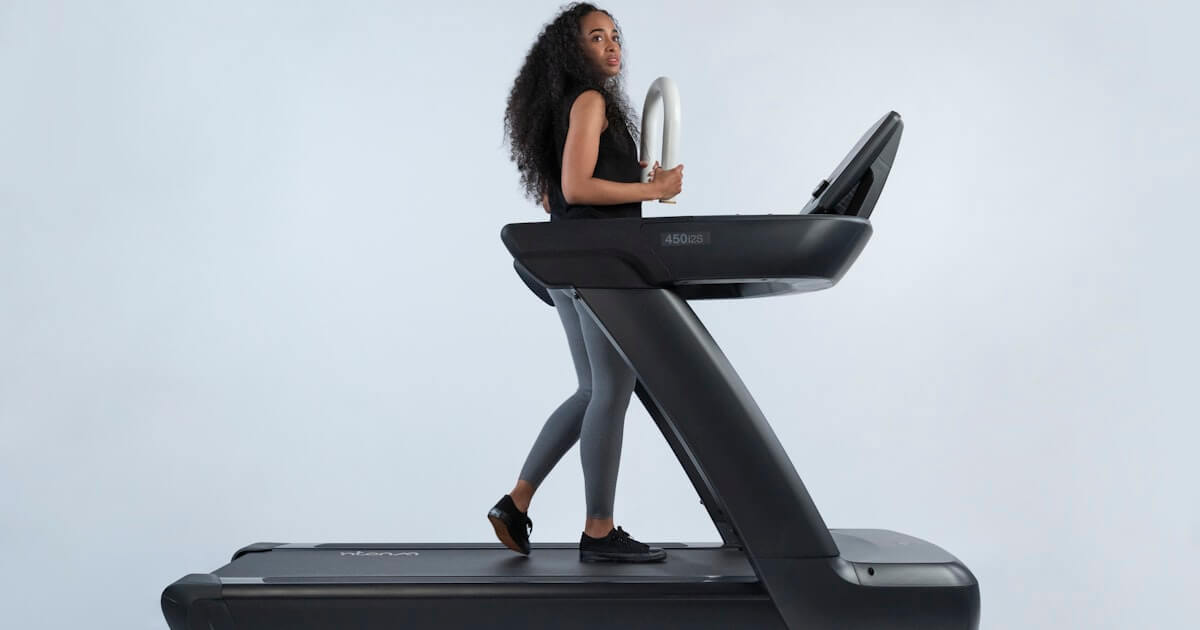
For flat treadmill walking aimed at fat loss, target 100–115 BPM (steps per minute) at 2.8–3.5 mph with 0–3% incline. That cadence keeps most adults in the 60–70% max heart rate zone where fat oxidation is highest, without turning the session into a breathless power walk.
Why your treadmill walk stops burning fat after 10 minutes
You hop on the treadmill with good intentions, start at 3.2 mph, feel fine for about eight minutes. Then your phone shuffles to a slow song. Your steps shorten. Heart rate sags below the fat-burning range. So you bump speed to 4.0 mph to "make up for it." Now you're gasping, burning mostly carbs, and watching the clock.
The problem usually isn't that walking doesn't work. Your cadence drifts, and your body never settles into steady-state fat oxidation.
Fix: pick a pace you can hold for 30–45 minutes, then give yourself a rhythm cue that keeps step rate honest.
What is the fat-burning zone on a treadmill walk?
The "fat-burning zone" is roughly 60–70% of your maximum heart rate (220 minus your age, then multiply by 0.60–0.70). At this intensity, a larger share of calories comes from fat, even though total calorie burn per minute is lower than in hard intervals.
The Cleveland Clinic notes that zone 2 exercise typically falls between 60–70% max HR—the range where your body prefers fat as fuel over glycogen.
Most treadmill guides fixate on mph. That's incomplete. Two people at 3.0 mph can land at 90 SPM or 115 SPM depending on height and stride length. Cadence tracks intensity better than the number on the console.
The 100 SPM rule (and why it matters on a flat treadmill)
Research from the CADENCE-adults study (International Journal of Behavioral Nutrition and Physical Activity, 2018) found that 100 steps per minute is a reliable threshold for moderate-intensity walking in adults aged 21–40. Vigorous walking starts around 130 SPM.
At moderate intensity (about 3 METs), optimal cadence was 102 SPM in lab testing. The researchers set a practical heuristic of 100 SPM with 91.4% positive predictive value.
Translation for your treadmill session: if you're walking for fat loss on flat ground, 100–115 BPM music with one step per beat is the sweet spot. Below 95 SPM, you're probably too easy. Above 120 SPM on flat ground, you're drifting toward vigorous territory and leaving the fat-max zone.
| Treadmill speed | Typical SPM (flat) | Target BPM music | Heart rate zone | Best for |
|---|---|---|---|---|
| 2.5 mph (beginner) | 90–100 | 95–100 BPM | 50–60% max HR | Building habit, recovery days |
| 2.8–3.2 mph (fat-loss sweet spot) | 100–110 | 100–110 BPM | 60–70% max HR | Steady fat oxidation, 30–45 min sessions |
| 3.5 mph (brisk flat walk) | 110–120 | 110–115 BPM | 65–75% max HR | Shorter sessions, fitter walkers |
| 3.8+ mph (power walk) | 120–130+ | 125–130 BPM | 75%+ max HR | Cardio fitness, not optimal fat % |
Taller walkers often need slightly higher mph to hit 100 SPM. Shorter walkers may hit the zone at 2.6 mph. Count your steps for 15 seconds, multiply by four—that's your real number.
Flat walk vs incline walk: different BPM targets
This is where people mix up two completely different workouts.
Flat treadmill walking (this guide): 100–115 BPM, 0–3% incline, 2.8–3.5 mph. The goal is sustainable moderate intensity you can hold for 45 minutes.
Incline walking (like 12-3-30 or steep hill walks): cadence drops to roughly 100–115 SPM at slower speeds because each step costs more. Our 115 BPM incline walking guide covers that protocol separately. Same BPM number, different treadmill settings.
If you want glute emphasis and higher calorie burn per minute without running, add incline—but expect your flat-walk BPM targets to shift. At 10% incline and 2.5 mph, you might only need 105 BPM to hit the same heart rate you'd get at 110 BPM on flat ground.
How to set up a fat-loss treadmill walk (step by step)
- Calculate your target heart rate. Take (220 − your age) × 0.65. A 35-year-old aims for roughly 120 bpm.
- Warm up at 2.5 mph, 0% incline for 5 minutes. Use 95 BPM music. Let your heart rate climb gradually.
- Set your working pace. Start at 3.0 mph, 0–2% incline. Count steps for 15 seconds—you want 25–28 steps (100–112 SPM).
- Lock the beat. Play music at your counted cadence. One footfall per beat. If you're using LISS cardio pacing principles, this is the same idea applied specifically to flat treadmill work.
- Run the talk test. You should speak a full sentence without gasping. If you can't, drop 0.2 mph—not the music BPM.
- Stay for 30–45 minutes. Fat oxidation ramps meaningfully after the 20-minute mark. Consistency beats intensity here.
Why music BPM beats willpower for fat-loss walks
When playlist tempo matches step rate, auditory-motor synchronization kicks in. Your brain stops renegotiating pace every few minutes.
A pilot study in Music and Medicine (2019) found that cadence-matched music on an elliptical reduced heart rate and Borg RPE versus mismatched music, with satisfaction scores averaging 8.3/10 vs 5.2/10 for async tracks.
PLOS ONE research on beat-synchronized running showed that matching footfalls to tempo improved time-to-exhaustion and cadence consistency compared to no acoustic cue—because the rhythm removes micro-decisions about stride length.
On a fat-loss walk, those micro-decisions are what pull you out of zone 2. You speed up during a chorus. You slow down during a bridge. Forty minutes later, your average heart rate chart looks like a seismograph.
The handrail trap (and the cadence fix)
Grabbing treadmill rails drops your heart rate 10–15 bpm instantly. You think you're working hard because the speed readout says 3.5 mph. You're not. Your legs are barely carrying body weight.
If you need rails to keep up, the speed is too high for a fat-loss walk. Drop to 2.8 mph, keep your hands free, and let 105 BPM music set an honest cadence. You'll actually burn more fat at the lower speed with proper posture.
Lock your pace with GagaRun
Manually building a 108 BPM playlist from your library is tedious enough that most people give up and hit shuffle. One slow ballad at minute 12, and your cadence collapses.
GagaRun filters your Apple Music or Spotify library to your target BPM—105, 110, whatever you counted on the treadmill—and keeps every track at that tempo. Set it once, walk for 45 minutes, and your footfalls stay locked. Same approach we use for treadmill incline sessions, just with flat-walk speed settings.

Sample weekly fat-loss walking plan
| Day | Duration | Speed | Incline | Target BPM | Notes |
|---|---|---|---|---|---|
| Mon | 35 min | 3.0 mph | 0% | 105 BPM | Post-strength recovery walk |
| Wed | 45 min | 2.8 mph | 2% | 108 BPM | Primary fat-loss session |
| Fri | 40 min | 3.2 mph | 0% | 110 BPM | Slightly faster, still pass talk test |
| Sat | 30 min | 2.5 mph | 5% | 105 BPM | Incline variant—see 12-3-30 BPM guide |
Total: about 150 minutes/week in the fat-burning zone, which aligns with standard aerobic exercise recommendations.
Frequently asked questions
What is the best treadmill speed for fat loss?
For most adults, 2.8–3.5 mph on flat or slight incline hits the fat-burning heart rate zone. Speed matters less than sustaining 100–115 steps per minute for 30–45 minutes. If your heart rate exceeds 70% max HR, slow down—even if the treadmill display feels embarrassingly low.
Is walking at 100 BPM better than running for fat loss?
For fat percentage, moderate walking wins. For total calories per minute, running wins. Meta-analyses consistently show both approaches reduce body fat when paired with a caloric deficit—the difference is adherence. Most people can walk 45 minutes four times a week. Fewer can sustain hard intervals that often. That's why walking keeps showing up in real-world fat-loss outcomes.
Should I use incline or flat walking to burn fat?
Both work. Flat walking at 100–115 BPM is easier to sustain for 45+ minutes. Incline walking burns more calories per minute at lower speeds but fatigues faster. Beginners should master flat cadence first, then add 2–5% incline. Avoid jumping straight to 12% incline protocols unless your heart rate data supports it.
How do I know if my BPM is too high on the treadmill?
Do the talk test. If you can't recite a sentence comfortably, your BPM target is too high for fat-loss walking—regardless of what feels "productive." Drop speed by 0.2 mph before lowering music tempo. Your cadence should stay at 100+ SPM even at the reduced speed.