
How To Run A Marathon Under 3:15: Pace, Splits & BPM Plan
Alex Chen, Certified Running Coach
September 28, 2026
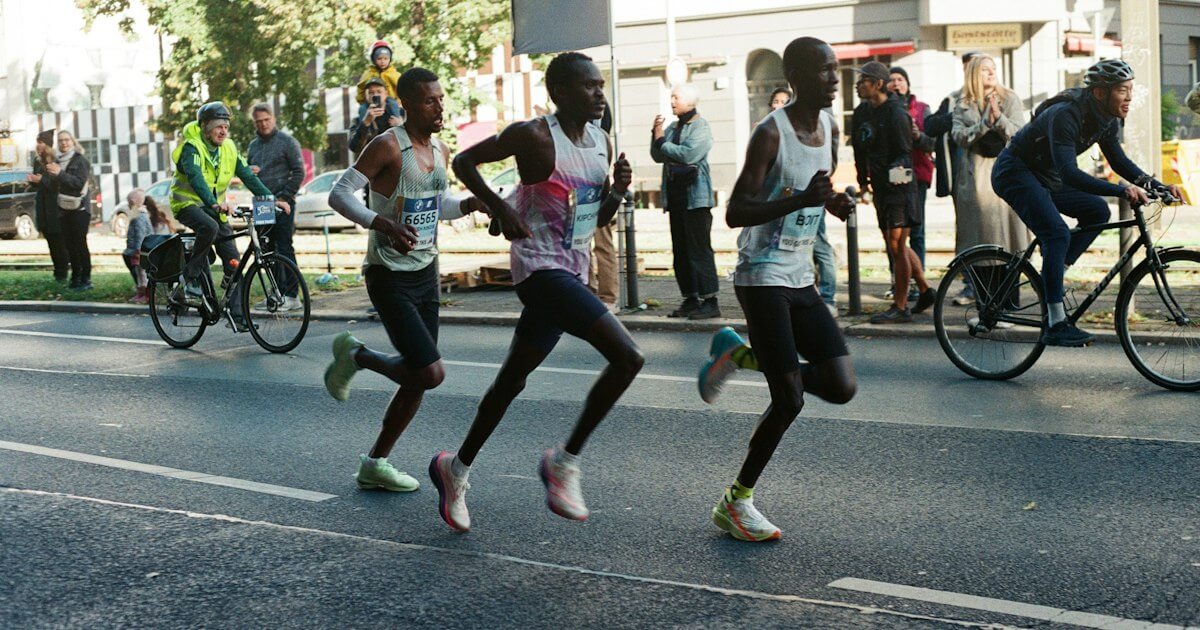
Short answer: Breaking 3 hours 15 minutes in the marathon requires holding an average pace of 7:26.3 per mile (4:37.3 per kilometer) over 26.219 miles. In race conditions, you should target an even cruise pace of 7:25 per mile (4:36/km) to cross the finish line around 3:14:25. That gives you a 35-second safety buffer for GPS drift, aid station slowdowns, and weaving through crowded turns. Across mass global marathon fields, only 4% to 5% of all marathon finishers ever crack the 3:15 barrier. Before committing to a sub-3:15 block, you should be able to run a sub-1:32:30 half marathon, a sub-41:30 10K, and handle 45 to 60 weekly miles.
Stepping up from a sub-3:30 marathon to 3:15 is a serious gear shift. You are shaving 34 seconds off every single mile for more than three hours. At 7:26 pace, you are operating right at the upper edge of your aerobic zone. Any pacing error in the opening 10K will catch up with you as severe late-race muscular failure past mile 20.
The sub-3:15 marathon pace chart
To break 3:15:00 cleanly, here is how your split checkpoints look when executing an even-effort race plan.
| Checkpoint | Distance (mi / km) | Target Split (7:25/mi pace) | 3:15:00 Limit Split (7:26.3/mi) | Cadence Range | Target BPM |
|---|---|---|---|---|---|
| 5K | 3.11 mi / 5.0 km | 23:00 | 23:06 | 176–180 SPM | 176–180 BPM |
| 10K | 6.21 mi / 10.0 km | 46:00 | 46:12 | 176–180 SPM | 176–180 BPM |
| 15K | 9.32 mi / 15.0 km | 1:09:00 | 1:09:19 | 176–180 SPM | 176–180 BPM |
| 20K | 12.43 mi / 20.0 km | 1:32:00 | 1:32:25 | 178–182 SPM | 178–182 BPM |
| Half Marathon | 13.11 mi / 21.1 km | 1:37:10 | 1:37:30 | 178–182 SPM | 178–182 BPM |
| 25K | 15.53 mi / 25.0 km | 1:55:00 | 1:55:31 | 178–182 SPM | 178–182 BPM |
| 30K | 18.64 mi / 30.0 km | 2:18:00 | 2:18:38 | 178–182 SPM | 178–182 BPM |
| 35K | 21.75 mi / 35.0 km | 2:41:00 | 2:41:45 | 178–182 SPM | 178–182 BPM |
| 40K | 24.85 mi / 40.0 km | 3:04:00 | 3:04:51 | 180–184 SPM | 180–184 BPM |
| Finish | 26.22 mi / 42.2 km | 3:14:25 | 3:14:59 | 180–186 SPM | 180–186 BPM |
Notice the halfway split: 1:37:10 to 1:37:30. If your standalone half marathon personal record is 1:35, trying to run 1:37:20 at the midway point of a full marathon is a recipe for a blowout. You need a buffer between your half marathon race capacity and your marathon cruising pace. For a broader view across different race time goals, check our full marathon pace chart.
How competitive is a sub-3:15 marathon?
A 3:14:59 marathon places you firmly in the advanced amateur category.
- Boston Marathon qualifying: For men in the 40–44 division, 3:15:00 has historically served as the benchmark qualifying standard. For women under 35, running 3:15 clears the Boston qualifying threshold (3:30:00) by fifteen minutes, offering a safe cushion against recent field cutoffs.
- Finish percentile: Mass race data compiled by RunRepeat and major world marathons shows that fewer than 1 in 20 finishers break 3:15. You can see how this compares across age brackets in our average marathon time by age chart.
- Stepping stone to sub-3: Most runners who eventually crack a sub-3 marathon spend at least one training cycle consolidating at 3:15 first. It validates your fueling, recovery, and volume before tackling 6:51 per mile.
3 Fitness benchmarks you must hit before training
Do not jump into a 3:15 training cycle on hope alone. Test your baseline fitness against these three criteria:
- A half marathon under 1:32:30 (approx 7:03/mile or 4:23/km). According to Jack Daniels' VDOT tables, a 3:15:00 marathon requires an equivalent aerobic power of VDOT 49. If you have not broken 1:33 in a standalone half, spend a season on half marathon speed first using our sub-1:30 half marathon training guide or sub-1:45 half marathon plan.
- A 10K under 41:30 (or a 5K under 19:55). Top-end speed creates efficiency. If your 10K best is 44:00, running 7:26/mile requires 85% of your maximum effort. With a 41:00 10K, that same 7:26 pace feels relaxed and manageable for 20 miles. Test your turnover with our sub-45 10K guide.
- Consistent weekly volume of 45 to 60 miles (72 to 96 km). Sub-3:15 is an aerobic endurance test. You cannot compensate for lack of miles with high-intensity intervals alone. Your tendons, mitochondrial density, and glycogen storage need 8 to 12 weeks of sustained volume.
The biomechanics: Why cadence matters at 7:26 pace
At 7:26 per mile (4:37/km), you take roughly 23,000 steps during the race. How your feet hit the asphalt determines whether your quadriceps survive past mile 20.
A landmark biomechanical study published in Medicine & Science in Sports & Exercise (Heiderscheit et al., 2011) showed that increasing running step rate by just 5% to 10% substantially reduces energy absorption at the knee and hip joints while moving foot contact closer to the center of mass.
Low Cadence (164 SPM) --> Overstriding --> Heavy Heel Braking --> Early Quad Fatigue & Cramping
Optimal Cadence (178 SPM) --> Compact Stride --> Spring Elasticity --> Smooth 7:25/mi Cruising
When runners fatigue past mile 18, their cadence often drops from 178 down to 164 SPM without them realizing it. To maintain pace, their stride length stretches out. That overstriding creates braking forces, doubles impact loading on the knees, and burns through remaining muscle glycogen.
Locking your turnover to a steady 176 to 182 SPM cadence keeps ground contact time short and prevents late-race leg lock.
How to use BPM playlists to lock in 7:25 pace
Pacing discipline wins marathons. If you go through the first 10K in 44:30 because the start felt effortless, you will give back 10 minutes between miles 20 and 26.
Using music matched to your cadence helps automate your rhythm:
- Miles 1 to 5 (Restraint): Set your tempo to 176 BPM. In the excitement of the start corrals, your legs will want to surge. Let the steady drumbeat act as a governor. Keep every mile split between 7:25 and 7:28.
- Miles 6 to 20 (Aerobic lock): Shift into your goal turnover groove at 178–180 BPM. Focus on relaxed shoulders, compact arm swing, and fueling on schedule. If you want to dive deeper into long-distance rhythm, read our marathon pacing strategy to avoid the wall.
- Miles 21 to 26.2 (The kick): When central fatigue sets in, maintain or nudge your turnover to 180–182 BPM. Quick feet stop your stride from collapsing.
This is where a dedicated running tool like GagaRun makes a practical difference. Instead of skipping through playlists on Spotify or Apple Music looking for songs that match your rhythm, GagaRun scans your existing music library and only plays tracks matching your selected BPM—whether you need 178 BPM for steady marathon cruising or 182 BPM for the closing stretch.

Core workouts for an 8-week sub-3:15 marathon build
Assuming you already have a solid base of 40+ miles per week, here are the three non-negotiable workouts in each training cycle:
1. The Marathon Pace (MP) Long Run
You need to practice running 7:26 pace on tired legs.
- Workout: 18 to 22 miles total, structured as 10 miles easy (8:15–8:30/mi) followed by 8 to 10 miles continuous at target race pace (7:20–7:26/mi).
- Purpose: Teaches your body to burn fat efficiently while maintaining race-pace mechanics under accumulated fatigue.
2. Mid-week Lactate Threshold Tempo
Build your aerobic ceiling so 7:26 pace feels sustainable.
- Workout: 2 miles warm-up, 6 to 8 miles continuous at 6:55 to 7:05/mile (4:18 to 4:24/km), 2 miles cool-down.
- Purpose: Pushes back your lactate threshold. Review our tempo run training guide for pacing tips.
3. Progressive Mid-Long Run
- Workout: 13 to 15 miles on Wednesday. Start at 8:15/mile and gradually drop the pace every 3 miles down to 7:25 by the final 2 miles.
- Purpose: Builds muscular durability without the multi-day recovery cost of a 20-miler.
Race-day fueling and execution rules
- Take 50 to 65 grams of carbohydrates per hour. Start taking your first gel around minute 35 to 40, and repeat every 30 to 35 minutes with plain water. Do not wait until mile 18 to refuel.
- Run tangents. Courses are measured along the shortest possible legal line. If you swing wide around every turn, your GPS watch will record 26.5 miles instead of 26.2. At 7:26 pace, an extra 0.3 miles adds over two minutes to your official chip time.
- Respect hills. On rolling courses, drop your effort slightly on the climbs (settle for 7:35–7:40/mi) rather than spiking your heart rate. Regain that time smoothly on the downhills by letting cadence carry your momentum.
Frequently asked questions
What pace do you need to run a 3:15 marathon?
To finish in 3:14:59, you must average 7:26.3 per mile (4:37.3 per kilometer). For a safe cushion on race day, target 7:25 per mile (4:36 per kilometer).
What half marathon time translates to a sub-3:15 marathon?
You should be capable of running a half marathon in 1:32:30 or faster. If your half marathon personal best is currently slower than 1:34, your top-end endurance is unlikely to hold up over the full 26.2 miles.
How many miles a week do you need for a sub-3:15 marathon?
Most runners need between 45 and 60 miles per week (72 to 96 km) spread over 5 to 6 running days. Consistent aerobic volume builds the structural durability needed to hold 7:26 pace through the final 10K.





