
Why Treadmill Running Feels Harder Than Outside (The Science)
Alex Chen, Certified Running Coach
August 27, 2026
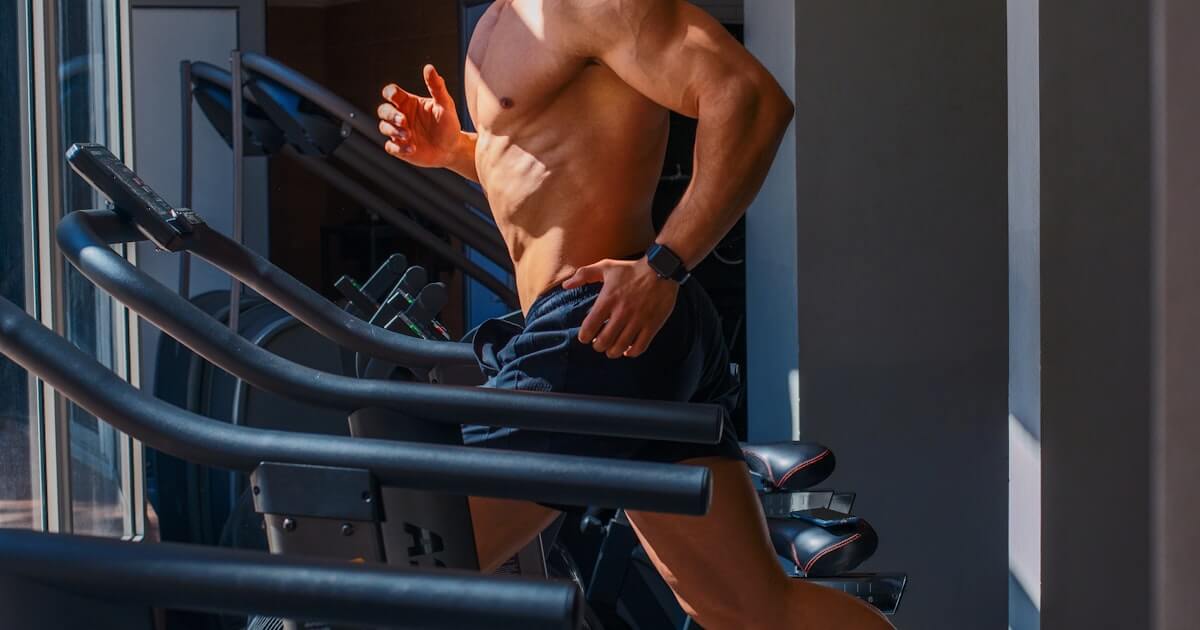
Treadmill running usually feels harder than the same pace outdoors, and it's rarely a fitness problem. The two biggest culprits are the lack of airflow (so you overheat and your heart rate climbs) and the lack of changing scenery (so your brain fixates on every ache). Your biomechanics barely change. Your perceived effort does.
I coach a lot of runners who panic in winter when their easy pace suddenly feels like a tempo grind indoors. They think they've lost fitness overnight. They haven't. The treadmill just changes the inputs your brain uses to judge effort. Once you understand what's actually happening, you can stop fighting the machine and start working with it.
Is it real, or is it in your head?
Both, honestly. And "in your head" isn't an insult here, perceived exertion is a real, measurable thing that drives how hard a run feels.
A study on running to exhaustion presented at the 2024 International Society of Biomechanics in Sports conference found that runners fatigued significantly earlier on a treadmill, roughly 9 minutes sooner, than running the same effort overground. The interesting part: their biomechanics were nearly identical in both conditions. The researchers pinned the earlier fatigue mostly on environmental factors, especially the absence of airflow to shed heat and sweat.
That lines up with lab work on effort perception. Research from Stockholm University found that ratings of perceived exertion (RPE) ran about 2 units lower outdoors than indoors at matched speeds and physiological measures. Same body, same output, but the indoor environment felt harder.
So no, you're not weak. The machine is stacking the deck.
The five reasons a treadmill feels harder
1. No airflow, so you cook
This is the big one. Outside, even a light breeze pulls heat off your skin through convection. On a treadmill you're running in place in still air, so heat builds up fast, you sweat more, and your heart rate drifts upward to pump blood to the skin for cooling. Higher heart rate at the same pace reads as "this is hard."
The fix is almost stupidly simple: point a fan at yourself. A decent floor fan can drop your perceived effort more than any mental trick. Gyms with good air circulation feel noticeably easier than a stuffy spare bedroom.
2. No scenery, so your brain turns inward
Outdoors, your brain is busy. Changing scenery, cracks in the pavement, other people, a sense of actually going somewhere, all of it soaks up attention. That distraction masks fatigue signals. On a treadmill you're staring at a wall or a console, and with nothing external to process, your brain amplifies every internal signal: heavy legs, warm skin, ticking clock.
This is why the last 10 minutes of a treadmill run can feel longer than the first 30. There's a whole guide on making treadmill time pass faster, but the core idea is to give your brain something to lock onto besides the misery.
3. Fixed belt speed removes your natural pacing
Outside, you unconsciously speed up and slow down constantly, dipping for a hill, easing off when you're tired, surging when you feel good. That micro-variation gives your muscles tiny recovery windows. A treadmill holds you at one exact speed with zero negotiation. Locking your body to a rigid pace for 30 straight minutes is more taxing than the naturally undulating effort you'd produce on the road.
4. Your gait shifts, just not as much as people claim
You've probably heard that the belt "pulls your legs through" so you do less work. The evidence says the effect is small. A 2020 systematic review and meta-analysis in Sports Medicine (Van Hooren et al., 33 studies, 494 runners) concluded that treadmill and overground running biomechanics are largely comparable. There were minor differences in sagittal-plane angles at footstrike, but the authors judged most of them too small to matter for everyday runners.
Translation: the treadmill isn't secretly making you a worse runner. Small gait tweaks exist, but they don't explain why the run feels 20% harder. The heat and the boredom do most of that.
5. The 1% incline habit
To offset the missing air resistance, many runners set a 1% incline, which is reasonable at faster paces. But at easy jogging speeds, air resistance is negligible, so a 1% (or steeper) incline just quietly adds work. If your "flat" treadmill run feels brutal, check that you didn't leave the incline cranked from your last walking session.
Treadmill vs outdoor: what actually changes
| Factor | Outdoors | Treadmill | Effect on perceived effort |
|---|---|---|---|
| Airflow / cooling | Natural breeze | Still air unless you add a fan | Big increase indoors |
| Mental stimulation | Constant, changing | Monotonous | Big increase indoors |
| Pace control | Self-adjusting | Fixed, rigid | Moderate increase indoors |
| Biomechanics | Baseline | Nearly identical | Minimal difference |
| Joint impact | Harder surfaces | Softer, cushioned belt | Slightly easier indoors |
The honest summary: the treadmill is usually easier on your joints and harder on your head.
How to make treadmill running feel easier
Add a fan. Non-negotiable if you overheat. This single change fixes the number one driver of treadmill fatigue.
Judge effort, not pace. Stop obsessing over minutes per mile. On a treadmill, run by feel or heart rate. If an outdoor 9:00 pace feels like a 9:40 indoors, run the 9:40 and let it go, the effort is what builds fitness.
Give your ears a job. This is the one that changed treadmill running for me and most of my athletes. Since your brain is starved for input, feed it rhythm. Music locked to a steady beat gives your feet a target to follow, and your stride synchronizes to the tempo automatically, a reflex called auditory-motor entrainment. Research in the Journal of Sports Sciences found that matching stride rate to musical tempo can lower perceived exertion by up to 12% and improve running economy.
The catch is that a normal playlist wanders all over the place, one song at 150 BPM, the next at 174, and your rhythm falls apart. That's exactly the problem GagaRun solves: you set a target cadence, and it only plays songs from your own library that match that BPM, so the beat holds steady for the entire run. On a monotonous treadmill, a locked 160 BPM playlist turns "staring at a wall" into "riding a beat," which is a much easier way to spend 30 minutes. If you want a starting point, our treadmill jogging BPM guide breaks down tempos by pace.
Vary the session. Straight steady-state is the most boring format there is. Intervals, incline blocks, or a 12-3-30 walk chop the time into chunks your brain can handle.
Frequently asked questions
Why does the treadmill feel harder even though the surface is softer?
Because "harder" here means perceived effort, not impact. The cushioned belt is genuinely easier on your joints. What makes the run feel tough is the lack of cooling airflow and the mental monotony, both of which push your perceived exertion up even when your body is doing the same or less mechanical work.
Should I set my treadmill to 1% incline?
At faster paces (roughly 7:30 per mile and quicker) a 1% incline reasonably compensates for the missing air resistance. At easy jogging or walking speeds, air resistance is tiny, so 1% mostly just adds effort. For most easy runs, flat is fine, just make sure the incline didn't get left up by accident.
Will treadmill running make me a worse outdoor runner?
No. The 2020 Sports Medicine meta-analysis found treadmill and overground biomechanics are largely comparable, so your form carries over. The main thing to recalibrate is pace: your treadmill pace may feel harder, so train by effort and you'll transition outdoors just fine.
How do I stop getting so bored on the treadmill?
Give your brain external input. Beat-matched music is the most effective option because it also stabilizes your cadence, but intervals, incline changes, and watching something all help. The goal is to pull your attention away from internal fatigue signals, which is what the changing outdoor environment does for you automatically.





