Treadmill Jogging BPM Guide: Easy Run Music By Speed
Alex Chen, Certified Running Coach
2026年7月3日
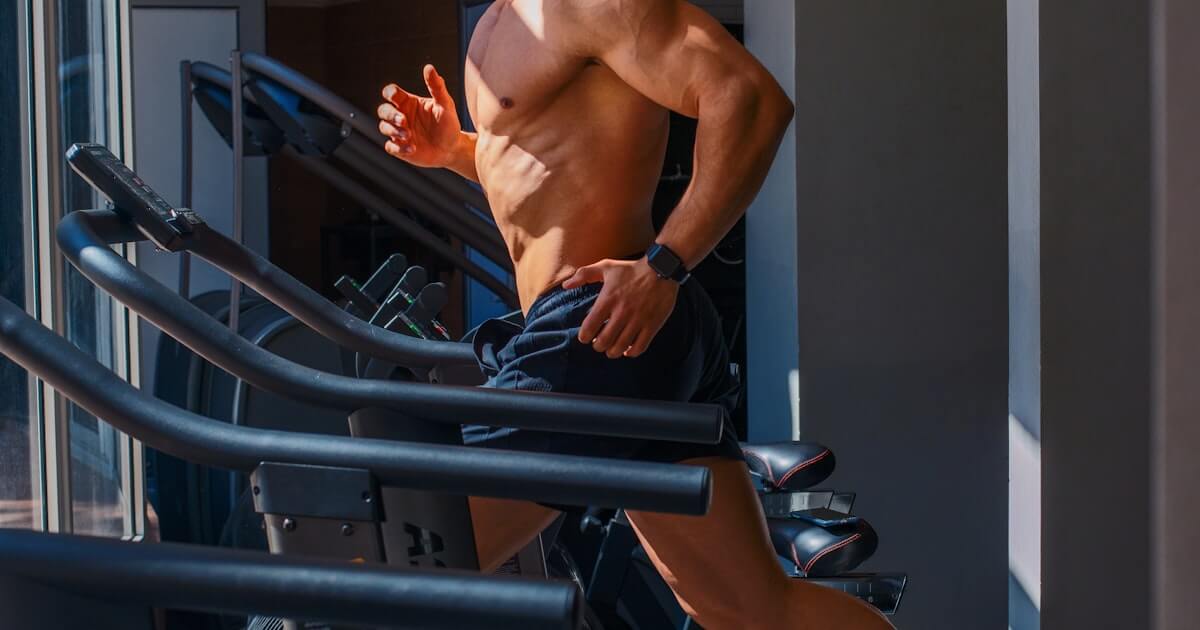
TL;DR: An easy treadmill jog for most recreational runners sits at 5.0–6.0 mph (8.0–9.6 km/h) with a cadence of 150–165 steps per minute (SPM). Lock your playlist to 150–165 BPM (one footfall per beat), bump your natural cadence by 5% if you tend to overstride on the belt, and run at 0% incline unless you're simulating hills. The belt pulls your foot back — music is the cheapest fix for the indoor cadence drop.
Why treadmill jogging feels harder than it should
You set the belt to your usual easy pace. Heart rate climbs faster than outside. Legs feel heavy by mile two. You blame deconditioning.
Wait — the problem might not be fitness. It might be rhythm.
On a treadmill, the motorized belt assists your leg on the way back. Your brain compensates by reaching forward. Stride length grows. Cadence drops. A 2020 systematic review in Sports Medicine found treadmill running increases ground contact time by about 8 milliseconds and stride length by roughly 0.20 meters compared to overground running at the same speed (Van Hooren et al., 2020). You're working harder for the same dashboard number.
Random shuffle makes it worse. A 140 BPM ballad mid-run? Your steps shrink. A 175 BPM chorus? You sprint without meaning to. Forty minutes of micro-adjustments, and you're more tired than a steady outdoor jog would have been.
Treadmill speed vs. cadence for easy jogs
There is no universal conversion — height and leg length shift the numbers. But for an average-height runner (5'7" to 5'10"), these ranges hold for conversational easy pace (RPE 3–4/10):
| Treadmill Speed | km/h | Typical Easy-Run Cadence | Target Music BPM |
|---|---|---|---|
| 4.5 mph (slow jog) | 7.2 | 145–155 SPM | 145–155 BPM |
| 5.0 mph (light jog) | 8.0 | 150–160 SPM | 150–160 BPM |
| 5.5 mph (easy run) | 8.9 | 155–165 SPM | 155–165 BPM |
| 6.0 mph (steady easy) | 9.6 | 160–170 SPM | 160–170 BPM |
| 6.5 mph (upper easy) | 10.5 | 165–175 SPM | 165–175 BPM |
Shorter runners often hit the high end of each range at lower speeds. Taller runners sit at the low end. If you want a personalized baseline, see our cadence by height chart or the speed-to-SPM conversion guide.
The half-time trick: Can't find enough songs at 160 BPM? Use 80 BPM tracks and step every other beat. Same cadence, half the catalog.
The 1% incline rule — when it applies (and when it doesn't)
Every gym bro says: "Always run at 1% to mimic outside."
The advice comes from Jones & Doust (1996, Journal of Sports Sciences), who showed a 1% treadmill grade offset the lack of air resistance at paces from roughly 5:45 to 10:00 per mile. Fair enough for moderate efforts.
For easy jogs, the math gets murkier. Tao et al. (2019) compared overground, 0%, and 1% treadmill running with in-shoe pressure sensors in Division I runners. Cadence was 3.5 SPM higher on the treadmill than outside — but there was no significant difference between 0% and 1% incline for cadence, stance time, or swing time.
Translation for your Tuesday easy run:
- 0% incline is fine for recovery and base-building jogs.
- 1% helps if you're trying to match the energy cost of a moderate outdoor run at 6:00–8:00/mile pace — not because it fixes your stride.
- If the treadmill already feels hot and hard, adding incline often makes RPE spike without improving form. Bump speed slightly instead, or fix cadence with music.
How to build a locked easy-jog playlist
1. Find your baseline cadence
Hop on at 5.0 mph, 0% incline. Count one foot for 30 seconds, multiply by 2. That's your SPM. Most recreational joggers land between 150 and 165.
2. Add 5% if you overstride indoors
If your outdoor cadence is 158 but the treadmill drops you to 150, don't chase 180. Add 5% to your treadmill baseline: 150 × 1.05 = 158 BPM. That shortens stride without spiking heart rate. Same logic as our cadence increase guide.
3. Lock the entire session
Easy jogs should feel hypnotic, not chaotic.
- Warm-up (5 min): 10–15 BPM below target (145 BPM music if main set is 160).
- Main set (20–40 min): Fixed BPM ±3%.
- Cooldown (5 min): Drop 15–20 BPM.
Bood et al. (2013, PLOS ONE) showed runners unconsciously sync stride rate when music BPM sits within 2–3% of their preferred cadence. Outside that window, you're fighting the beat.
4. Stop skipping tracks mid-run
Every skip breaks auditory-motor entrainment. Your nervous system has to re-lock to a new tempo. On a treadmill with no scenery, that reset costs more willpower than you'd think.
GagaRun filters your existing Apple Music or Spotify library to your target BPM — say, 158 for a 5.5 mph easy jog — so the whole session stays in one rhythmic lane. You keep songs you actually like; the beat gets normalized. Same idea as making treadmill time pass faster, but tuned for running, not walking.

Common treadmill jogging mistakes
Holding the rails. Heart rate reads 10–15 bpm lower than your legs are actually working. Drop speed 0.5 mph and let your cadence music do the pacing.
Chasing 180 BPM because Instagram said so. 180 SPM is an elite-race average, not a beginner mandate. For easy jogs, 150–165 is normal and healthy. Forcing 180 indoors spikes HR and wrecks form.
Using the same playlist for walking and jogging. A 115 BPM incline walk playlist will destroy your jog turnover. Easy runs need 140–170 BPM depending on speed.
Ignoring heat. Treadmills trap metabolic heat. If RPE feels one zone high at your usual pace, cadence lock at a slightly lower speed beats pushing through. Your Zone 2 playlist strategy applies here too.
Sample 30-minute easy jog session
- 0:00–5:00 — 4.5 mph, 0%, 145 BPM music. Let HR climb gradually.
- 5:00–25:00 — 5.5 mph, 0%, 158 BPM music. RPE 3–4. Full sentences, no gasping.
- 25:00–30:00 — 4.0 mph walk, 120 BPM music. Same protocol as a cooldown walk.
Frequently asked questions
What BPM should I use for a 5.0 mph treadmill jog?
Most runners at 5.0 mph (8.0 km/h) naturally fall between 150–160 SPM. Start with 155 BPM music, count 15 seconds of steps, and adjust ±5 BPM until footfalls land cleanly on the beat.
Is treadmill jogging bad for your knees?
Not inherently. Overstriding on the belt increases impact loading. A 5% cadence bump with BPM-matched music reduces stride length and knee stress — the same mechanism described in our overstriding fix guide.
Should I use a metronome instead of music?
Metronomes work. Research shows they improve cadence consistency. Most people quit them after a week because beeps get annoying. Music you already love, locked to the right BPM, keeps the same entrainment effect with better compliance — see metronome vs. music for the full comparison.
Why does my cadence drop on the treadmill after 15 minutes?
Fatigue shortens hip flexor drive and lengthens ground contact. A fixed BPM playlist prevents the slow drift toward overstriding. If drops persist, read why cadence falls when tired.