Walking To Music For Anxiety: The BPM Guide That Actually Works
Sarah Jenkins, Fitness Physiologist
2026年4月7日

Walking at a moderate pace for 20-30 minutes significantly reduces anxiety symptoms. Pair that walk with tempo-matched music between 100 and 120 BPM and the effect compounds. A 2024 meta-analysis of 75 randomized controlled trials (n=8,636) published in JMIR Public Health and Surveillance found walking produced a moderate reduction in anxiety (SMD -0.446, P<.001) compared to inactive controls. Medium-tempo music, separately, lowers perceived exertion by roughly 10% and raises positive affect during walking. Most people treat these as two unrelated facts. They are not.
What is auditory-motor entrainment?
Auditory-motor entrainment is your brain's automatic tendency to synchronize physical movement with an external beat. When you walk to music, your motor cortex locks your footfalls to the downbeat without conscious effort. A 2024 systematic review in Brain Sciences mapped the neural substrates involved: the supplementary motor area, premotor cortex, basal ganglia, and cerebellum all fire together to keep your stride in sync with the rhythm. This is not just a neat party trick. It stabilizes gait, reduces stride variability, and frees up the cognitive bandwidth that would otherwise spiral into anxious thought loops.
Why the combination works: three overlapping mechanisms
Most articles tell you "exercise is good for anxiety" and leave it there. That is not specific enough to act on. Here is what actually happens when you walk to beat-matched music, broken into three distinct pathways.
1. The dopamine double-hit
Exercise triggers dopamine release in the striatum via a BDNF-dependent pathway, according to a 2022 study in The Journal of Neuroscience (Bastioli et al.). Music independently drives dopamine release in the nucleus accumbens, the brain's reward center, with levels up to 9% higher during peak musical pleasure as measured by PET scans at McGill University. Walk to music you enjoy and both pathways fire at once. That is a pharmacological-grade mood shift from a 20-minute walk.
2. Attentional dissociation
Anxious walking often turns inward: you fixate on chest tightness, catastrophize, or replay stressful conversations. Music pulls attention outward. A 2016 study in the International Journal of Exercise Science found that medium-tempo music during walking increased dissociative (externally focused) attention from 39% to 48% compared to walking in silence. That 9-point shift means less mental real estate for rumination.
3. Cortical rhythm regulation
Rhythmic stimuli entrain not just your legs but your brain's oscillatory patterns. Alpha and beta wave activity shifts during synchronized movement, settling into a calmer baseline state. Think of it as the same mechanism behind slow breathing for panic, except you are also moving and burning calories instead of sitting on a couch trying to count to four.
The optimal BPM range for anxiety-reducing walks
Not all tempos produce the same result. Faster music tends to increase arousal, which can backfire if you are already wired. Slower music may feel sluggish and fail to produce the entrainment lock. Research consistently points to a sweet spot.
| Walk type | Target BPM | Walking cadence (SPM) | Best for |
|---|---|---|---|
| Gentle stress relief | 100-110 BPM | 100-110 SPM | High-anxiety days, recovery walks |
| Moderate mood boost | 110-120 BPM | 110-120 SPM | Daily anxiety management |
| Brisk energizing walk | 120-130 BPM | 120-130 SPM | Mild anxiety, fitness building |
A 2024 study in the International Journal of Exercise Science (Brown et al.) found that music between 106 and 130 BPM produced optimal entrainment during moderate-intensity walking, with music at the lower end of that range generating the highest positive affect scores (effect size η²=.25, P=.038). If your main goal is anxiety reduction rather than cardio fitness, lean toward the 100-115 BPM zone.
Where you walk matters as much as your playlist
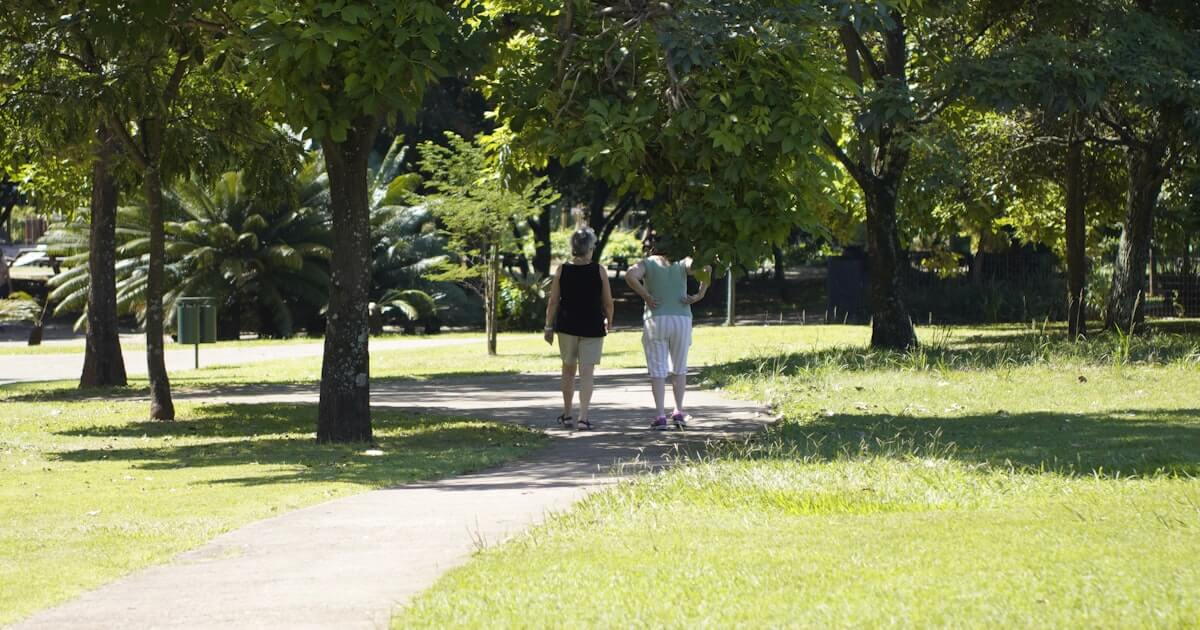
A 2025 meta-analysis compared nature walks to urban walks and the gap was hard to ignore. Walking in natural settings reduced anxiety with a large effect size (SMD=1.30, P<.001). Urban walking slightly increased it (SMD=-0.65, P<.001). Green space plus rhythmic music plus moderate movement — if a pharmaceutical company could bottle that stack, they would charge you $200 a month for it.
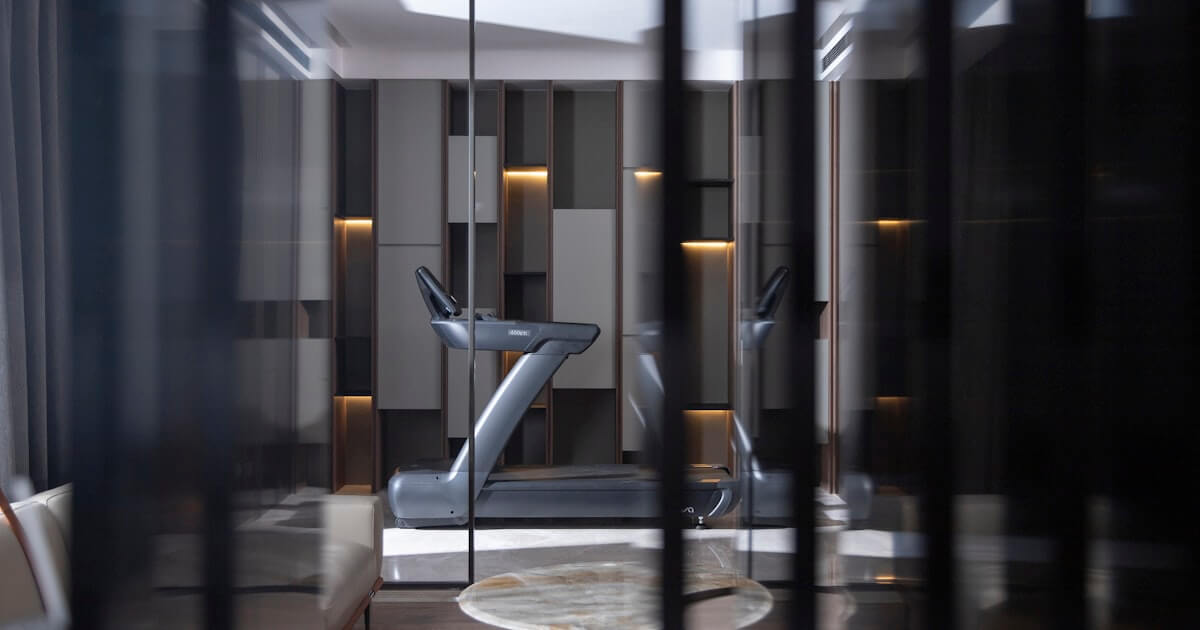
If outdoor access is limited, treadmill walking still works. The entrainment effect does not care whether you are on dirt or a belt. And if treadmill anxiety is part of the problem, headphones and a BPM-matched playlist create an auditory bubble that blocks out the gym's sensory chaos.
How to build your anxiety-relief walking protocol
- Find your resting cadence. Walk at a comfortable pace for two minutes. Count your steps for 30 seconds and multiply by two. Most people land between 95 and 115 SPM.
- Set your target BPM. Match the music BPM to your natural cadence or raise it by no more than 5%. If you count 105 SPM, start with 105-110 BPM tracks.
- Filter your library by tempo. Manually checking song BPMs is tedious and usually inaccurate. GagaRun scans your existing Apple Music or Spotify library and filters songs to your exact target BPM in real time — no playlist curation needed. You walk, it plays only what matches.
- Walk for 20-30 minutes. The 2024 meta-analysis found anxiety reductions across durations, but most individual trials clustered around 20 to 40 minutes. You do not need an hour.
- Prioritize green routes. Parks, trails, tree-lined streets. Even a five-minute detour through grass instead of pavement shifts the neurological response.
- Skip the podcast on high-anxiety days. Podcasts do not provide rhythmic structure. On days when anxiety is spiking, the beat-lock mechanism matters more than distraction alone. Save the podcast episodes for calmer days.
If you are also interested in fat loss, this protocol overlaps neatly with LISS cardio. Same low-intensity zone, same pace, same BPM range. You get the metabolic benefit stacked on top of the mood benefit without the cortisol spike of high-intensity work.
Frequently asked questions
Does it matter if I choose songs I like or songs at the right BPM?
Both matter, but tempo takes priority for anxiety relief. A study published in PNAS (Ferreri et al., 2019) demonstrated that dopamine causally mediates musical pleasure — so self-selected music amplifies the reward signal. The ideal scenario: songs you genuinely enjoy that also happen to match your target cadence. GagaRun handles this by filtering from your own library rather than prescribing generic "workout playlists."
Can walking to music replace medication for anxiety?
No. Walking and music can meaningfully reduce anxiety symptoms, but they are not substitutes for professional treatment. The 2024 meta-analysis showed walking's effect was comparable to other active interventions, which is genuinely impressive for something free and accessible. But if you have a clinical anxiety disorder, work with a healthcare provider. This is one tool, not the entire toolbox.
What about the Hot Girl Walk trend — is that good for anxiety?
The Hot Girl Walk typically aims for a brisk, confidence-building pace around 115-120 BPM. That lands squarely in the moderate mood-boost range. If you already enjoy the format, you are doing anxiety-reducing walking without knowing it. Adding BPM-matched music just makes the entrainment effect more consistent.