Treadmill 1% Incline Rule: Pace, Cadence & BPM Guide
Alex Chen, Certified Running Coach
August 6, 2026
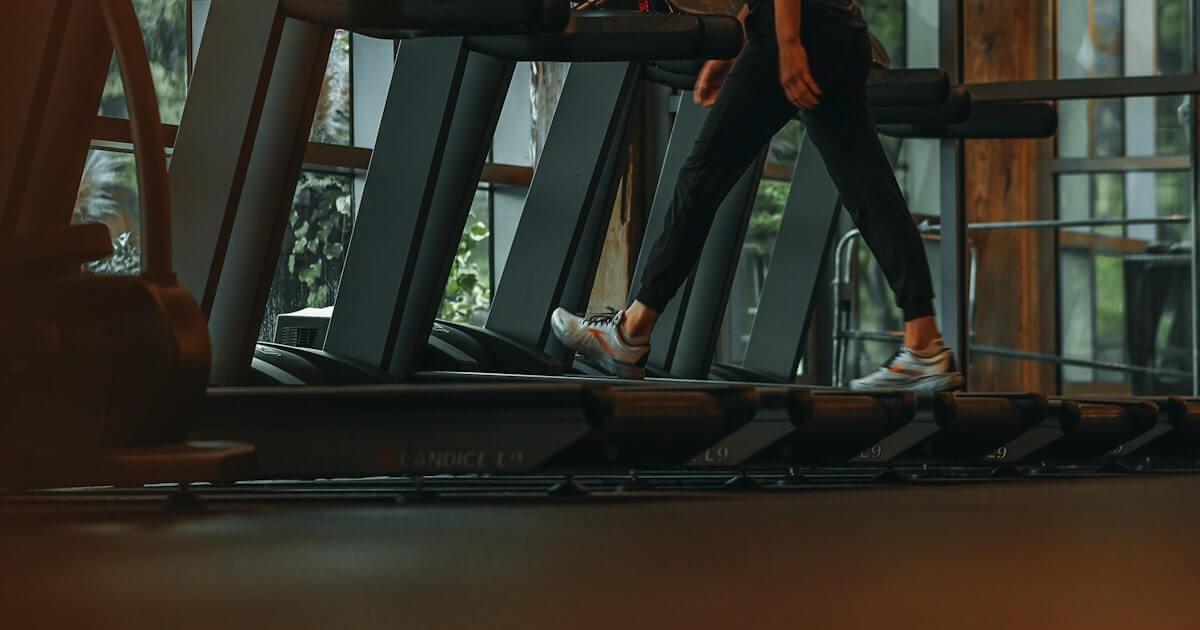
Set your treadmill to a 1% incline for easy-to-moderate runs between roughly 5:22 and 9:11 per mile (3:20–5:42/km) to match outdoor running effort. At that grade, pick music BPM equal to your target cadence (160 SPM → 160 BPM, one footfall per beat). Slow jogs below 8 km/h can stay at 0%; hard intervals above threshold often need 1.5–2% or outdoor work.
Every treadmill runner eventually hears the same advice: "Just add 1%." But when does it actually matter? What pace does it apply to? And once the incline is set, how do you keep your steps from drifting off the beat? This guide answers all three with numbers you can use today.
What the 1% incline rule actually means
The 1% treadmill incline rule is the practice of raising the belt grade by one percent to compensate for the lack of air resistance indoors. On a flat treadmill, the moving belt does part of the work of pulling you forward, and you do not push through still air. Both factors make the same displayed speed feel slightly easier than running that pace outside.
Andrew Jones and Jonathan Doust tested this in Journal of Sports Sciences (1996). Nine trained male runners ran six speeds on a treadmill at 0%, 1%, 2%, and 3% grades, plus a level outdoor road run. Oxygen cost matched best at 1% grade across speeds from 2.92 to 5.0 m/s — about 9:11/mi to 5:22/mi. That single study is still the source of the rule you see on every running forum.
When 1% works — and when it does not
The 1% figure is a solid starting point, not a universal law.
Use 0% when: You are walking or jogging very slowly (under ~8 km/h / 5 mph). At those speeds, air resistance is negligible and a flat belt is fine.
Use 1% when: You are doing normal easy runs, base mileage, or steady aerobic work in the 5:45–9:00/mi range. This is where the Jones & Doust data hold up best.
Use 1.5–2% when: You are running tempo or threshold pace. Air resistance scales with the square of speed, so faster efforts need a steeper grade to match outdoor cost.
Skip the math for hard intervals: If you are doing 400 m repeats at 5K race pace, either accept that the treadmill understates outdoor effort or take the workout outside. Precision matters less when the session is short and maximal.
A 2024 study in Current Issues in Sport Science added an important caveat: on one specific treadmill model, a 1% grade actually increased heart rate and oxygen uptake versus outdoor track running at the same speed. Belt stiffness, motor power, and calibration vary between machines. Treat 1% as your default, then adjust by feel — if 1% feels harder than your usual outdoor easy run, drop to 0.5%.
| Your goal pace | Suggested incline | Notes |
|---|---|---|
| Walk / very easy (< 8 km/h) | 0% | Air resistance negligible |
| Easy / base run (8–12 km/h) | 1% | Jones & Doust validated range |
| Tempo / threshold (12–14 km/h) | 1.5–2% | Wind cost rises with speed |
| Hard intervals | 2%+ or go outside | Short efforts, feel-based |
Pace, cadence, and BPM at 1% incline
Adding 1% does not change how you match music. Cadence (steps per minute) and music BPM still follow the same 1:1 rule on the treadmill: 160 SPM = 160 BPM, one footfall per beat.
The incline does shift your mechanics slightly. Most runners take shorter, quicker steps uphill. At 1%, expect cadence to creep up 2–5 SPM versus the same speed at 0%. That is usually a good thing — shorter steps land closer to your center of mass.
Here is a practical reference for average-height runners (5'7"–5'10") at 1% incline. Individual cadence varies with height and stride length; use our full treadmill speed to cadence chart for deeper detail.
| Treadmill speed | Pace (min/mi) | Typical cadence at 1% | Match music at |
|---|---|---|---|
| 5.0 mph / 8.0 km/h | 12:00/mi | 152–162 SPM | 155–160 BPM |
| 6.0 mph / 9.6 km/h | 10:00/mi | 160–170 SPM | 165 BPM |
| 7.0 mph / 11.2 km/h | 8:34/mi | 165–175 SPM | 170 BPM |
| 8.0 mph / 12.8 km/h | 7:30/mi | 170–180 SPM | 175 BPM |
Half-beat trick: Cannot find enough songs at 165 BPM? Use 82–83 BPM tracks and step on every other beat. Same cadence, wider playlist. This works especially well for incline walking where cadence sits around 110 SPM — pair with 110 BPM or 55 BPM half-time.
The cadence problem nobody talks about on treadmills
Even with the incline dialed in, most runners still lose rhythm mid-run. Treadmill running tends to produce longer ground contact and a slightly lower cadence than outdoor running at the same speed — your brain reaches forward because the belt pulls your foot back.
When cadence drops, stride length creeps up. Impact forces climb. That is when shin splints and knee irritation show up, usually around minute 20 when fatigue hits.
The fix is the same indoors or out: lock your step rate to an external rhythm before you get tired. A metronome works. Music works better because you will actually use it. The catch is curating songs at exactly 168 BPM by hand — most "workout playlists" jump from 130 to 180 and wreck your pacing.
GagaRun reads your live cadence from Apple Watch or phone sensors and filters your existing Apple Music or Spotify library to songs that match. Set a 165 SPM target, run at 1% incline, and the beat stays locked even when your legs start to drag. No skipping tracks mid-stride.
For a broader comparison of indoor vs outdoor effort (calories, stride, when to pick each), see treadmill vs outdoor running.
How to set up your next treadmill run
- Warm up at 0% for 5 minutes at an easy walk or jog.
- Raise to 1% before your main set (unless you are walking under 5 mph).
- Check cadence at minute 10 — count steps for 30 seconds and multiply by 2, or use a watch.
- Pick BPM matching your target SPM ±3%.
- Hold the rails off the deck — gripping side rails drops calorie burn and throws off your gait.
If you are training for an outdoor race, still get outside every 1–2 weeks. The 1% rule matches metabolic cost, but it does not replicate uneven ground, turns, or the hamstring pull-through demand of propelling yourself forward on asphalt.
Frequently asked questions
Should I always use 1% incline on the treadmill?
No. Use 1% for easy-to-moderate running paces where air resistance matters. Walking, very slow jogs, and recovery days can stay at 0%. Hard intervals are often better outdoors or at a higher grade by feel.
Does 1% incline change my running cadence?
Slightly. Most runners increase cadence by 2–5 SPM at 1% versus 0% at the same speed, because the grade encourages shorter steps. Match your music BPM to your actual cadence, not the speed on the console alone.
What BPM should I use on the treadmill at 6.0 mph?
For an average-height runner at 6.0 mph (10:00/mi) with 1% incline, aim for 160–170 BPM music with one step per beat. If your natural cadence is lower, use half-time tracks (80–85 BPM, step every other beat).
Is treadmill running bad for my knees?
Not inherently. The belt is actually softer than concrete. Problems usually come from overstriding at low cadence. Raising step rate by 5–10% above your baseline reduces knee loading — see our guide on increasing cadence without running faster.
Why does my treadmill feel easier than running outside even at 1%?
Machine calibration varies. Some belts run fast; others feel sluggish. Heart rate is your best cross-check — if easy runs at 1% show a heart rate 10+ bpm below your outdoor easy pace, bump incline to 1.5% or accept that your treadmill reads easy.