Rowing Stroke Rate To BPM Conversion Chart: Every SPM, Exact Tempo
Mia Taylor, Music & Workout Curator
2026年7月22日
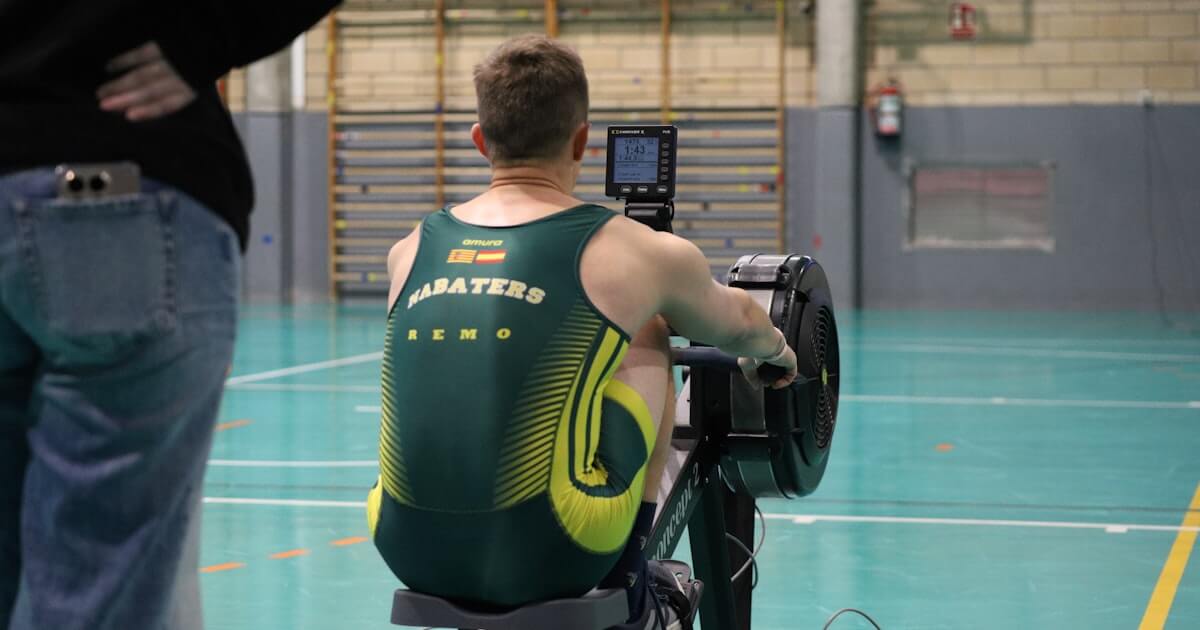
Rowing stroke rate (SPM on your Concept2 monitor) converts to music BPM by multiplying: BPM = 4 × SPM if you take one stroke per 4/4 measure, or BPM = 6 × SPM if you want Concept2's recommended 1:2 drive-to-recovery timing baked into the beat. A 24 SPM steady row matches a 96 BPM track (4 beats per stroke) or a 144 BPM track (6 beats per stroke). Never try to row "one stroke per beat"—no human rows at 96 strokes per minute.
The number in the top-right corner of your PM5 is strokes per minute. Music is measured in beats per minute. They only line up after you decide how many beats each stroke gets, and that decision is where most rowing playlists fall apart.
Why rowing sync is different from running
A running step is instant—one footstrike, one beat. A rowing stroke is a cycle: catch, drive, finish, recovery. Concept2's own monitor guidance recommends spending one beat of effort on the drive for every two beats of patience on the recovery. A stroke is long. It has to span several musical beats.
Two mappings work in real 4/4 music:
- 4 beats per stroke (BPM = 4 × SPM). Catch on beat 1, drive through it, recover across beats 2–4. One stroke per measure. Easiest to feel, and it lands most stroke rates in the usable 72–144 BPM range.
- 6 beats per stroke (BPM = 6 × SPM). Drive on beats 1–2, recover on beats 3–6. This matches the official 1:2 drive-to-recovery ratio exactly, and it pushes steady-state rates into the high-energy 120–170 BPM zone where most workout music lives.
The complete SPM-to-BPM chart
Concept2's stroke rate guidance frames the zones: 18–22 SPM for technique and low-rate strength work, 24–28 SPM for steady-state endurance, 30–36 SPM for intervals and race pace. Here is every rate with both tempo options.
| Stroke rate (SPM) | Zone (per Concept2 guidance) | 4 beats/stroke BPM | 6 beats/stroke BPM |
|---|---|---|---|
| 18 | Technique / low-rate power | 72 | 108 |
| 19 | Technique / low-rate power | 76 | 114 |
| 20 | Technique / low-rate power | 80 | 120 |
| 21 | Technique / low-rate power | 84 | 126 |
| 22 | Technique / low-rate power | 88 | 132 |
| 23 | Steady state | 92 | 138 |
| 24 | Steady state | 96 | 144 |
| 25 | Steady state | 100 | 150 |
| 26 | Steady state | 104 | 156 |
| 27 | Steady state | 108 | 162 |
| 28 | Steady state | 112 | 168 |
| 29 | Threshold | 116 | 174 |
| 30 | Intervals / racing | 120 | 180 |
| 31 | Intervals / racing | 124 | 186 |
| 32 | Intervals / racing | 128 | 192 |
| 33 | Intervals / racing | 132 | — use 4 beats |
| 34 | Intervals / racing | 136 | — use 4 beats |
| 35 | Intervals / racing | 140 | — use 4 beats |
| 36 | Intervals / racing | 144 | — use 4 beats |
Math check: the two columns are just SPM × 4 and SPM × 6. Reverse it anytime: a 132 BPM playlist at 6 beats per stroke = 132 ÷ 6 = 22 SPM. The same playlist at 4 beats per stroke = 132 ÷ 4 = 33 SPM—one song, two completely different workouts, which is why you decide the beat count before you sit down.
Which column should you use? Below 26 SPM, the 6-beat column keeps you in energetic music territory (120–156 BPM) and enforces the patient recovery that low rates are supposed to teach. Above 30 SPM, 6 beats per stroke demands 180+ BPM tracks, which get scarce—switch to the 4-beat column. Between 26 and 30, pick whichever tempo range your library covers better.
Accuracy note: your monitor's SPM is measured from flywheel data and updates stroke by stroke; Concept2 notes real workouts drift within about two strokes of target. Glance at the PM5 for the first minute to confirm you're holding the rate, then trust the beat.
How to row on the beat
- Pick your target SPM from the chart and set your music (or GagaRun) to the matching BPM.
- Catch on beat 1. The strongest drum hit of the measure is your leg drive.
- Count the recovery. At 4 beats per stroke: drive on 1, recover through 2-3-4. At 6: drive on 1-2, recover through 3-4-5-6. If the next downbeat arrives before your hands pass your knees, you're rushing the slide.
- Confirm against the monitor once, then stop staring at it. That's the point.
Synchronizing effort to the bar of the music does more than feel good: rowing with the beat stops the classic fatigue pattern of rushing the recovery as you tire, which quietly wrecks your split times. For zone-by-zone playlist construction, our rowing machine music guide goes deeper; if you also train on the SkiErg, the pull-rate BPM guide uses the same logic at higher rates.
Set it once, stop scrolling
The chart only works if every song holds the tempo you picked. One 100 BPM ballad shuffled into your 144 BPM steady-state block and your stroke rate sags with it. GagaRun filters your own Spotify or Apple Music library to the exact BPM you enter—type 144, row at 24 SPM with 6 beats per stroke, and every track that plays will carry the same measure-long stroke. Same trick as our top-performing StairMaster level-to-SPM chart: find the number once, let the music hold it.
Frequently Asked Questions
What stroke rate should a beginner row at? Start at 18–22 SPM. Concept2 recommends low rates for learning stroke sequence and rhythm, since the slower flywheel makes each drive feel more loaded and gives you time to sequence legs-body-arms correctly. With music: 108–132 BPM at 6 beats per stroke.
Why can't I just match one stroke to one beat? Because usable music starts around 70 BPM, and 70 strokes per minute is roughly double an Olympic sprint finish. Rowing needs multiple beats per stroke; the only question is 4 or 6.
Is a higher stroke rate always a harder workout? No. Concept2 is explicit that intensity comes from power per drive, not rate alone. A 20 SPM row with hard drives can be tougher than a soft 28 SPM row. The beat controls your timing; the flywheel effort is still on you.
Do these numbers work on water or on other erg brands? The math (BPM = beats-per-stroke × SPM) is universal. Zone boundaries vary by boat, brand, and drag setting, so anchor to your own monitor's SPM readout rather than assuming your rate.