Recumbent Bike Music BPM: Match RPM To The Beat
Sarah Jenkins, Fitness & Lifestyle Blogger
August 1, 2026
TL;DR: Recumbent bike riders pedal at 55–95 RPM, far slower than spin class cadence. Match music using the 2:1 half-time rule: one pedal revolution every two beats. Zone 2 steady rides at 70–85 RPM pair with 140–170 BPM tracks. Heavy-resistance climbs at 55–65 RPM work with 110–130 BPM. Sprint intervals at 90–100 RPM sync cleanly at 90–100 BPM (1:1).
Why recumbent bikes need a different BPM playbook
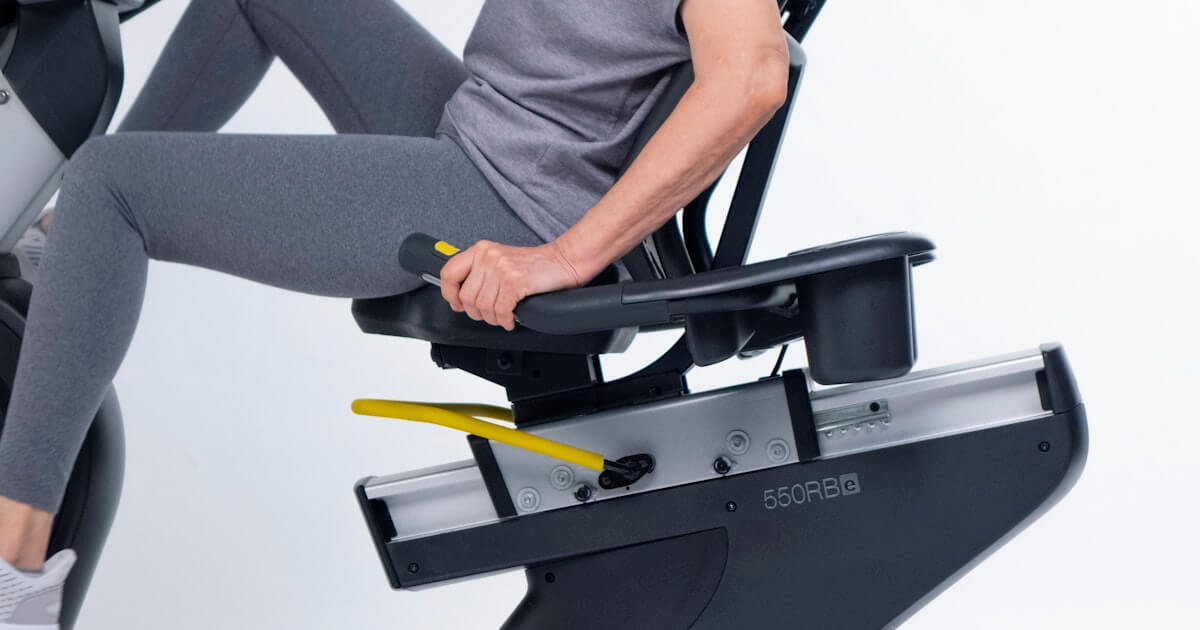
A recumbent bike puts you in a laid-back seat with pedals out front. Your legs push forward instead of down, your back stays supported, and your natural cadence sits lower than on an upright spin bike.
That last part trips people up. Most upright spin sessions target 80–100 RPM. Recumbent riders doing steady cardio often land at 65–80 RPM. Seniors, rehab patients, and anyone pedaling heavy resistance can drop to 55–65 RPM. If you grab the same 170 BPM playlist your spin instructor uses, your legs will either scramble to keep up or you'll ignore the beat entirely.
The fix is the same half-time trick that works on indoor cycling and elliptical machines: divide your target RPM by two, then multiply by the beats per minute. Or flip it: pick a song tempo and halve it to find your pedal rate.
| Workout phase | Target RPM | 1:1 BPM | 2:1 BPM (recommended) | Feel |
|---|---|---|---|---|
| Warm-up / cool-down | 50–65 | 50–65 | 100–130 | Easy spin; conversation pace |
| Zone 2 endurance | 70–85 | 70–85 | 140–170 | Steady breathing; sustainable 20–30 min |
| Tempo / threshold | 80–90 | 80–90 | 160–180 | Uncomfortable but holdable |
| Heavy resistance climb | 55–70 | 55–70 | 110–140 | Slow, deliberate pushes |
| HIIT sprint | 90–100+ | 90–100 | 180–200 | Short bursts; 15–30 seconds |
Two patterns worth noting:
- For everyday steady rides, 2:1 is your default. A 150 BPM pop track at half-time gives you 75 RPM without hunting for obscure slow-tempo albums.
- For sprints, switch to 1:1. Pedaling at 95 RPM to a 95 BPM track feels locked in. Doubling to 190 BPM is awkward and most libraries don't have enough usable tracks up there.
The science: why tempo matching actually works on a bike
When you pedal in sync with a beat, your brain treats the rhythm as an external pacing cue. That cue occupies mental bandwidth that would otherwise carry fatigue signals from your legs.
Costas Karageorghis at Brunel University, one of the most cited researchers on music and exercise, describes it as bandwidth competition: "Music reduces the capacity of the afferent nervous system. If you think of it as internet bandwidth, music takes up some of that capacity, leaving less bandwidth for fatigue-related signals to enter focal awareness."
The numbers back this up. A 2012 review in Sports Medicine found that synchronizing movement to music can produce ergogenic effects of 10–15% for recreational exercisers (Karageorghis & Priest, 2012). A separate cycling study found participants who pedaled in time with music required 7% less oxygen to do the same work compared to background music at an unrelated tempo (Bacon, Myers & Karageorghis, 2008).
On a recumbent bike specifically, the lower RPM range makes half-time sync even more practical. You're not fighting physics to spin at 110 RPM. You're settling into a comfortable 70–80 RPM groove, and a 140–160 BPM playlist does the math for you.
Building a 30-minute recumbent bike playlist
Here's a session structure I use for home recumbent rides:
1. Warm up for 5 minutes at 55–65 RPM. Two tracks around 120–130 BPM (half-time). Legs should feel loose, resistance low (level 1–2 on most machines). Don't rush this. Recumbent bikes feel easy at the start and punish you later if you skip the ramp-up.
2. Ride 15–20 minutes of Zone 2 at 70–85 RPM. Queue three or four tracks at 140–170 BPM (2:1). This is where BPM matching pays off most. Your legs lock into a rhythm you can hold without staring at the console. If you also do LISS cardio on a treadmill, the principle is identical: a steady external beat makes pacing automatic.
3. Add 5 minutes of intervals (optional). Alternate 45-second pushes at 85–95 RPM (170–190 BPM half-time or 85–95 BPM 1:1) with 90-second recoveries at 60 RPM (120 BPM). Let the song structure guide you: chorus = push, verse = recover.
4. Cool down for 5 minutes at 50–60 RPM. Drop to 100–120 BPM tracks. Let your heart rate drift down before you stand up. Standing too fast after a recumbent session causes lightheadedness in a lot of riders because blood pools in the legs during seated cycling.
The annoying part: scrolling through Apple Music or Spotify hunting for BPM tags mid-ride breaks your flow. GagaRun filters your existing playlists to only surface songs matching your target cadence. Set 150 BPM for a 75 RPM steady ride and it feeds you half-time-matched tracks without manual sorting.
Recumbent vs upright spin: why the BPM ranges differ
| Factor | Recumbent bike | Upright spin bike |
|---|---|---|
| Typical RPM range | 55–95 | 70–120 |
| Best music BPM (2:1) | 110–190 | 140–240 |
| Seated position | Reclined, back supported | Upright or standing |
| Knee stress at low RPM | Higher torque per stroke | Similar, but standing climbs shift load |
| Best use case | Rehab, seniors, long steady cardio | HIIT classes, climbing simulations |
Recumbent bikes trade leg speed for comfort and back support. That means your music library's sweet spot shifts down by roughly 10–20 BPM compared to a Peloton class. Don't fight it. A 130 BPM hip-hop track at half-time (65 RPM) with moderate resistance is a legitimate fat-burn session, not a lazy ride.
Knee-friendly cadence: why grinding slow hurts
If you've ever cranked resistance to max and mashed the pedals at 50 RPM to "feel the burn," your knees probably complained the next day.
At a given wattage, lower RPM means higher torque per pedal stroke. That torque loads your patellofemoral joint. Research in the Journal of Applied Biomechanics found that increasing workload at a constant cadence raised peak knee abduction moments, but increasing cadence at the same workload did not produce the same negative effect (Shen et al., 2015).
Playlist implication: if your music drags at 50 BPM, you'll unconsciously slow your legs to match. A 130 BPM track at half-time nudges you toward 65 RPM, a joint-friendlier cadence, without you watching the screen. Same logic applies to under-desk treadmill walking and reverse walking rehab sessions.
What BPM for rehab or senior recumbent sessions?
Physical therapists often prescribe recumbent bikes for knee replacement recovery, cardiac rehab, or general deconditioning. Target RPM here is low: 50–70.
| Population | Target RPM | Music BPM (2:1) | Session length |
|---|---|---|---|
| Post-surgery rehab | 50–60 | 100–120 | 10–15 min |
| Cardiac rehab | 55–70 | 110–140 | 15–20 min |
| Active seniors | 60–75 | 120–150 | 20–30 min |
| General fat loss | 70–85 | 140–170 | 25–35 min |
Keep resistance light until cadence feels natural. Music at these tempos should feel calm, not aggressive. Think acoustic, mellow pop, or instrumental tracks rather than EDM bangers.
How is recumbent bike BPM different from running BPM?
Running cadence is measured in steps per minute. Most recreational runners land between 150 and 170 SPM. Recumbent RPM counts full crank revolutions at a much lower rate. You'll use either 1:1 with slower tracks (70 BPM → 70 RPM) or 2:1 with faster ones (150 BPM → 75 RPM). The overlap zone sits around 70–90, where either activity works at a 1:1 match, but the movement patterns are completely different.
Can I use the same playlist as my spin bike?
You can, but you'll mostly use the half-time interpretation. A 160 BPM track that drives 80 RPM on an upright bike becomes 80 RPM on a recumbent at 1:1, which is already tempo/threshold territory. For easy recumbent rides, filter down to 130–150 BPM and ride at half-time (65–75 RPM).
Does music help on recumbent bikes as much as running?
Yes, especially below threshold intensity. A study in Medicine & Science in Sports & Exercise found synchronous music during cycling lowered perceived exertion and limb discomfort compared to no music, particularly at moderate intensity (Lim et al., 2014). Above roughly 75% of VO₂max, your body's own signals get loud enough to override the masking effect. Recumbent steady-state cardio lives right in the zone where music helps most.