HYROX Running BPM: The 8 Run Music Pacing Strategy
Alex Chen, Certified Running Coach
2026年5月22日

HYROX Running BPM: The 8-Run Music Pacing Strategy
Short answer: Treat each of HYROX's eight 1 km runs as a controlled aerobic segment, not a mini 5K. Target a cadence BPM roughly 5-8 beats below your standalone race cadence, hold that tempo across all eight runs, and use brick workouts in training so your legs learn the rhythm under fatigue. A 2012 PLOS ONE study found that cadence-synchronous music increased time-to-exhaustion by roughly 19% compared with no music at the same intensity.
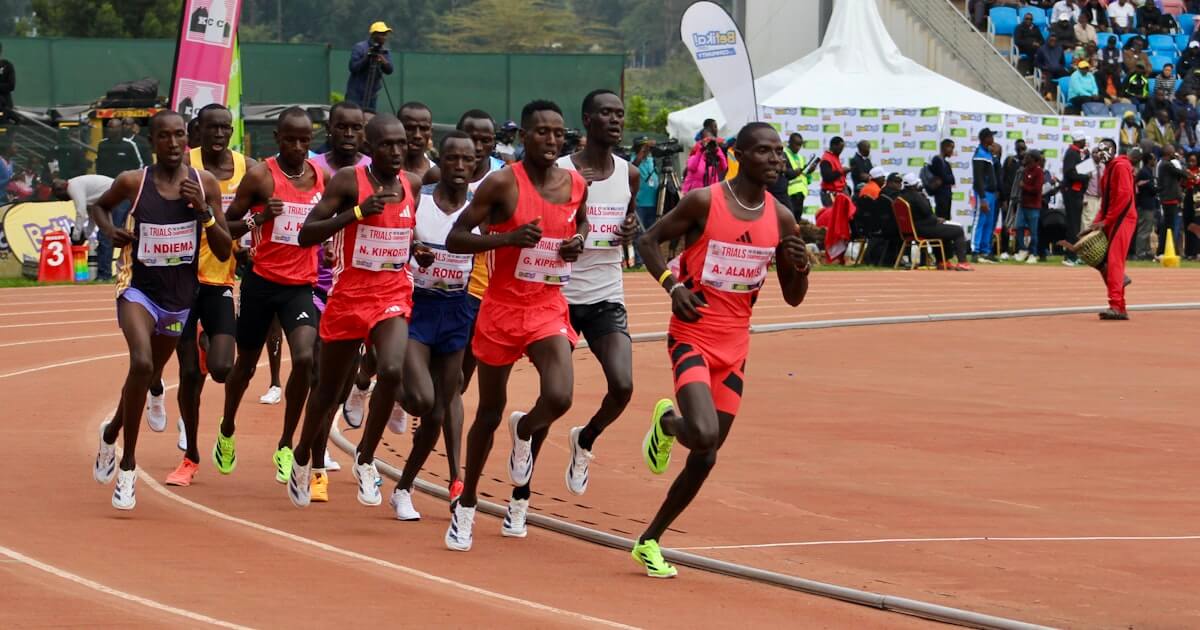
I've watched this play out dozens of times at local events. The sled push looks brutal, so athletes respect it. Then Run 5 arrives — legs from Run 1 are long gone — and they discover HYROX running is not a Saturday parkrun with extra burpees.
What makes HYROX running different
HYROX is a hybrid fitness race: eight 1 km runs, each followed by a functional station (ski erg, sled push, sled pull, burpee broad jumps, rowing, farmer's carry, sandbag lunges, wall balls). You are never running fresh. You are always running on legs that just finished a hard strength effort.
That changes the pacing math. Industry pacing guides consistently recommend running HYROX segments 15-25% slower than your standalone 5K race pace. If you can hold 4:30/km in a road 5K, your HYROX target is closer to 5:15-5:40/km — not because you lack fitness, but because glycogen, grip fatigue, and lactate from the stations compound across the race.
Hybrid fitness participation has exploded: HYROX reported 779,073 finishers across 89 events in calendar year 2025, with projections exceeding 1.2 million athletes in the 2025/26 season. More people are learning the hard way that their road-race playlist does not transfer.
The cadence mistake (and the fix)
Wait — shouldn't HYROX runners chase 180 steps per minute like the Instagram coaches say?
Not automatically. Recreational runners naturally sit between 150 and 170 SPM at comfortable pace. Forcing 180 SPM on fatigued HYROX legs spikes heart rate, shortens your stride awkwardly, and sends you into the red before the ski erg.
What actually works: find your natural training cadence, then add only 5-10% for race-effort HYROX runs. Jog at 158 SPM in practice? Your HYROX lock might land at 166-174 BPM — not 180.
Short, quick steps still help. They reduce braking forces when you transition from stations back to the track. But "quick" is relative to your baseline, not an elite marathoner's average.
Step-by-step: find your HYROX goal BPM
- Measure your baseline cadence. Run 10 minutes at an easy effort you'd hold mid-race in HYROX (not all-out). Count right-foot strikes for 30 seconds, multiply by four. Most athletes land between 155 and 172 SPM.
- Subtract 5-8 BPM for race discipline. HYROX rewards restraint. If your measured race-effort cadence is 170 SPM, your race-day lock is 162-165 BPM — not 170.
- Hold that BPM across all eight runs. Resist the urge to speed up when Run 1 feels easy. The music should feel almost boring early. That's the point.
- Train with bricks. Once per week, pair a hard station (sled push or rowing) immediately into a 1 km run at your locked BPM. Your body needs to learn turnover under heavy quads.
HYROX pace and BPM reference table
Use your recent 5K time to estimate HYROX run pace and cadence. Adjust for heat, flooring, and station bottlenecks.
| 5K PR | 5K Pace (min/km) | HYROX Run Pace (min/km) | Est. HYROX Cadence (SPM) | Race-Day BPM Lock |
|---|---|---|---|---|
| Sub 20:00 | ~4:00 | 4:45-5:00 | 175-182 | 168-175 |
| 20:00-25:00 | 4:00-5:00 | 5:00-5:30 | 168-176 | 162-170 |
| 25:00-30:00 | 5:00-6:00 | 5:30-6:15 | 162-170 | 156-165 |
| 30:00-35:00 | 6:00-7:00 | 6:15-7:00 | 156-165 | 150-160 |
| 35:00+ | 7:00+ | 7:00-7:45 | 150-162 | 145-155 |
These cadence ranges align with recreational biomechanics data — not the 180 SPM myth. Taller athletes may sit 3-5 SPM lower; shorter athletes slightly higher.
The 3-phase music strategy for race day
Phase 1: Runs 1-2 (controlled deposit)
Your adrenaline will scream "sprint." The first two kilometers will feel insultingly slow at your locked BPM.
Good. You're banking glycogen and grip strength for Runs 6-8.
Play your goal BPM minus 3 for the opening two segments if you've never raced HYROX before. A 165 BPM target becomes 162 BPM music. You'll feel restrained. That's correct.
Phase 2: Runs 3-6 (the grind)
This is where most athletes positive-split — they chase lost time after a slow sled pull and turn Run 4 into a 5K time trial.
Hold your exact goal BPM. Treat the beat like a contract with future-you. Schneider and colleagues reported in Frontiers in Psychology (2018) that synchronous music cut rated perceived exertion during steady-state running — same workload, less misery in your head.
If you need a deeper dive on why beat-matching lowers RPE, read our guide on the dissociation effect and synchronous running music.
Phase 3: Runs 7-8 (measured lift)
Only in the final two runs — when you've survived wall balls — should you consider a +3 to +5 BPM bump. Not a sprint. A slight cadence lift you can hold for two kilometers.
Chasing a dramatic kick after six prior runs usually ends with walking. A 3 BPM increase is roughly two extra steps per minute. Small, sustainable, effective.
Brick workouts that actually transfer
Road runners often "just run more." HYROX demands brick specificity — running immediately after a station-like effort.
Brick A: Row-to-Run (beginner)
- Row 500 meters hard (2:00-2:30 effort).
- Within 10 seconds, start a 1 km treadmill run at HYROX pace with your locked BPM playlist.
- Repeat 3-4 rounds. Rest 3 minutes between rounds.
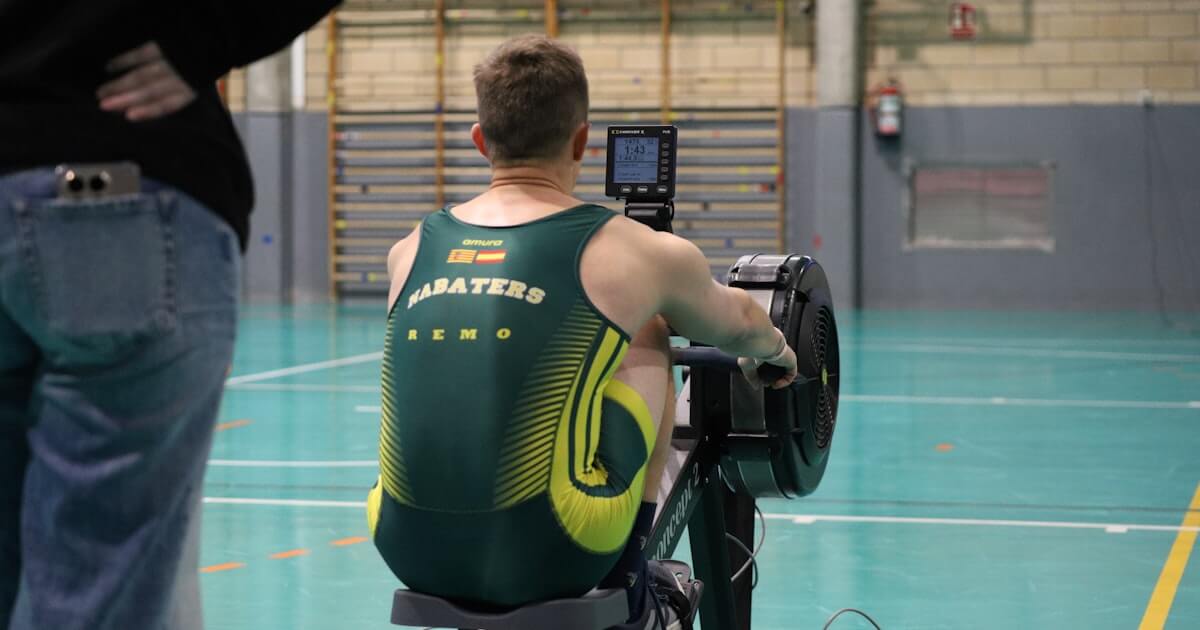
Use the same rowing machine BPM principles during the row — steady strokes, then switch playlists instantly for the run.
Brick B: Sled-to-Run (intermediate)
- Sled push 25-50 meters at competition weight (or substitute heavy kettlebell front-rack carries).
- Run 800m-1 km at HYROX BPM lock without stopping.
- Repeat 4 rounds.
This mimics the metabolic hit of Run 3 or Run 5 after legs are already flooded with lactate.
Brick C: Full simulation (advanced, 4-6 weeks out)
Run two complete HYROX run segments back-to-back with one station between them — e.g., 1 km run, 1,000m ski erg, 1 km run — at race BPM. Add stations weekly until you cover four runs in one session.
Pair station work with HIIT treadmill interval training on non-HYROX days for top-end conditioning without duplicating race-day fatigue.
Station transitions: when to change the music
Do not change BPM between runs. Consistency is your pacing anchor.
Do switch playlists (or pause) during stations. Ski erg and rowing have their own stroke rhythms; carrying a 170 BPM run beat into a ski erg pull throws off technique. Silence or station-specific tempo during work, then hit play the moment you line up for the next 1 km.
If you're building a tempo run foundation during the week, keep those sessions at threshold BPM — higher than HYROX race lock. HYROX race day is aerobic discipline, not Tuesday track night.
What about going faster on "easy" runs?
Runs 1, 3, and 5 feel easy because you're fresh or adrenaline is masking cost. That's the trap.
Pacing data from major road races shows that 87% of recreational 10K runners positive-split — they fade in the second half because the opening felt free. HYROX magnifies that error across eight segments instead of two halves.
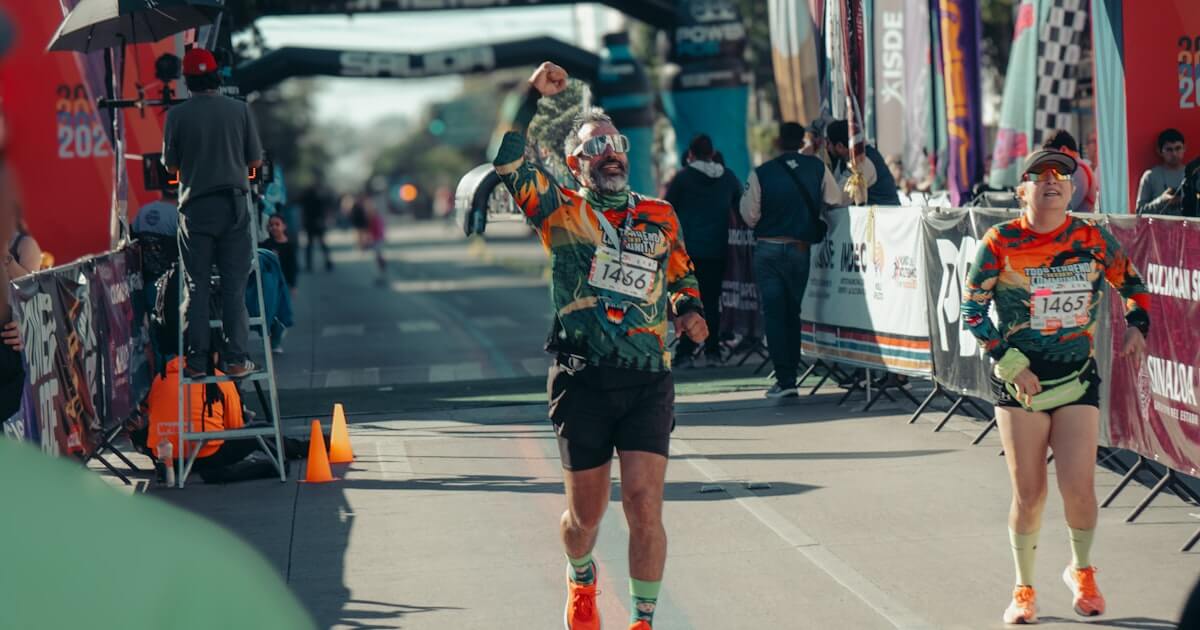
The athletes who negative-split HYROX (yes, it's possible) treat Run 1 like a deposit, not a statement. Music at a locked BPM makes that discipline physical instead of willpower-based.
Planning shorter road races alongside HYROX? The 5K BPM pacing framework uses a more aggressive phase structure — faster opening lift, harder kick — because you're not carrying a sled between kilometers.
Lock your BPM without breaking flow
Fumbling through your phone between runs — chalk on your hands, heart rate sitting at 165 — is exactly how pacing dies.
GagaRun filters your library to whatever BPM you've set, so the beat is already right when you leave the ski erg. Lock in 163 BPM (or whatever your test runs gave you), keep a separate playlist for stations, and let the runs police themselves.

FAQ
What BPM should I use for HYROX training runs?
Use your measured easy-run cadence plus 5-10% for tempo efforts, and your race-effort cadence minus 5-8 BPM for race-specific bricks. Most intermediate athletes land between 158 and 172 BPM on race day.
Is 180 BPM necessary for HYROX?
No. One hundred eighty SPM is an elite marathon average, not a universal target. Recreational HYROX athletes who force 180 on tired legs often spike heart rate and walk Run 7. Match music to your sustainable cadence.
How slow should HYROX runs be compared to a 5K?
Roughly 15-25% slower per kilometer than standalone 5K race pace. Fitness level, station proficiency, and course congestion all shift that range. When in doubt, start conservative — you can always lift cadence in Runs 7-8.
Can I use the same playlist as my half marathon?
Not ideally. Half marathon negative-split pacing uses a progressive BPM build across 21 km. HYROX needs a flat BPM lock across eight short runs with full recovery only between race segments — not between your legs and the next station.