Half Marathon BPM Pacing: The Negative Split Music Strategy
Alex Chen, Certified Running Coach
2026年4月25日

Half Marathon BPM Pacing: The Negative Split Music Strategy
Short answer: Lock your playlist to three BPM phases — a conservative opening at goal cadence minus 3-5, a steady middle at your exact goal cadence, and a 5-8 BPM lift for the final 5K. Around 90% of recreational runners positive-split their half marathons, fading badly in the second half. Music-synced pacing is the simplest way to avoid joining that majority.
Most half marathon training plans obsess over weekly mileage and long run distance. Almost none address the pacing problem that actually ruins race day: going out too fast in the first three miles.
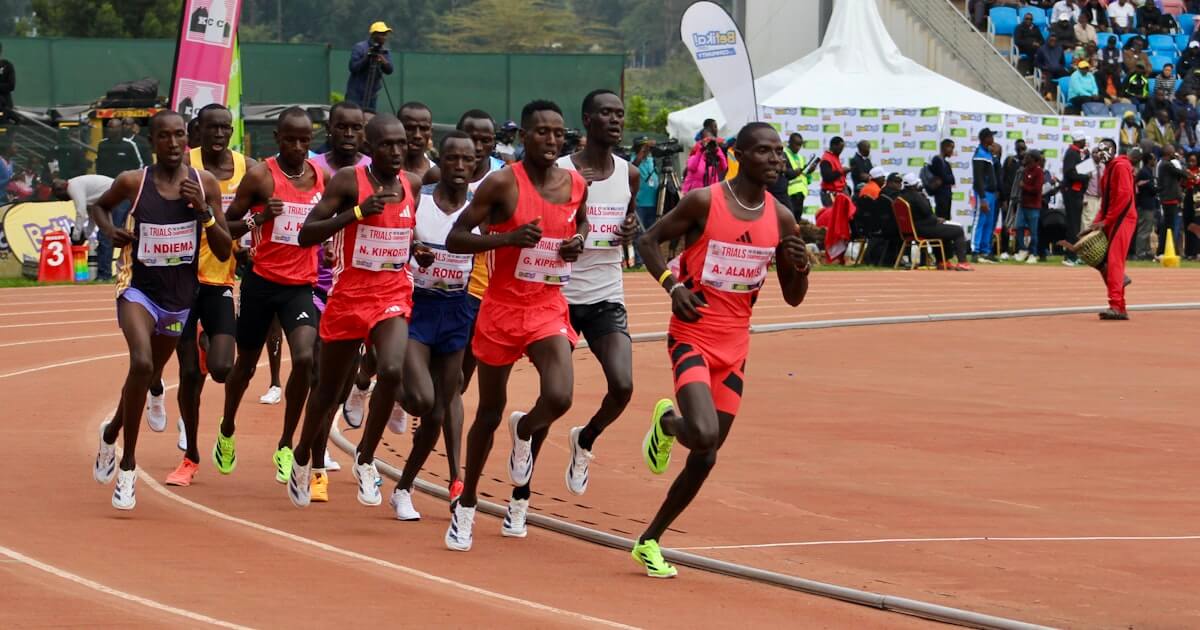
Your adrenaline spikes at the start line. The crowd pulls you forward. Your GPS watch says you're 15 seconds per kilometer faster than planned, but the effort feels easy, so you keep it. By mile 8, your heart rate has drifted 10-15 beats above your aerobic ceiling. By mile 10, your legs are filling with lactate and your pace is collapsing.
This is a solved problem. You just need an external governor that overrides the adrenaline. That governor is your playlist.
The math behind negative splits
A negative split means finishing the second half of your race faster than the first. For half marathons, a realistic target is 30-60 seconds faster in the second half — not a dramatic slowdown-then-sprint, just a disciplined start followed by a controlled acceleration.
The evidence is hard to argue with. Analysis of mass-participation race data shows that roughly 77% of runners positive-split their events. The cost is steep: the so-called "2:1 rule" means for every second per mile you go out too fast, you lose approximately two seconds per mile later. Start your half marathon just 10 seconds per mile over your target pace, and you'll hemorrhage 20 seconds per mile over the final 10K.
Eliud Kipchoge's 2:01:09 marathon world record was run on near-perfect even splits with a slight negative split in the second half. That kind of discipline doesn't require world-class fitness. It requires a pacing tool you actually follow.
Why BPM music works better than your GPS watch
GPS watches beep at you after the fact. A pacer group forces you into someone else's rhythm. Music does something neither can: it sets your cadence in real time through auditory-motor entrainment.
Your brain involuntarily matches your stride frequency to a strong rhythmic beat. Play 165 BPM music, and your legs will turn over at roughly 165 steps per minute without conscious effort. Costas Karageorghis, a professor of sport and exercise psychology at Brunel University, has published extensively on this mechanism. His research demonstrates that synchronous music — where the beat matches your movement frequency — reduces perceived exertion and increases endurance compared to running in silence or with mismatched tempos.
A 2025 study published in the Journal of Science and Coaching in Training confirmed that a 160 BPM metronome tempo during self-paced running enhanced motivation and made time feel like it passed faster. Over a half marathon lasting 1.5 to 2.5 hours, that psychological advantage compounds substantially.
The practical implication: build a playlist that gradually shifts from 160 BPM to 170+ BPM across your race, and your cadence and pace will follow without you staring at a screen.
The 3-phase half marathon BPM strategy
| Race Phase | Distance | BPM Range | Purpose |
|---|---|---|---|
| Phase 1: Conservative bank | Start to 7K | Goal BPM minus 3-5 | Spare glycogen, prevent cardiac drift, stay aerobic |
| Phase 2: Rhythm lock | 7K to 16K | Goal BPM (exact) | Settle into sustainable race effort at target pace |
| Phase 3: Negative split push | 16K to finish | Goal BPM plus 5-8 | Recruit remaining reserves, close fast |
Phase 1 (start to 7K): The restraint phase
This is where races are lost. Your only job for the first third is to arrive at 7K feeling like you left speed on the table.
Set your opening playlist to 3-5 BPM below your goal cadence. If your target race cadence is 168 SPM, play music at 163-165 BPM. Your legs will lock to the beat, and the slightly conservative turnover prevents the adrenaline-fueled blowup that derails most recreational runners.
You'll watch other runners surge ahead. Let them. By kilometer 12, most of them will be slowing down, and you'll be catching them.
Phase 2 (7K to 16K): The steady state
At 7K, transition your playlist to your exact goal BPM. Your heart rate should sit at 75-85% of max, firmly in your tempo zone. The music locks your cadence exactly where it needs to be for the next 9 kilometers.
This is where the half marathon is really raced. Not heroically, not dramatically, just metronomically. Match the beat, hold the effort, don't think about the finish yet.
A common mistake here: trying to "make up time" if Phase 1 felt too easy. Resist that. The whole point of a negative split is that Phase 1 was supposed to feel easy.
Phase 3 (16K to finish): The payoff
At 16K, switch to your closing playlist — 5-8 BPM above your goal cadence. Because you banked energy in Phase 1 and ran disciplined through Phase 2, you have glycogen reserves that positive-splitters already burned through kilometers ago.
The faster music tempo lifts your cadence automatically. Your stride rate increases, your pace drops, and you start passing fading runners. The psychological boost of overtaking people in the final 5K is real — it feeds on itself.
For the final 1-2K, you can push even harder if your body cooperates. Some runners add one more track at 8-10 BPM above goal pace for the finishing kick.
BPM targets by half marathon finish time
| Target Time | Avg Pace (min/km) | Avg Pace (min/mi) | Goal BPM | Phase 1 BPM | Phase 3 BPM |
|---|---|---|---|---|---|
| 1:30 | 4:16 | 6:52 | 178 | 173-175 | 183-186 |
| 1:40 | 4:44 | 7:37 | 174 | 170-171 | 179-182 |
| 1:50 | 5:12 | 8:23 | 170 | 166-167 | 175-178 |
| 2:00 | 5:41 | 9:09 | 166 | 162-163 | 171-174 |
| 2:10 | 6:09 | 9:54 | 162 | 158-159 | 167-170 |
| 2:20 | 6:38 | 10:41 | 158 | 154-155 | 163-166 |
| 2:30 | 7:06 | 11:26 | 155 | 151-152 | 160-163 |
These BPM targets correspond to typical cadence ranges observed in recreational runners at each pace zone. Your exact cadence depends on height and stride mechanics — taller runners naturally sit at the lower end of each range. If you've never measured your cadence, run a comfortable 5K with a GPS watch and note your average SPM. That's your starting reference point.
For a detailed breakdown of how cadence varies by height, see our cadence-by-height chart.
How to build your race-day playlist
- Determine your goal BPM from the table above based on your target finish time.
- Sort your music library by tempo. Most streaming apps don't offer a BPM filter. GagaRun analyzes the BPM of every song in your Apple Music library and lets you filter by tempo range, which eliminates the tedious process of manually checking each track.
- Create three playlist sections corresponding to the three race phases: Phase 1 songs at goal BPM minus 3-5, Phase 2 at goal BPM, Phase 3 at goal BPM plus 5-8.
- Test in training. Do at least two long runs using your race-day playlists before the actual race. Your body needs to learn the rhythm transitions between phases.
- Account for warm-up. If you jog to the start, include a 10-minute block at 145-150 BPM before Phase 1 begins.
If you've already been training with BPM-matched playlists for your tempo runs, the race-day setup is the same principle extended across three distinct phases.
The cardiac drift problem
Cardiac drift is the gradual increase in heart rate that occurs during prolonged exercise at a constant workload. During a half marathon, your heart rate can creep upward by 10-15 BPM even at a steady pace, due to dehydration, heat buildup, and declining stroke volume.
This is why running by heart rate alone can backfire on race day. If you try to hold a heart rate ceiling, you'll end up slowing down as drift kicks in, producing an unintentional positive split.
BPM-locked music sidesteps this entirely. Your cadence stays fixed to the beat regardless of what your heart rate does. The conservative Phase 1 gives your cardiovascular system headroom to absorb some drift without pushing you into oxygen debt. By the time drift accumulates significantly — usually around 12-15K into a half — you're transitioning into Phase 3, where the higher BPM pulls your effort up instead of letting it collapse.
For a deeper breakdown of this mechanism, check out our cardiac drift guide.
What about running by feel?
Some coaches recommend ditching all pacing tools and running on perceived effort. That can work for experienced runners who've raced dozens of half marathons and have a deeply calibrated internal clock.
For most of us, running by feel on race day goes like this: the start feels easy (because adrenaline masks the effort), the middle feels manageable (because you're borrowing from the back half), and the last 5K feels like running through wet concrete (because you already spent what you needed).
BPM pacing doesn't replace perceived effort. It calibrates it. The music gives your brain a rhythm to lock onto before adrenaline distorts your judgment. You can still adjust — if 165 BPM feels genuinely too fast at kilometer 3, something is off and you should slow down regardless. But having the beat as a baseline prevents the most common race-day error: drifting faster than planned without even noticing.
Does cadence actually equal BPM?
Not perfectly. Your foot hits the ground once per beat only if each step aligns with one musical beat. In practice, most runners naturally sync to a 1:1 footstrike-to-beat ratio when the BPM falls between 150 and 185. Outside that range, you might double-step (at very slow tempos) or half-step (at very fast ones).
Can I use a metronome instead of music?
You can, but most people find a bare metronome psychologically brutal over 21 kilometers. Music provides the same rhythmic cue with the added benefit of mood regulation and dissociation from discomfort. Karageorghis's research at Brunel University shows motivational music reduces perceived exertion compared to a plain metronome at the same tempo.
If you want to compare both approaches, we covered the metronome vs. music debate in detail.
What if my natural cadence doesn't match the target BPM?
Start where you are. If your comfortable half marathon cadence is 155 SPM but the table suggests 166, don't force a 7% jump overnight. The safe intervention range is a 5-10% increase above your natural baseline, introduced gradually over 4-6 weeks of training. Jumping cadence by more than 10% at once increases injury risk, particularly in the calves and Achilles tendon.
Should I use the same strategy for a full marathon?
The BPM phase structure transfers to marathons, but the energy math changes. Phase 1 should extend through the first 15K (not just 7K), and the negative split target should be more modest — a 2-3 BPM lift rather than 5-8. The margin for error in a marathon is smaller because glycogen depletion becomes the dominant limiter past 30K.