Double Threshold Training: Pace, Cadence & BPM Guide
Alex Chen, Certified Running Coach
September 14, 2026
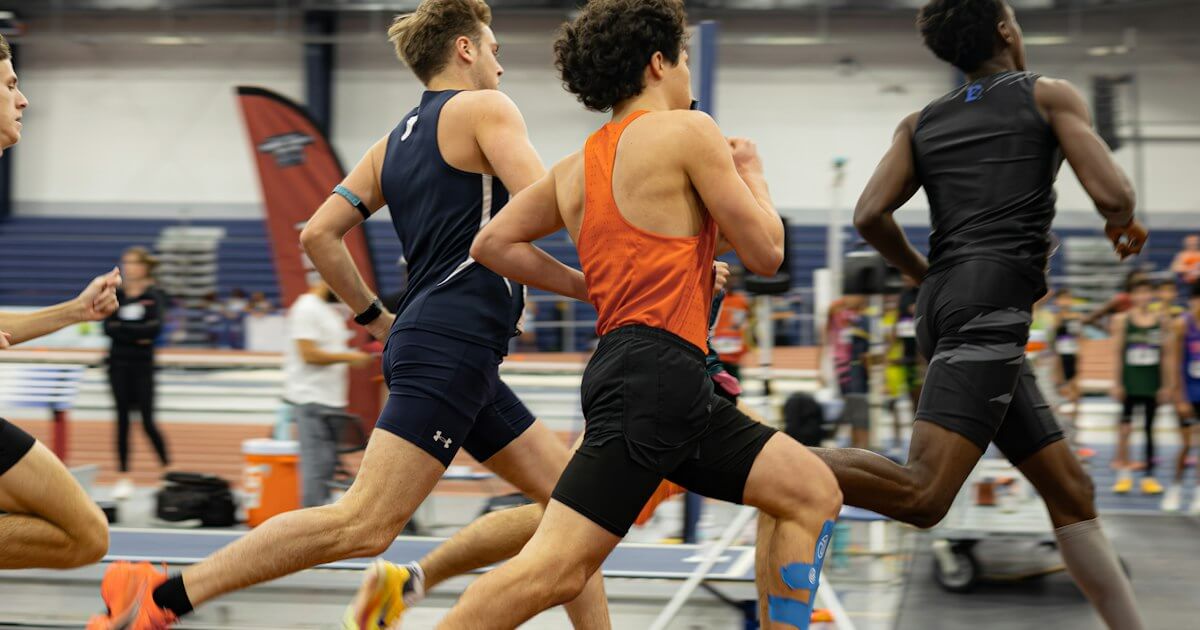
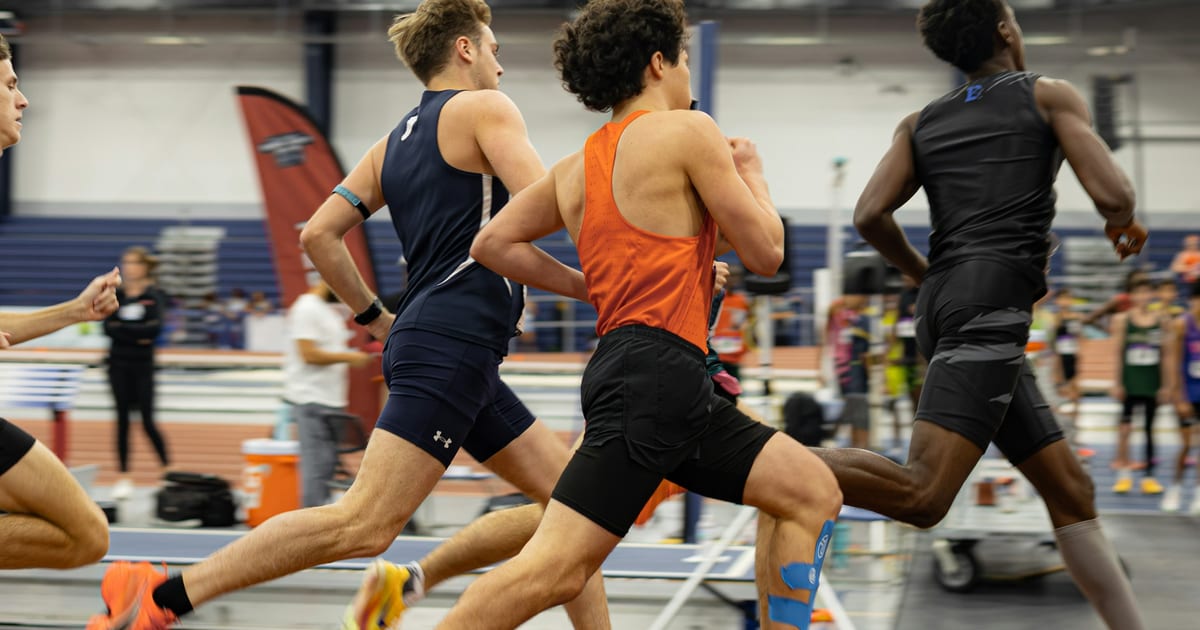
Double threshold training means running two controlled lactate threshold sessions on the same calendar day, separated by six to eight hours of rest. Made famous by Jakob Ingebrigtsen and pioneered by Norwegian Olympian Marius Bakken, the goal is not to hammer intervals, but to accumulate massive volume right below your lactate threshold (2.0 to 3.5 mmol/L). Keeping your stride turnover anchored to a steady 172–176 BPM tempo keeps you in the sub-threshold pocket and prevents the pace creep that ruins your afternoon workout.
+-------------------------------------------------------------------------+
|                  THE NORWEGIAN DOUBLE THRESHOLD BLUEPRINT               |
|                                                                         |
|   MORNING (Aerobic Foundation)           EVENING (Neuromuscular Speed)  |
|   5 x 6 min or 3 x 2,000m                10 x 1,000m or 20 x 400m       |
|   Target Lactate: 2.0 - 2.5 mmol/L       Target Lactate: 2.5 - 3.2 mmol/L|
|   HR: 82% - 85% HRmax                    HR: 85% - 88% HRmax            |
|   Cadence: 170 - 174 SPM                 Cadence: 174 - 178 SPM         |
|   Pacing: Daniels T-pace + 10s/mi        Pacing: 10K to Half Marathon   |
|                                                                         |
|                 RECOVERY WINDOW: 6-8 HOURS (Carbs + Nap)                |
+-------------------------------------------------------------------------+
What double threshold training actually is (and why it works)
Most runners believe that to get faster, hard days need to feel agonizing. You run until your legs burn, collapse on the grass, and spend the next three days limping through recovery jogs.
The Norwegian model flips that premise entirely.
Instead of running at VO2 max (where lactate spikes past 4.0 mmol/L and muscle damage skyrockets), double threshold training stays inside what Dr. Marius Bakken calls the "Golden Zone": between 2.3 and 3.0 mmol/L. At this intensity, your muscles produce lactate, but your slow-twitch muscle fibers clear it just as fast.
By capping intensity below your true anaerobic threshold, you skip the heavy eccentric muscle damage and autonomic nervous system wreckage caused by traditional all-out track intervals. That allows you to log 12 to 16 miles of quality threshold work in a single day—and wake up two days later ready for another workout.
A 2024 randomized trial published in Frontiers in Physiology tested this exact mechanism in well-trained endurance athletes. Researchers compared a single continuous threshold session (6 × 10 minutes) against two split sessions (3 × 10 minutes, spaced 6.5 hours apart). The split-session athletes produced lower post-exercise lactate, reported significantly lower Rate of Perceived Exertion (RPE), and suffered substantially less delayed-onset muscle soreness (DOMS) the following day. Breaking the stimulus in half doubled their capacity to absorb volume without overloading muscle tissue.
The morning vs evening split: how to structure the day
You do not run the same workout twice. The two workouts serve completely different physiological purposes:
| Training Variable | Morning Session (Aerobic Base) | Evening Session (Turnover & Economy) |
|---|---|---|
| Interval Format | Longer reps: 5 × 6 min or 3–4 × 2,000m | Shorter reps: 10–12 × 1,000m or 20–25 × 400m |
| Rest Intervals | 60–90 seconds easy jog | 45–60 seconds standing or walking |
| Target Lactate | 2.0–2.5 mmol/L (very controlled) | 2.5–3.2 mmol/L (controlled turnover) |
| Effort / HR | 80–84% of HRmax | 85–88% of HRmax |
| Pace Benchmark | Half-marathon to marathon effort | 10K to 15K race effort |
| Target Cadence | 170–174 SPM | 174–178 SPM |
| Optimal Music BPM | 170–174 BPM | 174–178 BPM |
Morning: high volume, low tension
The morning session keeps muscle tension relaxed and builds your aerobic ceiling. Running longer blocks (6 minutes or 2,000 meters) trains mitochondrial enzymes to process lactate over extended durations.
If you use Jack Daniels' VDOT tables, your target pace here is roughly 8 to 12 seconds per mile slower than your standard 20-minute threshold pace. You should finish every repetition feeling like you could comfortably do three more.
Evening: neuromuscular speed without acid buildup
Six hours later, your muscle glycogen has refilled, your body temperature is higher, and your neuromuscular system is primed. Now you run shorter repetitions (400m to 1,000m) with very short recoveries.
Because the repetitions are brief (60 to 180 seconds), you can run at 10K race pace while keeping blood lactate comfortably below 3.5 mmol/L. You get the stride mechanics, ground contact times, and leg turnover of fast running without the metabolic cost of lactic acidosis.
Why 90% of amateur runners fail: the pace creep trap
If you try this protocol on feel alone, you will almost certainly fail your first three attempts. Here is why:
During the morning session, your legs feel fresh after a rest day. You hit rep one at 6:00/mile pace when you were supposed to run 6:15. It feels deceptively easy. By rep four, your blood lactate has drifted to 4.2 mmol/L. You just converted a controlled sub-threshold session into an exhausting VO2 max workout.
When 5:00 PM rolls around, your legs are heavy, your central nervous system is depleted, and the evening session turns into a slog. You end up overtrained within two weeks.
Elite Norwegian runners solve this with a handheld lactate meter, pricking their ears after every second rep. Unless you want to spend $400 on test strips and stop on the track with bloody fingers, you need a different governor.
PACE CREEP VS. CONTROLLED TURNOVER

Without Cadence Lock:
[Rep 1: 172 SPM] ---> [Rep 3: 166 SPM, Overstriding] ---> [Lactate Spikes to 4.5+]

With Locked 174 BPM Beat:
[Rep 1: 174 SPM] ---> [Rep 3: 174 SPM, Compact Stride] ---> [Lactate Stays at 2.6]
How cadence and music BPM keep you in the threshold zone
Your stride rate (cadence) is the single most reliable mechanical throttle you have.
When runners fatigue during threshold intervals, stride rate drops and stride length unconsciously stretches out. You start overstriding, landing with your foot ahead of your center of mass. That braking force increases vertical oscillation and spikes your heart rate.
Biomechanics research from the University of Wisconsin-Madison (Heiderscheit et al., 2011) showed that increasing cadence by just 5% reduces energy absorption at the knee and hip joints by 15% to 20%, keeping foot strike directly under your hips.
For double threshold sessions, locking your cadence between 172 and 176 SPM produces two huge advantages:
- It caps your stride length: At 174 SPM, you physically cannot take giant, loping strides that spike lactate. Your turnover stays quick, compact, and energy-efficient.
- It eliminates subjective guesswork: Instead of constantly checking your GPS watch for fluctuating paces, you synchronize your footstrikes to a fixed musical rhythm. If your feet stay on the downbeat, your effort stays level.
This is where dedicated rhythm tools become essential. Trying to manually shuffle through songs on Spotify to find tracks that stay between 172 and 176 BPM wastes time, and one random 158 BPM track will drag your tempo down mid-interval. An app like GagaRun automatically filters your existing Apple Music or Spotify library to play only songs matching your exact target cadence. You set 172 BPM for the morning reps and 176 BPM for the evening track, and the acoustic tempo keeps your turnover locked without looking at your wrist.
How to execute your first double threshold day (step-by-step)
Do not jump straight into two full-volume sessions. Follow this four-step onboarding progression:
1. Build your threshold base first
Before attempting two workouts in one day, you should already be comfortable running 35 to 45 miles per week, including regular single threshold workouts and tempo runs. If you cannot handle a 40-minute continuous tempo run without crashing, your aerobic foundation is not ready for doubles.
2. Schedule the session on a flexible day
Pick a day where you control your schedule—typically Saturday. You need minimum 6 hours between workouts:
- 07:30 AM: Morning workout (Warm-up + 4 × 6 minutes at easy threshold + Cool-down)
- 08:45 AM: Breakfast with 80–100g of fast-digesting carbohydrates (oatmeal, banana, honey)
- 11:00 AM – 02:00 PM: Desk work, foam rolling, and a 30-minute nap
- 03:30 PM: Pre-run snack (rice cake with peanut butter, electrolyte drink)
- 04:30 PM: Evening workout (Warm-up + 12 × 400m at 10K turnover + Cool-down)
- 06:00 PM: High-protein dinner and early bedtime
3. Use the talk test on every morning repetition
During the morning 6-minute blocks, use the 4-word rule. You should be able to say: "Pace feels very smooth" without gasping. If you can only spit out two words before taking a breath, you are running too fast. Back off by 10 seconds per mile immediately.
4. Keep your evening recovery periods strict
For the evening 400m or 1,000m repetitions, resist the urge to take long, luxurious three-minute breaks. Keep recoveries to 45–60 seconds of gentle walking. Short recoveries prevent heart rate from dropping entirely into baseline and keep lactate clearance mechanisms actively engaged.
Double threshold workout alternatives
How does double threshold compare to other popular endurance pacing strategies? Here is how to position it in your weekly training block:
| Workout Style | Primary Adaptation | Weekly Frequency | Best Cadence / BPM Strategy |
|---|---|---|---|
| Double Threshold | Massive lactate clearance volume | Once every 7–14 days | 172–174 BPM morning, 176–178 BPM evening |
| Norwegian 4x4 Intervals | Maximum VO2 max expansion | Once weekly | 178–184 BPM during work reps |
| Yasso 800s | Marathon pace prediction | Every 2–3 weeks | 174–180 BPM for reps, 120 BPM recovery |
| Tempo Run | Sustained mental & lactate grit | Once weekly | Steady 168–172 BPM continuous lock |
Frequently asked questions
Do I need a lactate meter to do double threshold training?
No. While elite athletes rely on lactate strips to test for 2.5 mmol/L, recreational runners can gauge effort accurately using heart rate caps (82–88% HRmax), the 4-word talk test, and a cadence locked to 172–176 BPM. The main rule is staying disciplined: always err on the side of running 5 seconds too slow rather than 2 seconds too fast.
Can runners doing under 40 miles a week try double thresholds?
It is not recommended. If you run under 40 miles (65 km) per week, your biggest performance gains will come from building basic weekly mileage and doing one quality single sub-threshold session per week. Double thresholds are designed for runners who have maxed out standard weekly workouts and need more threshold volume without joint breakdown.
How often should I schedule a double threshold day?
Start with one double threshold day every two weeks. If your sleep, nutrition, and resting heart rate remain stable after two months, you can progress to once per week during a dedicated 6-to-8 week base training block. Never schedule double threshold days back-to-back or within 48 hours of a hard long run.