Spin Bike RPM To BPM Conversion Chart: Match Music To Pedal Cadence
Mia Taylor, Music & Workout Curator
2026年7月22日
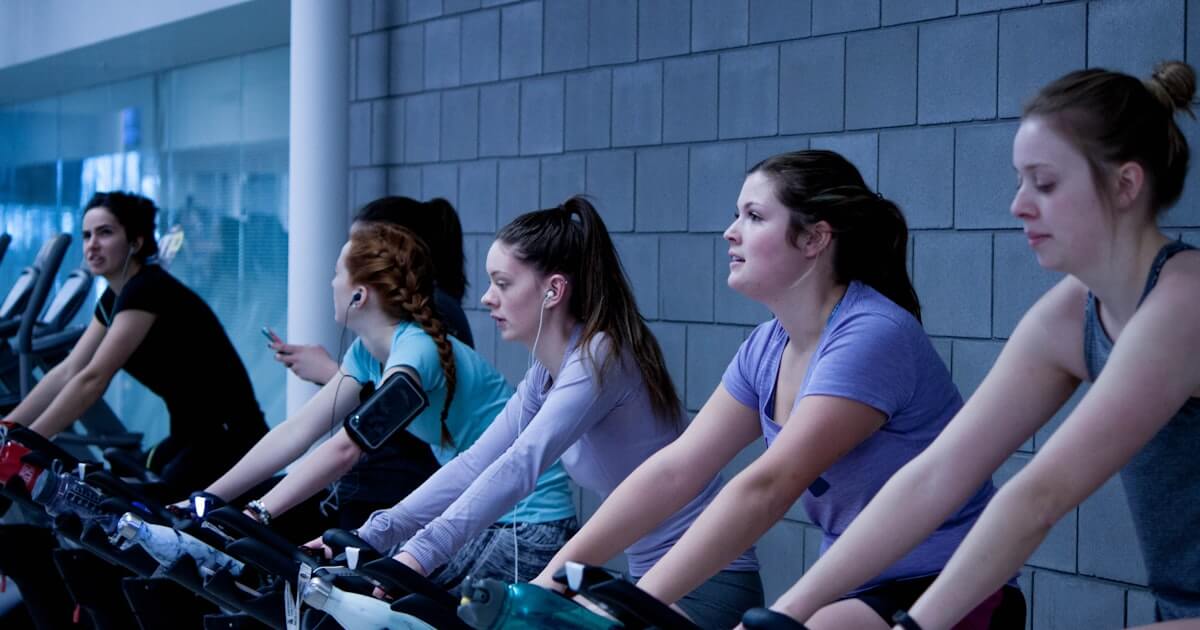
On a standard indoor cycle, RPM is full crank revolutions per minute—what Peloton, Keiser, and most studio bikes show on the console. The Spinning® program (Mad Dogg Athletics) sets 80–110 RPM for flat-road work and 60–80 RPM for simulated climbs, with 110 RPM as the usual upper safety cap on flats when resistance is light. To match music, either set playlist BPM equal to RPM (1:1, one revolution per beat) or double it (2:1, one revolution every two beats).
If your songs and your legs disagree, you are not imagining it. Running uses one footfall per beat. Cycling uses one full circle per beat (or per two beats). This chart turns the number on your screen into a BPM you can type into an app.
Why RPM and BPM get confused
RPM counts complete pedal circles. BPM counts musical beats. They share the same unit (per minute), which makes them look interchangeable—they are not, until you pick a mapping rule.
- 1:1 mapping: 90 RPM → 90 BPM. One beat, one revolution. Works well for endurance and sprints where you want the kick drum to hit at the top of each stroke.
- 2:1 mapping: 90 RPM → 180 BPM. One revolution every two beats. This is how most spin classes stay in pop/EDM tempos (160–190 BPM) while pedaling 80–95 RPM.
Always confirm what your bike displays. Nearly all commercial spin bikes use full-revolution RPM. If yours only shows a cadence sensor on one leg, treat the reading as half-revolutions and double before using this chart.
Zone chart (Spinning® official ranges)
These bands come from Spinning’s published cadence guidelines for indoor road simulation—not from guesswork.
| Workout zone | Official RPM range | Best music approach | Typical use |
|---|---|---|---|
| Seated / standing flat | 80–110 | 2:1 (160–220 BPM) or 1:1 (80–110 BPM) | Endurance, tempo, jumps |
| Seated / standing climb | 60–80 | 2:1 (120–160 BPM) strongly preferred | Heavy resistance, hill simulation |
| Below climb minimum | <60 | Avoid sustained work | Spinning warns heavy sub-60 RPM risks knee strain |
| Above flat maximum | >110 (light resistance) | Usually unsafe / uncontrolled | Add resistance or slow legs per Spinning safety guidance |
For drill ideas and playlist structure, see our indoor cycling BPM guide. For the same “conversion chart” format on stairs, compare the StairMaster level-to-SPM chart.
Complete RPM → music BPM chart (every 5 RPM)
Use the console RPM you are holding steady. Set GagaRun, a metronome, or filtered playlists to the Music BPM column you plan to follow, then pedal with the How to pedal rule.
| Console RPM | 1:1 music BPM | 2:1 music BPM | How to pedal |
|---|---|---|---|
| 60 | 60 | 120 | 1:1 = 1 rev per beat · 2:1 = 1 rev every 2 beats |
| 65 | 65 | 130 | same |
| 70 | 70 | 140 | same |
| 75 | 75 | 150 | same |
| 80 | 80 | 160 | same |
| 85 | 85 | 170 | same |
| 90 | 90 | 180 | same |
| 95 | 95 | 190 | same |
| 100 | 100 | 200 | same |
| 105 | 105 | 210 | same |
| 110 | 110 | 220 | same |
Math check: At 2:1, RPM = BPM ÷ 2. Example: 130 BPM, one revolution every two beats → 130 ÷ 2 = 65 RPM.
Accuracy note: Your legs, seat height, and resistance change how hard a given RPM feels, but the console RPM and BPM relationship does not change. If the display reads 88 RPM and you lock 176 BPM at 2:1, you should feel one revolution every two beats. If not, the console may be lagging—soft-pedal 10 seconds, read again, then reset your target BPM.
Which ratio should you use?
Climbs (60–80 RPM): Use 2:1. Playlists at 60–80 BPM are mostly ballads and ambient tracks—not what you want on a hard hill. A 128 BPM track at half-time gives 64 RPM without hunting obscure slow songs.
Endurance flats (85–95 RPM): Either ratio works; 2:1 opens more songs (170–190 BPM pop and house).
Sprints (100–110 RPM): 1:1 usually feels cleaner (100–110 BPM). Double-time at 220 BPM is rare in normal libraries.
Synchronizing movement to beat can lower perceived exertion at moderate intensities; a cycling study in Medicine & Science in Sports & Exercise (Lim et al., 2014) reported lower RPE and limb discomfort with synchronous vs asynchronous music during sub-maximal cycling (PubMed).
Lock the BPM without mid-ride scrolling
Manually sorting your library for 130 vs 176 BPM between climb and flat blocks ruins the point of tempo training. GagaRun filters Spotify or Apple Music to your exact target BPM so every track matches the column you chose—set 170 for a 85 RPM flat at 2:1, then switch to 130 when you drop to a 65 RPM climb.
Frequently Asked Questions
Does Peloton cadence match this chart? Yes. Peloton reports full crank RPM like most spin bikes. Use the same 1:1 or 2:1 columns.
Why does Spinning cap flats at 110 RPM? Their official guidance treats >110 RPM with too little resistance as loss of flywheel control (bouncing, not driving the pedals). Add resistance before chasing higher leg speed.
Can I use running BPM playlists on the bike? Only if you convert. Running steps are roughly twice cycling RPM for the same leg turnover feel. A 180 BPM running mix often maps to ~90 RPM cycling at 2:1.
What if my bike has no cadence display? Count revolutions for 15 seconds, multiply by four, or use a cadence sensor. Without a number, BPM matching is guesswork—get a reading once per segment before trusting the chart.