Run Commuting With A Backpack: The Cadence Fix For Heavy Loads
Alex Chen, Certified Running Coach
July 16, 2026
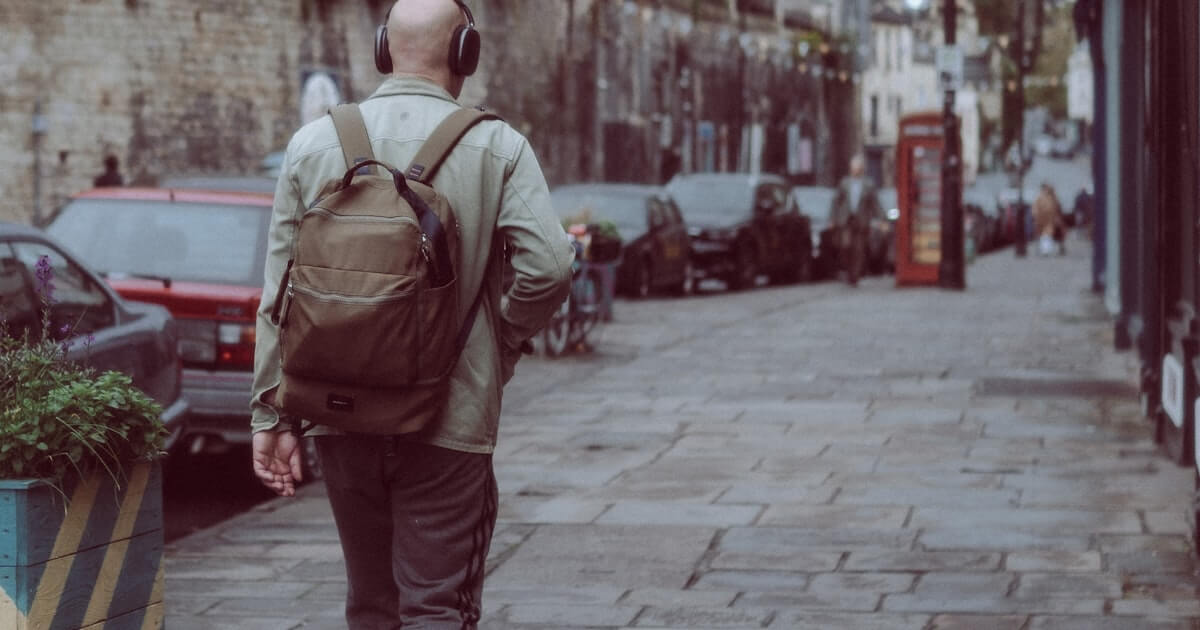
Short answer: Running your commute with a loaded backpack increases knee joint stress on every step — but raising your cadence by 5–7.5% cancels the per-step increase almost entirely. Keep the pack under 10% of your body weight, shorten your stride instead of leaning forward, and pace the first kilometer slower than your ego wants.
Run commuting is having a moment, and for good reason: it turns dead transit time into training time. But there's a biomechanics catch nobody mentions in the gear reviews. The moment you strap 5 kilograms of laptop, lunch, and spare clothes to your back, you are not doing the same sport anymore. Your joints know it, even if your pace chart looks identical.
What a backpack actually does to your stride
A loaded pack changes your running mechanics in two ways, and both are sneaky.
First, the obvious one: more mass means more force at every footstrike. A study in the Journal of Biomechanics measured runners carrying body-borne load and found peak patellofemoral (kneecap) contact force rose by 0.2 body weights per step, with cumulative kneecap loading climbing 32 body weights per kilometer — and total knee joint impulse jumping by 85 body weights per kilometer compared to unloaded running. The per-step increase feels like nothing. The per-kilometer accumulation is what turns week three of run commuting into a sore-knee mystery.
Second, the subtle one: your body quietly changes its strategy. Research published in Applied Bionics and Biomechanics (2023) found that even a pack at just 10% of body weight measurably alters lower-limb mechanics — during loaded running the body shifts work toward the ankle, with greater plantar flexion and ankle range of motion. Translation: your calves and Achilles absorb more of the job. If your calves feel wrecked after loaded runs while your quads feel fine, this is why, and it's also why calf pain responds to cadence changes.
The cadence fix, quantified
Here's the useful part of that same Journal of Biomechanics study: when runners increased their cadence by 7.5%, peak kneecap force dropped by 0.5 body weights — more than the load had added. Higher cadence with a shorter stride brought footstrike closer to the body's center of mass, and the per-step penalty of the pack effectively disappeared. Cumulative load per kilometer only partially improved, which is fair warning: cadence is a fix, not a cheat code for unlimited mileage with a heavy bag.
A 2025 systematic review in Cureus backs the general principle: a 5–10% cadence increase consistently reduces vertical ground reaction forces, loading rates, and stress at the knee and hip, without hurting running economy.
Practical numbers. Say your natural easy-run cadence is 162 SPM (that's normal for recreational runners — don't force 180):
| Load | Cadence target | What changes |
|---|---|---|
| No pack | 162 SPM (baseline) | Your normal stride |
| Pack under 5% body weight | 165–168 SPM (+2–4%) | Slightly quicker steps, same effort |
| Pack 5–10% body weight | 170–174 SPM (+5–7.5%) | Noticeably shorter, quicker stride |
| Pack over 10% body weight | Don't run it. Walk it, or shed weight | Ankle loading rises disproportionately |
That last row is not hedging. The Applied Bionics researchers concluded that running should be avoided with packs at or above 10% of body weight because of the ankle-loading shift. For a 70 kg runner, that's a hard ceiling around 7 kg — a loaded commuter pack with a laptop hits that faster than you'd think. Weigh your bag once. Mine was 8.2 kg the first time I checked, which explained a lot.
How to actually hold a higher cadence for 5 km
Knowing your target is 170 SPM and hitting it at kilometer four while sweating under a pack are different problems. Counting steps works for about 90 seconds, then your mind wanders back to the meeting you're running toward.
The reliable trick is auditory: match your steps to music at your target tempo. Auditory cueing was specifically flagged in the Cureus review as the strategy that helps runners stick to a cadence change. One song at 170 BPM does the counting for you — every beat is a footstrike, and drifting off-tempo becomes something you hear immediately instead of discovering on your watch afterward.
The annoyance is that regular playlists aren't sorted by tempo. I set GagaRun to 170 BPM for loaded commute runs and let it filter my own library down to tracks that match; the pack run gets its own faster rhythm profile, separate from my weekend easy runs at 164. Two saved targets, zero mid-run fiddling with a phone while wearing a backpack — which, having tried it, I don't recommend.
A few non-cadence rules that make loaded commuting sustainable:
- Pack tight, pack high. A bag that bounces adds impact force your cadence can't fix. Compression straps and a sternum strap are non-negotiable; the load should move with your torso, not against it.
- Start 30 seconds per km slower than your normal easy pace. Loaded running raises heart rate at any given speed, and the first kilometer is where your calves get recruited into their new job.
- Alternate loaded and unloaded days. The cumulative per-km load math means a loaded pack every single day is a volume increase, not a neutral swap.
- Leave the heavy stuff at work. Shoes, chargers, toiletries — the best load management is not carrying it.
FAQ
Is run commuting with a backpack bad for my knees?
Not inherently. The per-step knee stress increase from a light pack is fully offset by a 5–7.5% cadence increase. The risk comes from heavy packs (over 10% body weight), bouncing loads, and stacking loaded runs daily without adaptation time.
What cadence should I use when running with a backpack?
Take your natural unloaded cadence and add 5–7.5%. A runner at 160 SPM should target roughly 168–172 SPM with a loaded pack. Match music at that BPM to hold it without counting.
How heavy is too heavy for a running backpack?
Keep it under 10% of your body weight. Above that threshold, research shows ankle loading rises sharply and the smart move is walking, not running. Weigh your fully loaded pack once — laptops push most commuter bags close to the line.