Parkrun BPM Pacing: The Music Strategy For A 5K PB
Alex Chen, Certified Running Coach
2026年5月25日
Parkrun BPM Pacing: The Music Strategy for a 5K PB
Short answer: Treat parkrun like a controlled 5K time trial, not a Saturday sprint. Lock your music to goal cadence minus 5 BPM for the crowded first kilometer, hold your target BPM through KM 2–4, then bump 5–8 BPM for the final kilometer. A Frontiers in Psychology study found synchronous music extended time-to-exhaustion by roughly 67% and lowered perceived exertion at every measured interval — the same mechanism that stops you red-lining before the turnaround cone.
If you've ever hit the parkrun finish funnel gasping while your watch shows a positive split, the problem usually isn't fitness. It's the first 400 meters.
What makes parkrun pacing different from a road 5K
Parkrun is a free, timed 5K community run held every Saturday morning in parks worldwide. Same course, same volunteers, same barcode scan at the finish — and almost always the same pacing mistake in kilometer one.
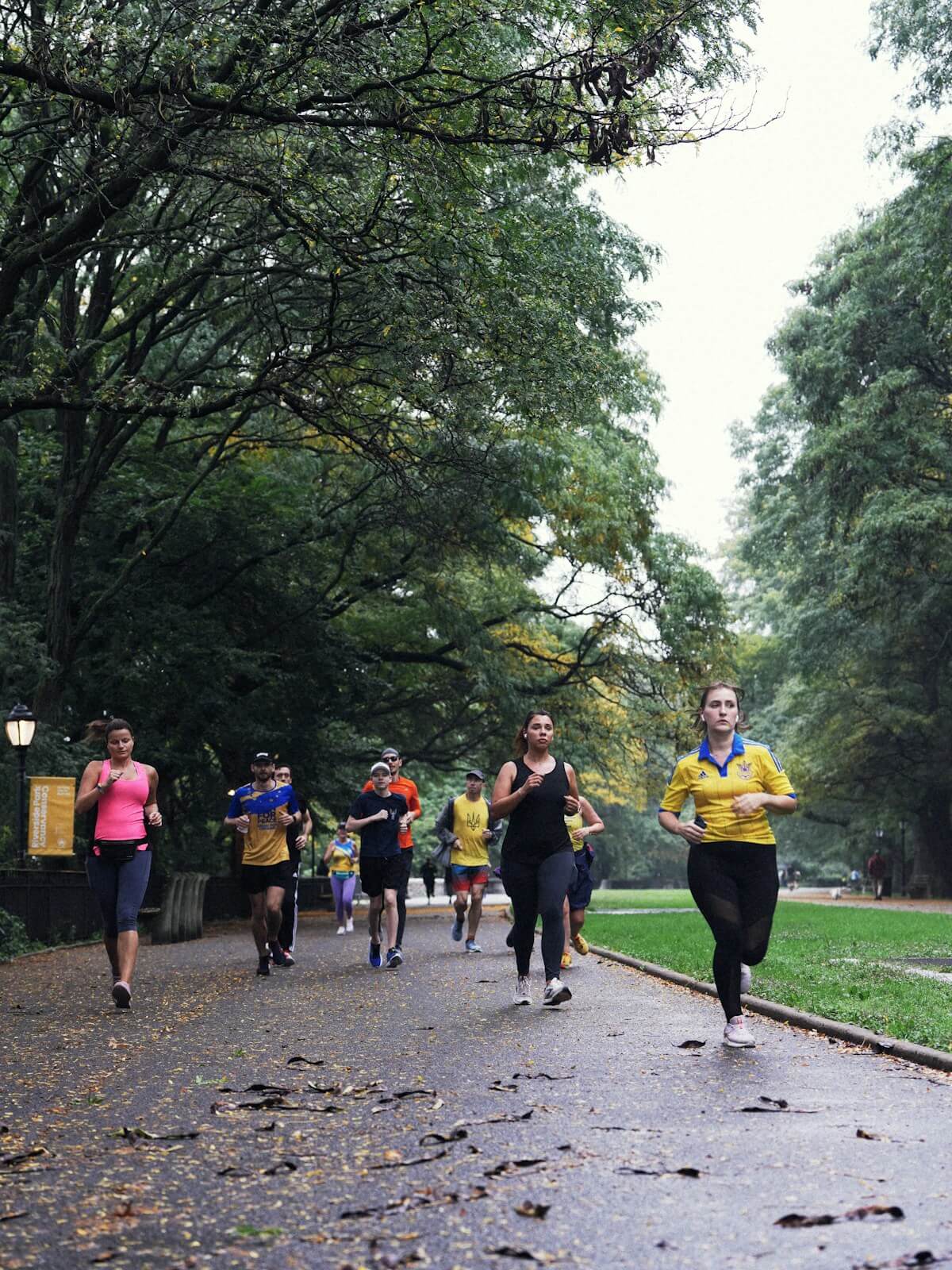
Road races spread runners across a wide start corral. Parkrun squeezes hundreds of people through a narrow path, a bridge, or a single-track trail within the first minute. Adrenaline spikes. Someone sprints past you. Your legs answer before your brain catches up.
Runner's World pacing guidance for 5K is blunt: go too hard over the entire first kilometer and lactate accumulates faster than you can clear it. You pay for that in KM 4 and 5. Parkrun amplifies the trap because the opening chaos feels slow on your watch while your heart rate tells a different story.
Wait — so the problem isn't actually my playlist?
Often it's both. Crowds push you fast early. Then, when the path opens, a high-BPM track pulls you even faster. By KM 3 you're locked into a cadence you can't sustain. Music doesn't create the blowup — but beat-matched audio makes an unsustainable stride feel normal until it doesn't.
The three-phase parkrun BPM blueprint
This mirrors the four-phase 5K BPM framework but trims the warm-up (you're already jogging to the start line) and adds a patience buffer for KM 1 congestion.
| Phase | Distance | BPM Target | Why it works |
|---|---|---|---|
| Controlled start | KM 1 | Goal BPM minus 5 | Survives bottlenecks without red-lining when the path opens |
| Settle & hold | KM 2–4 | Goal BPM | Locks threshold rhythm once traffic thins |
| Finish kick | Final KM | Goal BPM plus 5–8 | Uses reserves without waiting until 200m to go |
Finding your goal BPM
Your goal BPM equals your target cadence at parkrun race effort — steps per minute, not heart rate.
Best method: Run a recent hard parkrun (or road 5K) with a GPS watch and note average cadence. That's your number.
No watch? Use the same formula from our 5K pacing guide:
Goal BPM ≈ 155 + (35 minus your 5K time in minutes) × 1.2
| Parkrun Target | Pace (min/km) | Goal BPM | KM 1 BPM | Final KM BPM |
|---|---|---|---|---|
| 35:00 | 7:00 | ~158 | 153 | 163–166 |
| 30:00 | 6:00 | ~161 | 156 | 166–169 |
| 27:00 | 5:24 | ~165 | 160 | 170–173 |
| 25:00 | 5:00 | ~167 | 162 | 172–175 |
| 22:00 | 4:24 | ~171 | 166 | 176–179 |
These ranges sit inside what recreational runners typically hit at 5K effort — roughly 160–175 SPM for most adults, higher for trained athletes. Don't chase 180 SPM because a blog post told you to. A 5–10% bump above your comfortable baseline is the safer biomechanics target if you're actively working on cadence.
Why BPM beats "just run by feel" at parkrun
Parkrun is a social event. You hear friends cheering. You see someone you want to beat. Feel-based pacing collapses under that noise.
Auditory-motor entrainment is the workaround. Your brain syncs footfalls to external rhythm whether you intend to or not. A 2012 PLOS ONE study confirmed that runners naturally lock stride rate to musical tempo — and shifting the tempo predictably changes cadence. Terry and colleagues later showed that cadence-matched music extended time-to-exhaustion compared with silence, with small-to-moderate reductions in perceived exertion.
If your playlist sits at 168 BPM, your legs will hunt 168 SPM — whether or not your lungs agree. That's great when 168 is the plan. It's a disaster when 168 is ten beats above what your aerobic system can hold for 25 minutes.
You don't need to ditch the headphones. You need music that matches the phase you're actually in, not the phase your ego wants.
Build your parkrun playlist in 15 minutes
- Set three mini-playlists — KM 1, middle, final KM — each 5–7 minutes long so transitions don't require fumbling at a narrow bridge.
- Pre-race: Jog easy from the car park at 145–155 BPM for 8–10 minutes. Same protocol as our running warm-up BPM routine.
- Start line: Hit play on Playlist 1 (goal minus 5) before the briefing finishes. When the horn goes, you're already locked in.
- KM 2: Switch to Playlist 2 at goal BPM. Resist the urge to "make up time" from a slow KM 1 — even pacing wins more parkrun PBs than heroic surges.
- Final KM: Swap to Playlist 3 at goal plus 5–8. If the course has a known hill in KM 4, hold goal BPM there and save the lift for after the crest.
Headphones at parkrun: check local rules
Most parkrun events allow headphones, but policies vary by country and venue. Some ask runners to keep one earbud out for safety on shared paths. Check your event's website before race morning — getting turned away at the start line over earbuds is a rough way to lose a PB attempt.
When GagaRun saves you from playlist surgery
I'll be honest: manually building three tempo-locked playlists every week gets old. Especially when a decent training block shifts your goal cadence by 2–3 BPM and you're re-sorting tracks on Friday night.
GagaRun filters your existing Apple Music or Spotify library to a target BPM and keeps playback locked there. For parkrun, set 162 BPM for the middle phase, tap down to 157 for KM 1, up to 168 for the finish — no skipping tracks, no guessing whether that upbeat indie song is secretly 174 BPM.

Same songs you already love. Just sorted by the tempo your legs actually need this Saturday.
First parkrun and nowhere near a PB hunt yet? Start with a 140 BPM conversational lock until finishing comfortably matters more than splitting.
Parkrun pacing mistakes (and the BPM fix)
| Mistake | What happens | BPM fix |
|---|---|---|
| Sprinting when the path opens | Lactate spike by KM 2; walk-shame at KM 4 | KM 1 playlist at goal minus 5 — physically caps turnover |
| Same playlist all race | One tempo can't serve three physiological phases | Three short playlists, one per phase |
| Chasing a friend in KM 1 | Their jog is your threshold | Lock BPM before the start; let them go |
| Saving music for the last 500m | Too late — damage done in KM 1–2 | Middle-phase BPM holds rhythm when it matters |
FAQ
Should I negative split or even-split a parkrun?
Aim for even splits with a small lift in the final kilometer — not a dramatic negative split. Runner's World 5K guidance recommends speeding up only in the last 800m to 1km when you've paced the middle correctly. For most recreational parkrunners, a 5–8 BPM bump in the final KM achieves that without requiring perfect kilometer math on the fly.
What BPM should a first-time parkrunner use?
Finish first. Target 140–150 BPM music for the entire run — slow enough to jog the full 5K without walking. Once you've completed three or four parkruns and know your baseline time, come back to the three-phase table above.
Is parkrun BPM pacing different on a hilly course?
Yes. Hills drop cadence even when effort rises. Hold goal BPM on climbs rather than chasing pace — stride shortens, turnover stays honest. Save the plus-5–8 BPM lift for the final flat kilometer or downhill finish straight, not the hill itself. Hilly parkrun courses pair well with our trail running cadence guide for climb-specific adjustments.