
Does Cadence Change With Pace? Cadence At Different Running Speeds
GagaRun Team
October 22, 2026
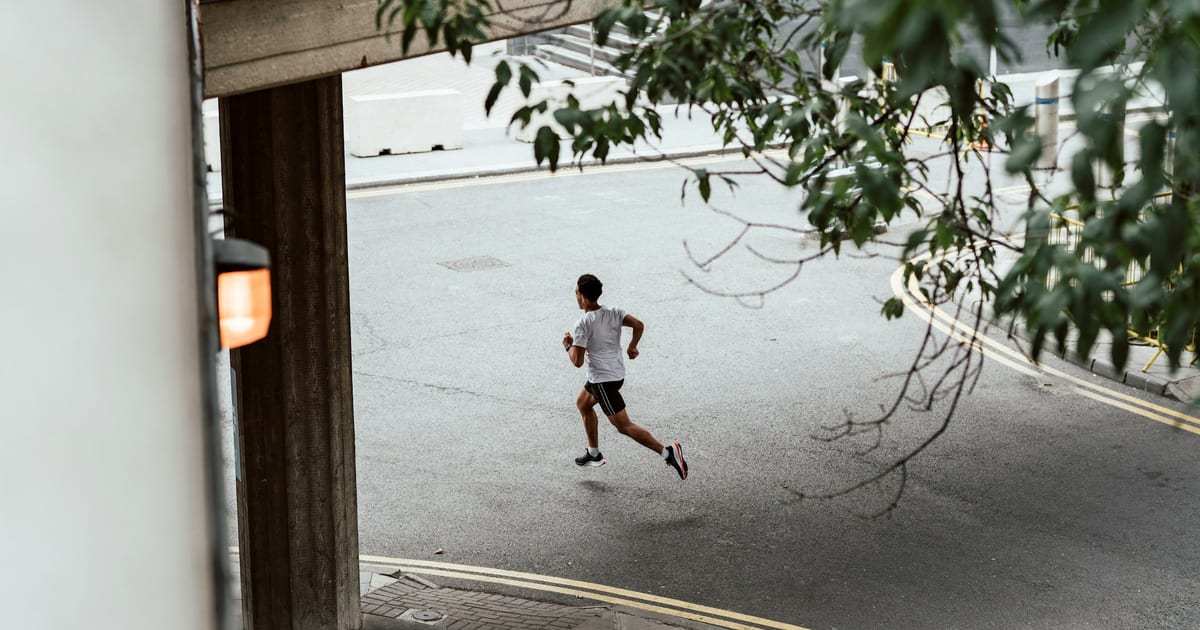
Yes, running cadence naturally increases as your running pace gets faster, but it rises much more gradually than stride length. In laboratory treadmill testing of experienced runners (Leacox et al., 2024, PMC12222555), average cadence increased from 169 steps per minute (SPM) at a 9:40/mile pace (2.68 m/s) to 178 SPM at a 7:00/mile pace (3.83 m/s)—a 9 SPM increase across a 43% jump in running speed. The popularized "180 SPM" standard observed by coach Jack Daniels originated from elite runners competing at Olympic race pace, not recreational runners logging easy Zone 2 miles. Forcing 180 SPM during slow recovery runs creates an unnaturally choppy stride, increases internal kinetic work, and spikes heart rate. For easy recovery runs, a relaxed 155–168 SPM is completely normal, with cadence scaling upward to 170–178 SPM at marathon pace and 178–185+ SPM during 5K intervals.
Speed, cadence, and stride length: The biomechanical relationship
Running speed is governed by a fundamental formula:
$$\text{Speed} = \text{Cadence (steps/min)} \times \text{Step Length (meters/step)}$$
When you speed up, your body can increase your step turnover (cadence), lengthen your stride, or do a combination of both. However, human biomechanics does not treat these two variables equally across all speeds:
- At easy and recovery paces (Zone 1 to Zone 2): Your cadence stays in a relatively stable, energy-efficient baseline pocket (typically 155–168 SPM for most recreational runners). Modest adjustments in pace are driven primarily by small, natural variations in stride length.
- At moderate to tempo paces (Zone 3 to Zone 4): Both stride length and cadence increase steadily. Your leg turnover rises by approximately 5 to 10 SPM as forward ground reaction forces and elastic recoil in your Achilles tendon and calf muscles increase.
- At sprint and maximum interval paces (Zone 5): Stride length approaches its anatomical limit. Further speed increases are driven almost entirely by rapid cadence acceleration (often exceeding 185 to 195 SPM).
To see how the numbers interact in real life, consider a runner holding 160 SPM with an average step length of 1.00 meter:
$$\text{Speed} = 160 \times 1.00 = 160 \text{ meters/min} \approx 10:04/\text{mile (6:15/km)}$$
If that same runner accelerates to an 8:00/mile pace (approximately 201 meters/min), they do not jump from 160 SPM straight to 201 SPM, nor do they stretch their step length to an unsustainable 1.26 meters while remaining at 160 SPM. Instead, their nervous system naturally combines both adjustments: cadence climbs to around 172–174 SPM while step length expands to approximately 1.16 meters.
The 180 SPM myth: Why easy runs have lower cadence
The persistent belief that every runner should hit 180 SPM on every single run stems from a famous observation by legendary running coach Jack Daniels at the 1984 Olympic Games. Daniels counted the foot strikes of elite distance runners competing in events ranging from 800 meters to the marathon and found that almost all of them ran at 180 SPM or higher.
However, three critical context points are often overlooked:
- Competition pace vs. training pace: Daniels was observing world-class athletes racing at speeds faster than 5:00/mile (3:07/km), not logging relaxed recovery miles on a Tuesday morning.
- Height and leg length: Taller runners with longer levers naturally take fewer steps per minute at equivalent speeds compared to shorter runners. A 6'2" (188 cm) runner and a 5'2" (157 cm) runner moving at the same 9:30/mile pace will naturally register different cadences, as explored in our running cadence by height chart.
- The metabolic cost of hyper-cadence: Rapidly swinging your legs back and forth requires muscular effort to accelerate and decelerate your limbs. At a slow jogging speed (such as 10:30/mile or 6:30/km), forcing 180 SPM forces your step length down to an unnaturally tiny 0.80 meters. This rapid foot shuffling increases internal kinetic work and oxygen consumption, which directly explains why heart rate stays high on easy runs.
Many runners attempting heart-rate-based Zone 2 training encounter this exact frustration: when they try to maintain 180 SPM, their stride feels hurried, their heart rate drifts into Zone 3, or they subconsciously accelerate to match the fast cadence and blow past their aerobic ceiling. Allowing your cadence to settle naturally at 158–166 SPM on easy days keeps your breathing relaxed and your cardiovascular effort truly aerobic.
Cadence by workout type: A practical reference chart
Because cadence scales with effort and speed, experienced runners treat cadence as a dynamic range rather than a single fixed metric. Below is a representative breakdown of how cadence typically shifts across standard training workouts:
| Workout Type | Intensity Zone | Typical Effort & Pace | Representative Cadence Range | Biomechanical Focus | Target Music BPM Strategy |
|---|---|---|---|---|---|
| Recovery Run | Zone 1 | Very easy jog; 10:30–12:30/mile (6:30–7:45/km) | 152–162 SPM | Relaxed shoulders, soft footfalls, low impact | 154–162 BPM (1 step per beat) |
| Easy Aerobic Run | Zone 2 | Conversational; 9:00–11:00/mile (5:35–6:50/km) | 158–168 SPM | Landing beneath hips, relaxed breathing rhythm | 160–168 BPM steady groove |
| Long Steady Run | Zone 2–3 | Aerobic endurance; 8:30–10:00/mile (5:15–6:13/km) | 164–172 SPM | Consistent leg turnover, avoiding late-run cadence drops | 166–172 BPM motivating tempo |
| Marathon Pace / Tempo | Zone 3 | Controlled comfort; 7:30–9:00/mile (4:40–5:35/km) | 170–178 SPM | Compact arm swing, efficient spring-mass rebound | 172–178 BPM rhythmic drive |
| Threshold / 10K Pace | Zone 4 | Comfortably hard; 6:30–7:45/mile (4:02–4:48/km) | 174–182 SPM | Quick ground push-off, active hip extension | 176–182 BPM high-energy pulse |
| 5K Pace / Speed Intervals | Zone 5 | Hard effort; 5:15–6:45/mile (3:15–4:12/km) | 180–190+ SPM | Maximum turnover, explosive turnover drills | 180–188 BPM peak tempo |
Note: These ranges represent common recreational running patterns. Individual numbers will vary based on leg length, footwear, and running experience.
When should you actually increase your cadence?
While forcing 180 SPM across all runs is a mistake, having an excessively low cadence at a given speed can lead to biomechanical inefficiencies.
The primary danger of a low cadence (typically below 150–155 SPM for average-height runners) is overstriding—reaching out with the lead foot and landing with a straight knee well in front of your center of mass. Overstriding creates a harsh braking force with every foot strike, sending elevated shock waves up the tibia, patellar tendon, and hip joints.
In a landmark biomechanical study, Heiderscheit et al. (2011, PMC3022995) evaluated 45 healthy recreational runners running at a constant speed of 2.9 m/s (~9:15/mile) across step rates adjusted by -10%, -5%, preferred (172.6 SPM), +5%, and +10%:
- Knee joint loading: Increasing cadence by just +5% reduced mechanical energy absorbed at the knee by 20%, while a +10% increase reduced knee energy absorption by 34%.
- Braking impulse: Braking impulse dropped from 306.0 N·s/kg at preferred step rate to 274.1 N·s/kg at +5% and 256.7 N·s/kg at +10%.
- Impact positioning: The horizontal distance between the heel and the body's center of mass at initial contact decreased from 9.2 cm to 7.8 cm (+5%) and 7.0 cm (+10%).
- Vertical bounce: Center-of-mass vertical excursion dropped from 8.7 cm to 8.0 cm (+5%) and 7.3 cm (+10%), directly curbing excessive vertical bouncing as explained in our guide on how to reduce vertical oscillation.
How to know if you need to adjust:
- Check your landing position: If your foot lands directly beneath your center of mass with a slightly flexed knee, your cadence is mechanically sound—even if your watch says 162 SPM on an easy jog.
- Look for overstriding symptoms: If you suffer from chronic shin splints, patellofemoral knee pain, or heavy heel-striking clatter, you may be overstriding. Use our step-by-step checklist on how to stop overstriding to confirm.
- Apply the 5% rule: If you need to increase your cadence, increase it by only 5% above your current baseline for that specific workout speed. If your easy run currently sits at 155 SPM, aim for 162–163 SPM for 2 to 3 weeks before making any further adjustments.
Training your rhythm with music BPM and GagaRun
Trying to count steps in your head while running is distracting, and robotic metronome beeps can become mentally exhausting after a few miles. As outlined in our comparison of running cadence metronomes versus music, running to music with a tempo that matches your target steps per minute provides a natural acoustic cue that guides your gait without cognitive strain.
Because your cadence changes across different workouts, listening to the same static 180 BPM playlist for every run creates pacing confusion:
- On an easy recovery run, an upbeat 162 BPM playlist allows your feet to turn over lightly without pushing your heart rate into threshold territory.
- On a tempo workout, shifting to a 174–176 BPM track list gives you the forward momentum to stay on pace without overstriding.
- During 5K track intervals, songs locked to 180–184 BPM provide the rapid auditory cues needed to maintain high turnover under heavy fatigue.
In GagaRun (iOS v1.57), you can import your personal music files (supporting MP3, M4A, FLAC, and WAV formats) or access built-in running tracks. The app automatically analyzes the tempo (BPM) of your songs and filters them according to your specific target cadence—whether you need 160 BPM for recovery or 178 BPM for a hard tempo run. GagaRun also includes a standalone metronome mode for focused cadence drills.
Note: GagaRun provides audio BPM analysis, playlist filtering, and rhythmic metronome cues. It does not measure real-time foot strikes, control treadmill speed, or replace medical gait analysis.
Frequently Asked Questions
Why is my cadence lower on the treadmill than outdoors?
Many runners notice a 3 to 6 SPM drop on treadmills compared to outdoor asphalt. On a moving treadmill belt, the running surface is drawn underneath you, which often alters visual flow, reduces forward hip extension, and slightly lengthens ground contact time. Calibrating your rhythm with steady BPM music can help you maintain your preferred turnover on the belt.
Will running at 160 SPM on easy runs ruin my 5K race turnover?
No. Your neuromuscular system is capable of operating across a wide spectrum of step frequencies. Running easily at 160 SPM builds aerobic mitochondria, capillary density, and slow-twitch muscle endurance without exhausting your fast-twitch fibers. When you do speed intervals or race a 5K, your body will naturally recruit higher turnover (180+ SPM) in response to the increased velocity and power output.
How do I increase my cadence without accidentally running faster?
To increase cadence while maintaining a slow, easy pace, you must consciously shorten your stride. Focus on taking "light, quick, quiet steps" and imagine stepping over ankle-height hurdles rather than bounding forward. Keeping your arm swing compact and close to your ribs will naturally encourage faster, shorter leg turnover without increasing your ground speed.





