
Curve Treadmill BPM Guide: Pace By Cadence, Not Speed
Alex Chen, Certified Running Coach
June 12, 2026
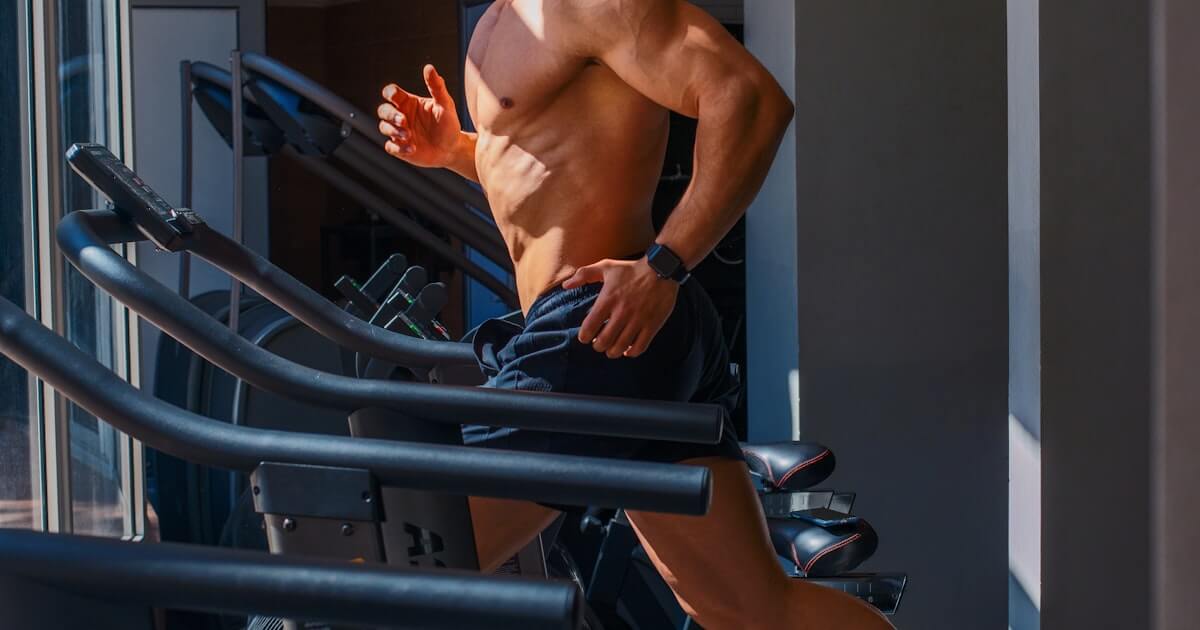
TL;DR: A curved, self-powered treadmill (AssaultRunner, Woodway Curve, TrueForm) has no speed display and no motor—the belt only moves as fast as your feet drive it. That makes cadence your steering wheel. For easy aerobic work, lock your footstrike to 150–165 BPM music. For tempo efforts, 165–175 BPM. For sprints, stop counting beats and go all-out, then recover at 120–130 BPM half-time. Because the belt is unforgiving to overstriding, a steady beat keeps your feet landing under you instead of out in front.
Why a curve treadmill needs cadence, not speed
On a motorized treadmill you set "8.0" and the belt drags you along. On a curve treadmill, there is no number to set. The belt is a freewheeling curved deck, and it rotates only when your foot strikes the back of the curve and pushes it under you. Slow your turnover and the belt slows; quicken it and the belt speeds up.
This flips your whole pacing strategy. You cannot chase a pace readout because there isn't one. Your only reliable, real-time control is how many steps you take per minute—your cadence. That is exactly why these machines feel chaotic for the first few sessions: people are used to a motor doing the pacing for them.
The core problem: Without a speed display, runners either sprint by accident or shuffle and stall. A fixed musical beat gives you back the one dial the machine took away.
What is a self-powered curve treadmill?
A self-powered curve treadmill is a non-motorized running machine with a concave, slatted belt. Your bodyweight and foot placement on the curve generate all the momentum—there is no plug, no motor, and no preset speed. You speed up by shifting slightly toward the front of the curve and slow down by drifting toward the back.
Because you generate every bit of force yourself, these machines recruit more of the posterior chain (glutes, hamstrings, calves) and are popular for HIIT, Hyrox training, and sprint work rather than long steady jogs.
How BPM maps to curve treadmill cadence
The rule is simple: one footstrike per beat. If you run to a 160 BPM track, you are taking roughly 160 steps per minute. On a curve treadmill that translates directly into belt speed, so the beat becomes your throttle.
| Workout phase | Target cadence (SPM) | Music BPM (1:1) | What it feels like |
|---|---|---|---|
| Warm-up walk/jog | 120–140 | 120–140 | Conversational, loose |
| Easy aerobic / Zone 2 | 150–165 | 150–165 | Smooth, repeatable for 20+ min |
| Tempo / threshold | 165–175 | 165–175 | Controlled discomfort |
| Sprint intervals | 175+ (don't count) | Go all-out | Max effort, 15–30 sec |
| Active recovery | 110–130 | 120–130 (half-time) | Easy reset between bursts |
For most recreational runners, the comfortable cruising zone sits at 150–170 SPM, not the mythical 180. The 180 figure is a statistical average for elite distance runners and scales with height—it is not a universal target. The safest way to dial in your number is to add 5–10% to your natural cadence, which shortens your stride just enough to keep your feet landing under your hips.
Why one beat per step beats guessing
On a curve treadmill, overstriding is instantly punished. Reach your foot out in front of your body and you are essentially braking the belt with every step—it slows down, then you lunge harder to speed it back up, and the cycle hammers your knees and hips.
A higher, steady cadence fixes this. As one manufacturer training guide puts it: "Fight the urge to overstride by reaching your foot way out in front. That's like hitting the brakes with every step. The fix? Focus on quicker, lighter steps. A higher cadence ensures your feet land underneath you, creating a smooth, rolling momentum." A fixed musical beat enforces that quick turnover without you having to think about it.
The evidence: why beat-locked cadence works
Music does not just make the session feel shorter—it measurably changes effort and form.
Synchronous music lowers perceived effort. Karageorghis and Priest's review in Sports Medicine found that movement synchronized to a beat reduces perceived exertion by roughly 10–15% for recreational athletes at the same workload (Karageorghis & Priest, 2012). On a self-powered belt, where the machine offers zero help, that masking effect is the difference between a clean 20-minute run and a sloppy 8-minute stall.
Cadence is comparable between treadmill and overground. A 2024 JOSPT Open study comparing step rate during treadmill and real-world running found that step rate was relatively comparable between conditions, which means the cadence you train on a curve treadmill transfers to your outdoor running (Diss et al., JOSPT Open, 2024). The skill you build locking footstrike to a beat is not machine-specific.
Higher cadence reduces overstriding load. Increasing step rate moves your foot strike closer to your center of mass and shortens your stride, which lowers impact loading at the knee—one reason coaches prescribe a small cadence bump rather than a speed bump for runners managing joint stress. The same biomechanics that help you run lighter on your feet apply doubly on a belt that brakes the instant you reach too far forward.
Build a 20-minute curve treadmill session
1. Warm up (4 minutes). Walk and then jog at 120–140 BPM. The first two minutes are purely about learning how the belt responds to your weight shift. Keep your grip on the rails light or hands-free.
2. Aerobic block (8 minutes). Settle into 155–165 BPM and hold one footstrike per beat. This is your steady, repeatable pace—the equivalent of an easy outdoor run. Pick four tracks in the same tempo band so you are not yanked faster or slower mid-block, the same logic behind a Zone 2 running playlist.
3. Tempo intervals (5 minutes). Alternate 45 seconds at 170 BPM with 45 seconds easy at 130 BPM. On the work bouts, lean slightly forward into the curve and let the faster beat pull your turnover up. On recovery, drift back and shake out.
4. Sprint finisher (1 minute). Two 15-second all-out bursts with 30 seconds of walking between. Forget the beat here—sprint mechanics on a curve are about maximal force, not metronomic timing. This is where the self-powered design shines.
5. Cool-down (2 minutes). Drop to 120 BPM and let your heart rate fall before stepping off. The belt stops the instant you do, so finish your turnover deliberately rather than jumping off mid-stride.
Stop thumb-skipping for the right tempo
The hardest part of running to cadence is finding enough songs at the exact BPM you need. Digging through Spotify at 165 heart rate to skip a slow ballad wrecks the rhythm you just built—and on a curve treadmill, the moment your turnover drops, so does the belt.
GagaRun filters your existing playlists down to only the tracks at your target BPM—say 160 BPM for a steady aerobic block—so every song that plays keeps your footstrike locked. It is the same approach as matching running cadence to music outdoors, except here the beat is literally what drives the machine.

Common curve treadmill pacing mistakes
Copying a friend's sprint clip. The 22-calorie-per-minute numbers you see online come from trained athletes holding high cadence with short, controlled steps. Start at 140–150 BPM and earn the speed.
Death-gripping the handrails. Pulling hard on the rails to drive the belt breaks your posture and removes the metabolic challenge. Graze them for balance in your first sessions, then aim to run hands-free.
Treating it like a long steady jog. Curve treadmills excel at intervals and sprints because the belt responds instantly. If you want 45 minutes of flat Zone 2, a motorized belt is honestly the better tool. Use the curve for what it is good at.
Ignoring stride length when the beat feels frantic. If 165 BPM feels rushed, shorten your step before blaming the song. On a curve, a shorter quick step is almost always more efficient than a long reaching one.
Frequently Asked Questions
What cadence should I run on an AssaultRunner or Woodway Curve?
For easy aerobic work, aim for 150–165 steps per minute; for tempo, 165–175 SPM. There is no single perfect number—start at your natural cadence and add 5–10%. Because the belt has no speed setting, your step rate (matched to a music BPM) is the most reliable way to hold a pace.
Is running on a curve treadmill harder than a regular treadmill?
Yes. Studies and coaches consistently note that self-powered curve treadmills demand more effort at the same perceived pace because you generate all the momentum yourself, recruiting more posterior-chain muscle. A jog on a motorized belt feels like a run on a curve.
Can I use my outdoor running playlist on a curve treadmill?
Mostly, yes—since step rate is comparable between treadmill and overground running, a 160 BPM outdoor mix maps cleanly to 160 SPM on the curve. The main adjustment is that sprints on a curve are force-based, so you will outrun your fastest tracks during all-out bursts.
Why does the belt slow down when I get tired?
Because the belt only moves as fast as you drive it. As fatigue sets in, your cadence naturally drops and your stride lengthens, both of which slow the curve. Locking your footstrike to a steady beat is the simplest way to fight that drift, similar to how runners use a beat when cadence drops once they get tired.





