Beach Running Cadence: The Right BPM For Soft Sand
Alex Chen, Certified Running Coach
July 4, 2026
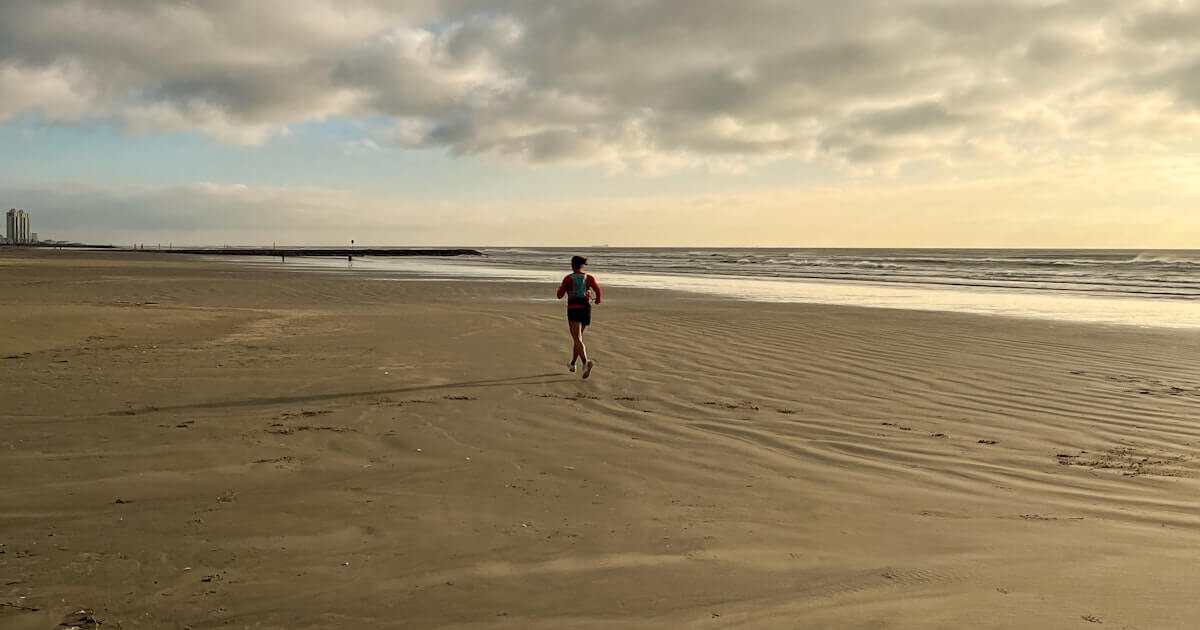
On soft, dry sand, run at a quicker, shorter-strided cadence than you use on the road—usually a 5-10% bump over your normal step rate, landing most recreational runners around 165-180 SPM. Sand swallows the stride length you would get on firm ground, so the only way to hold pace without overreaching is to turn your legs over faster.
Here is the part nobody warns you about before your first beach run: it feels three times harder than it should. That is not you being out of shape. Loose sand deforms under every footstrike, so the elastic energy your tendons normally recycle just disappears into the ground. You are effectively running with the brakes half-on.
Why sand feels so brutal
When you run on a road, your Achilles and calf tendons act like springs. They store energy on landing and give a chunk of it back on push-off for free. Sand kills that spring. The surface collapses, your foot sinks, and your muscles have to generate the force the tendon used to hand you.
The numbers back up the misery. A classic 1998 study by Lejeune and colleagues in the Journal of Experimental Biology found the energy cost of running on sand is roughly 1.6 times higher than on a firm surface. Walking on sand was even worse—about 2.1-2.7 times more costly. Separate field research by physiologist Martyn Binnie found running on sand forces the body to work at least 10% harder than running on grass.
So if your heart rate spikes and your usual easy pace feels like a tempo effort, the surface is doing exactly what physics says it should.
What sand does to your stride
Researchers have measured this directly. A kinematic and EMG study published in the Journal of Sports Sciences (2005) compared running on firm ground versus soft, dry sand at matched speeds. On sand at 11 km/h, runners showed:
- Shorter stride length
- Higher cadence (step rate went up to compensate)
- Greater hip and knee flexion at foot contact
- Higher muscle activation in the hamstrings, quads, and hip stabilizers
In plain terms: your body instinctively takes faster, choppier, higher-lifting steps because a long, floaty stride just sinks. Fighting that instinct by forcing a long stride is how people tweak calves and Achilles on the beach.
The cadence and BPM ranges for sand
Use your firm-ground cadence as the anchor, then nudge it up. The point isn't to hit a magic number—it's to keep your foot landing under your body instead of way out in front of it, which is even more important on an unstable surface.
| Surface / Effort | Target Cadence (SPM) | Music BPM (1 beat = 1 step) |
|---|---|---|
| Firm wet sand near the waterline (easy) | 160-172 | 160-172 |
| Soft dry sand (easy jog) | 168-180 | 168-180 (or 84-90 at double-time) |
| Soft sand strides / short pickups | 180+ | 90+ at double-time |
Wet, packed sand near the water is only about 5-10% softer than grass, so your normal road cadence works fine there. The deep, dry stuff higher up the beach is where you deliberately shorten and quicken your steps. If your comfortable road cadence is 165, aim for roughly 172-180 in soft sand.
If you want the science on why this range protects your joints, our guide on how a 5-10% cadence increase prevents shin splints covers the mechanism in detail.
The one upside: sand is gentle on your joints
Sand punishes your engine but babies your skeleton. Because the surface compresses on impact, peak ground reaction forces drop sharply. Binnie's work reported that soft sand can produce close to four times less impact force than firm ground like grass. A 2013 study in the European Journal of Sport Science found women running on soft sand had less muscle damage and inflammation than those running on grass.
That trade-off is why coaches program beach running as a low-impact, high-effort session—you get a hard cardiovascular and muscular workout without the repetitive pounding that drives stress fractures and overuse injuries. It is a genuinely useful tool when you need volume but your joints are asking for a break.
How to actually run on sand
- Start on the firm stuff. Warm up on the packed sand near the water where the footing is closer to a normal road, then move to soft sand once your legs are ready.
- Shorten your stride on purpose. Think "quick and light," not "long and powerful." Let the beat set a faster turnover.
- Keep runs shorter at first. Because the energy cost is up to 60% higher, a 20-minute soft-sand run can tax you like a 30-plus-minute road run.
- Watch the camber. Beaches slope toward the water. Running the same direction the whole time loads one leg unevenly, so turn around halfway.
- Decide on shoes deliberately. Barefoot on soft sand is fine for short efforts once your calves adapt; shoes give more support for longer runs. Don't go barefoot on unknown beaches with hidden debris.
Locking your cadence when the ground fights back
Holding a quick, even cadence is the whole game on sand, and it is exactly when your rhythm wants to fall apart—every sinking step tempts you to lunge and reach. Staring at your watch to police your step rate on an uneven surface is a good way to trip.
This is where matching your music to your target step rate does the work for you. Your brain naturally syncs footfalls to a strong beat, so a playlist sitting at your goal BPM acts like a metronome you don't have to think about. The catch is that most of your library isn't at 175 BPM, and fishing for the right tracks kills your flow. An app like GagaRun analyzes your existing playlists and automatically plays only the songs that match your target sand cadence—set it to 175 BPM, hit the beach, and let your feet follow the beat.

The same rhythm trick carries over once you leave the beach—it's the backbone of steady Zone 2 running and any effort where holding a consistent pace matters.
Frequently asked questions
Is running on sand actually good for you?
Yes, with caveats. It builds strength in your lower legs and hip stabilizers, delivers a hard cardio workout, and does it with far less joint impact than roads. But the high energy cost and calf/Achilles demand mean you should ease in gradually rather than jumping straight to long sand runs.
Should my cadence be higher on the beach than on the road?
For soft, dry sand, yes—typically 5-10% higher. The surface shortens your stride whether you like it or not, so a faster step rate keeps you efficient and stops you from overstriding into unstable footing.
Why does running on sand make my calves so sore?
Soft sand removes the free energy return your tendons normally provide, forcing your calves, Achilles, and foot muscles to generate more force on every push-off. That extra workload is why beach running lights up your lower legs, especially if you run barefoot before your muscles have adapted.
Wet sand or dry sand for beginners?
Start on the firm, wet sand near the waterline. It behaves much more like a normal running surface—only slightly softer than grass—so it is far more forgiving while you build the specific strength that deep, dry sand demands.