Best BPM For HIIT Dance Workouts: Zumba Style Cardio Guide
Sarah Jenkins, Fitness Physiologist
2026年4月23日
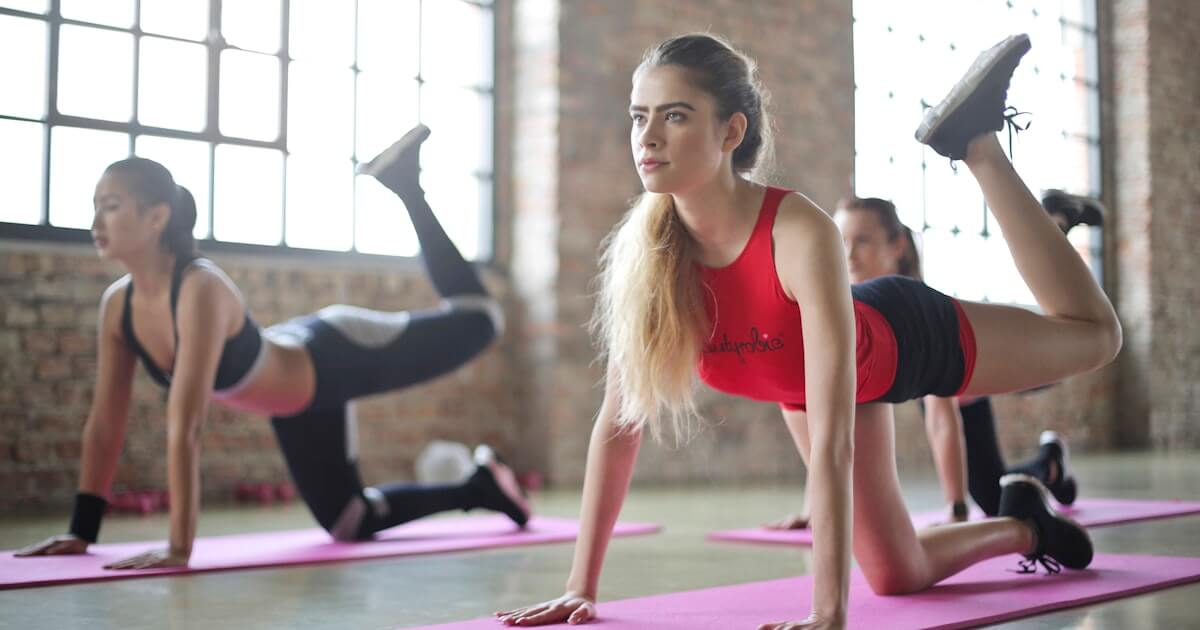
For a HIIT-style dance session at home or in a studio, aim for about 110-120 BPM during the warm-up, 128-145 BPM for the main cardio blocks, and short peaks at 150-160 BPM when you want sharp effort spikes. Recovery tracks should land closer to 90-100 BPM so your heart rate can actually come down between rounds. This is not the same problem as locking a running cadence to a metronome; you are matching whole-body movement to a beat, and the tempo range is wider because footwork, hips, and arms do not have to land on every downbeat the way a stride does.
What "HIIT dance" means in plain language
HIIT dance is short bursts of high heart-rate movement—think squat jumps, fast footwork, and big patterns—separated by easier choreography or active recovery. A Zumba-style class follows the same logic even when the brand name is not on the marquee: Latin pop, reggaeton, and dancehall tracks with a clear beat, structured into songs that raise your heart rate and then give you a half-step of breathing room.
What is "Zumba-style" music? In practice, it is commercial dance music (often Latin-influenced) with a strong, predictable kick drum, usually between roughly 128 and 150 BPM for the hard sections. Instructors also use half-time or double-time feel, so a 75 BPM reggaeton groove can still "ride" on top of a 150 BPM metronome click in your head. That is why a single BPM number rarely tells the whole story for dance HIIT, even though it is still the fastest way to sort a playlist that will not fight your legs.
BPM map for each block of the workout
| Block | Target heart-rate feel | Music BPM (starting point) | What it does |
|---|---|---|---|
| Warm-up | RPE 3-4, conversation possible | 110-120 | Lets ankles, hips, and shoulders sync without jarring landings. |
| Steady dance cardio | RPE 5-6, short sentences only | 128-136 | The range most Zumba and dance-cardio libraries use for main sets. |
| Peaks and power songs | RPE 7-8, borderline breathless | 140-150 (occasional 160) | Pushes you into the HIIT "work" side of the session. |
| Active recovery / bridge | RPE 4, controlled breathing | 100-115 | Brings the heart rate down while you keep moving. |
| Final stretch (optional) | RPE 2-3 | 80-100 | Steadies the autonomic system before you walk off the mat. |
If you are used to elliptical work at a fixed stride rate, dance HIIT will feel less mechanically steady. The BPM still matters, but the beat is doing more of an emotional and pacing job than a strict stride lock.
What the physiology literature actually says
A 2012 study in the Journal of Sports Science and Medicine (Luettgen and colleagues) reported a mean heart rate of 154 ± 14 bpm during a Zumba session, at roughly 79% of predicted HRmax in young healthy women. That is squarely in vigorous territory for most people, not a light jog, which is why a random slow playlist can leave you under-working even when you are tired.
In laboratory settings, fast-beat background music has been shown to improve work output in high-intensity cycling and rowing without always increasing how hard the effort feels. Schittenhelm and co-authors, in a 2024 Frontiers in Psychology study on rowing sprints, found that performance moved in a favorable direction with a faster musical tempo while perceived exertion did not skyrocket in parallel. Translation for dance: the right track can buy you a few more honest seconds in a hard block before your brain begs to quit.
I am not going to promise that music "burns more fat" on its own. The calorie burn still comes from mechanical work. What rhythm gives you is tighter structure—less coasting, fewer accidental breaks, and a session that is easier to repeat week after week because the pacing is obvious in your ears.
Build the playlist like you are programming intervals
Anchor the warm-up to 110-120 BPM. Start with one or two songs in that window. If the first track is 170 BPM, your ankles will pay for it in minute four.
Build two or three 128-140 BPM "lanes." These are your bread-and-butter work songs. Group them in folders or playlists by BPM so you are not thumbing through mid-set.
Add one "peak" bucket at 140-150 BPM (and a rare 160) for 60-90 second efforts. This is the dance equivalent of a treadmill HIIT push, only the equipment is your own coordination.
Drop 10-20 BPM for recovery, not to silence. A 100 BPM track with a clear beat is better for nervous system regulation than dead air.
Re-use songs you like. Motivation in dance HIIT is partly preference. A familiar chorus hits different when your legs already hurt.
If you are mixing genres with confusing percussion, use one external tempo target. Some reggaeton sits at 90 BPM in the file metadata but feels like double that once you are stepping on the backbeat. A single target BPM in your app keeps you from chasing the file tag.
When every song in your library is a different tempo, the mental tax is not dramatic, but it is real. You spend half the session thinking about the phone instead of your hips. That is where a tempo-locked tool starts to make sense. GagaRun is built to take playlists you already care about, analyze rhythm, and nudge tracks into a unified tempo so a whole block can sit on one target BPM without you hand-picking the discography. You still pick the style; the app holds the line on pacing so the HIIT structure does not fall apart in song three.

FAQ
Is 180 BPM good for a Zumba-style HIIT class?
Usually no as a default. One hundred eighty beats per minute is a running-culture number. Dance HIIT spends more time in the 128-150 BPM lane for the main work, and often lower for grooves that emphasize hips over raw foot speed. Use 180 BPM only for very short, athletic bursts (think tuck jumps to a very fast house track) and not as the whole session.
How do I know I am in true HIIT and not just bouncy aerobics?
Heart rate and breath are the cheap tests. In the vigorous zone, you should not be able to recite a paragraph. If you can hold a long conversation through the "hard" song, the BPM or the size of your movement is too low. Borrow the contrast idea from HIIT on a treadmill: the work block should feel dramatically harder than the recovery block, not a little different.
Can I do this with any genre?
Yes, as long as the transients are clear. EDM, Latin pop, hip-hop, and Afrobeats all work when the snare and kick are easy to find. The genre matters less than whether you want to move to it. That is the whole point of using your own library and fixing the tempo outward instead of downloading someone else's "official" list.
What if a song I love is the "wrong" BPM for the current block?
Time-stretch it or swap lanes. The least pleasant option is jumping around manually on the trackpad while you are gassed. Tools that time-align or gently adjust music to a target beat—without turning your session into a DJ set—tend to win on adherence, because the playlist stays yours.
If you are cross-training the same week, you can also lean on a lower-body steady session with the same music discipline, such as a BPM-locked easy run or walk, to reinforce rhythm without adding more joint impact.
The short version
Dance HIIT rewards a simple rule: structure your music like you structure the work—warm, hard, hard-ish, and actually easy. Nailing the BPM bands matters more than chasing a viral single. Keep the beats legible, keep the peaks short, and let tempo do the part of coaching that a stopwatch cannot hear.