How To Start Running Again After A Break (The BPM Comeback Plan)
Alex Chen, Certified Running Coach
2026年4月23日
How to start running again after a break (without wrecking your shins)
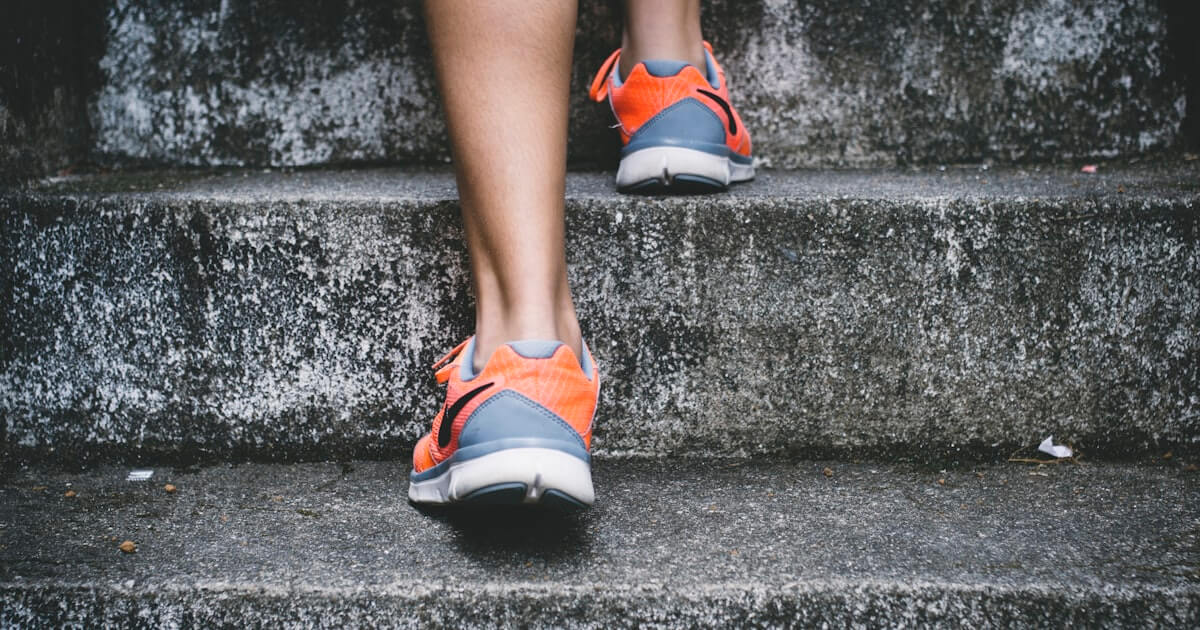
Your lungs will lie to you. After a few weeks off, your cardiovascular system still feels okay—so you lace up and go out at your old pace. Two miles in, your shins are on fire. A week later, you're back on the couch wondering why you even tried. I've coached dozens of people through this exact cycle, and it's completely avoidable.
Start your comeback at 145–155 steps per minute (SPM), limit your first runs to 15–20 minutes, and increase weekly volume by no more than 10%. Lock your stride to music at that tempo and let the beat do the pacing for you.
How fast does running fitness actually disappear?
Most people assume a few weeks off erases months of work. The truth is more specific than that.
Research on trained runners shows a clear detraining timeline:
| Time off | VO2 max decline | What you'll notice |
|---|---|---|
| 10 days | ~0% | Almost nothing |
| 2 weeks | ~6% | Runs feel slightly harder |
| 4 weeks | ~6% | Easy pace feels like tempo pace |
| 9 weeks | ~19% | Real endurance loss |
| 11+ weeks | ~25% | Near beginner aerobic capacity |
The Garmin-RUNSAFE Running Health Study, which tracked 7,391 runners, found that cumulative injury rate reached 57.8% after 1,000 km—and runners who didn't follow structured programs were at the highest risk. Coming back without a plan puts you right in that danger zone.
Here's what most people miss: your cardiovascular system bounces back within 2–3 weeks of easy running. Tendons, ligaments, and bones don't. They need 8–12 weeks to readapt. That gap between "feeling ready" and "being structurally ready" is where comeback injuries live.
Why your old pace is your worst enemy right now
When you try to run at your pre-break pace, two bad things happen at once:
Your stride lengthens. With less aerobic power, your body compensates by overstriding—landing the foot far ahead of your center of gravity. Biomechanics research shows that each 5% increase in overstride distance raises patellofemoral joint stress by 12% and tibial shock demand by 17%.
Your heart rate spikes. What used to be easy pace is now threshold pace. You're hammering Zone 4 while your deconditioned tendons absorb all the impact. This is how shin splints, Achilles tendinitis, and stress fractures happen to "experienced" runners who should know better.
The fix isn't complicated: stop pacing by feel and pace by cadence instead.
A 2025 systematic review of 18 studies confirmed that a 5–10% increase in cadence from baseline reduces vertical ground reaction forces, lowers loading rates, shortens stride length, and improves lower limb alignment—without increasing metabolic cost. When you lock your steps to a 145–155 BPM soundtrack during your comeback, you automatically shorten your stride, land closer to your center of gravity, and keep your heart rate in the aerobic zone.
Your ego might protest the pace. Your knees won't.
The 6-week BPM comeback plan
This plan assumes you've taken 3+ weeks off and were previously running at least 15–20 miles per week. If you're coming back from a specific injury, check with your physio first.
Weeks 1–2: walk-run intervals at 140–145 BPM
Set your music to 140–145 BPM. Alternate between 3 minutes of easy jogging (matching your footstrike to the beat) and 2 minutes of brisk walking. Total session: 20 minutes, 3 days per week, with at least one rest day between each run.
The goal here isn't fitness. It's tissue loading. You're giving your Achilles tendons, patellar tendons, and tibial bone the bare minimum stimulus to start structural remodeling. It'll feel embarrassingly slow. That's fine—nobody's watching your Strava.
Weeks 3–4: continuous easy running at 150–155 BPM
Bump your music to 150–155 BPM. Drop the walk intervals and run continuously for 20–25 minutes. Still 3 runs per week.
At this tempo, your stride rate sits squarely in the protective cadence zone—short enough to avoid overstriding, quick enough to feel like actual running. If you catch yourself speeding up, let the beat pull you back. That restraint is the whole point.
If you wear a heart rate monitor, check your Zone 2 pacing during these runs. You want most of them under 75% of your max heart rate.
Weeks 5–6: build duration at 155–165 BPM
Increase to 155–165 BPM and extend your runs to 30–35 minutes. You can add a fourth run per week if your legs feel recovered.
By week 5, your cardiovascular system has largely bounced back. Your connective tissue has had four weeks of graduated loading. You can start nudging your cadence toward your natural running rhythm—but do it gradually. A 5–10% increase from your current baseline gives you all the injury-prevention benefits without the structural overload.
How to pick your starting BPM
Your comeback cadence depends on how long you've been off and where you were before the break:
| Break length | Previous level | Starting BPM | Week 6 target |
|---|---|---|---|
| 2–4 weeks | Recreational (15–25 mpw) | 150 | 160–165 |
| 2–4 weeks | Competitive (30+ mpw) | 155 | 165–170 |
| 1–3 months | Any level | 145 | 155–160 |
| 3+ months | Any level | 140 | 150–155 |
These numbers come from the detraining curves and the 5–10% progressive overload window. The principle is simple: your starting cadence should feel too easy. Right now, "too easy" is exactly where your tendons need you to be.
GagaRun automates this. Set your target BPM and it filters your Apple Music or Spotify library to only play songs at that tempo. No hunting for playlists, no manual BPM checks—just lace up and match your footstrike to the beat. When your plan says "bump to 155 BPM next week," you change one number in the app and your entire playlist adjusts.

Does muscle memory actually speed up the comeback?
Yes—and the science is more interesting than the buzzword suggests.
A study from the University of Oslo found that when you train a muscle, it generates extra nuclei (myonuclei) inside the fibers. When you stop training, the muscle shrinks, but those nuclei stick around for years. Kristian Gundersen, professor of physiology and lead researcher, described it as an "absence of degeneration" that explains the "remarkable capability" muscles have for recovery after long inactivity.
Your body isn't starting from zero. It's re-reading old blueprints. Previously trained runners typically regain baseline fitness in 8–12 weeks rather than the 6–12 months it took to build originally.
For returning runners, this means your neuromuscular coordination—foot strike timing, hip drive, arm swing—comes back faster than you'd expect. The bottleneck is always connective tissue. So stop pushing the pace and let the slow rebuild happen.
Three rules that keep comeback runners healthy
Cap weekly volume increases at 10%. This is the single most validated rule in distance running. Running 80 minutes this week? Next week, cap it at 88.
Run by rhythm, not by GPS pace. Your pace numbers will be slower than before. Expected. If you chase old pace numbers, you'll blow past your heart rate ceiling and overload your joints. Lock to BPM and forget the watch.
Strength train before you add speed. Two weeks of hip, glute, and calf work before your first run back makes a real difference. Single-leg calf raises, glute bridges, and lateral band walks rebuild the stabilizers that keep your mechanics clean.
Should I just repeat Couch to 5K?
If your break was longer than 3 months, a structured C25K program is a reasonable framework. The walk-run intervals give your body the graduated exposure it needs.
But most C25K programs have a blind spot: they don't tell you how fast to run during those "run" intervals. That's where BPM-locked music fills the gap. Set running intervals to 145–150 BPM and walking intervals to 110–115 BPM, and you get automatic pacing in every session without thinking about it.
How long until I'm back to my old fitness?
For breaks under 4 weeks: typically 3–4 weeks of consistent running. For 2–3 months off: 6–10 weeks. For breaks longer than 6 months: 12–16 weeks or longer, depending on your previous training history. Muscle memory helps, but connective tissue adaptation can't be rushed.
Should I run every day when getting back into it?
No. Three to four runs per week with rest days between sessions gives your tendons time to repair and adapt. Daily running during a comeback spikes overuse injury risk—especially for structures that haven't been loaded in weeks or months.
What if I feel great and want to run faster?
That feeling is the trap. Your cardio rebounds faster than your structural fitness. Feeling "great" after a comeback run usually means your heart and lungs are ahead of your tendons and bones. Stick to the BPM plan for the full 6 weeks. Speed work belongs in week 7 at the earliest.