Fartlek Training With Music: The BPM Playlist That Paces Your Speed Play
Alex Chen, Certified Running Coach
2026年4月13日

Use 150-160 BPM music for your fartlek recovery jogs and 170-180 BPM for your speed surges. The tempo shift acts as an automatic pacing cue, so you stop guessing how hard to push each interval and start locking your cadence to the beat instead. According to research published in the Journal of Science and Medicine in Sport, synchronous music—where your foot strikes match the beat—extended time-to-exhaustion by roughly 18% compared to running in silence.
What fartlek training actually is (and isn't)
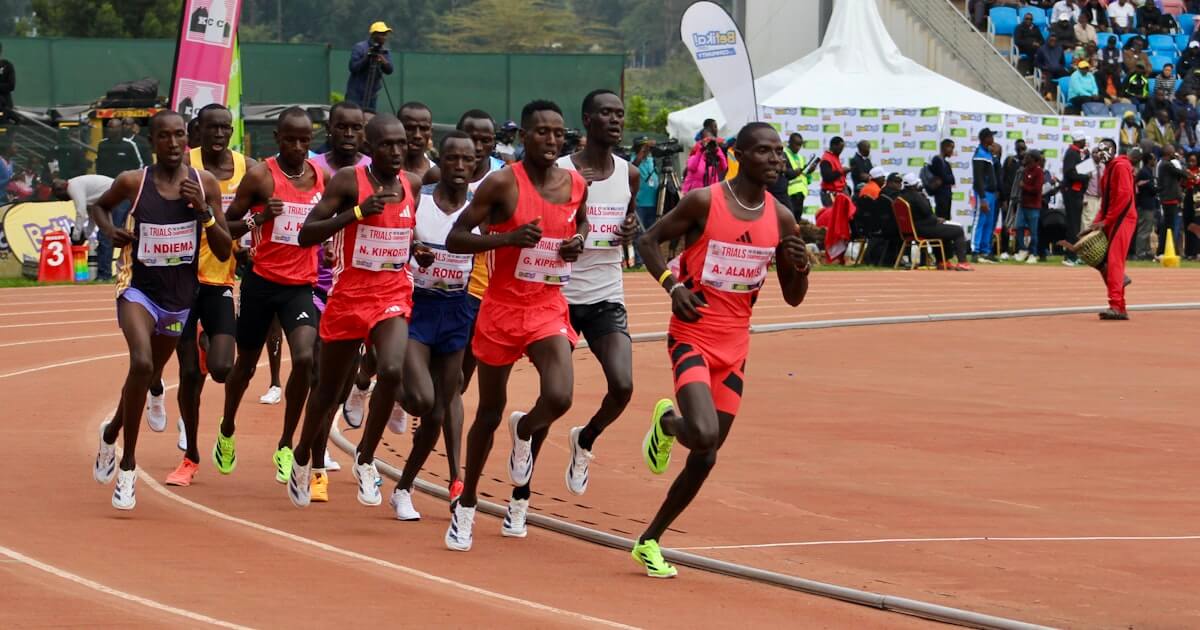
Fartlek is Swedish for "speed play." Coach Gösta Holmér developed it in the 1930s as an alternative to rigid track intervals. The idea is simple: during a continuous run, you alternate between faster surges and easier recovery jogs whenever you feel like it. No stopwatch. No fixed distances. Just you deciding when to push and when to back off.
That flexibility is what makes fartlek great for building aerobic fitness and mental toughness. It's also what makes it easy to do wrong. Without external structure, most runners fall into one of two traps: they either never push hard enough during surges, or they never actually recover between them.
Music fixes both problems at once.
Why most fartlek workouts fall apart without a pacing cue
Here's a pattern I see constantly. A runner heads out for a 30-minute fartlek. The first two surges feel strong. By the third one, they're not sure if they're running hard or just kind of medium-hard. By the fifth, the "recovery" jog isn't much slower than the surge. Everything blends into one sloppy tempo, and the session turns into a moderately hard steady run that doesn't produce the training stimulus they wanted.
The core issue is perception. Without a reference point, your brain recalibrates effort after every interval. What felt like 80% effort five minutes ago now feels like 70%, so you unconsciously drift faster during rest periods. A study in the Journal of Sport and Exercise Psychology (Karageorghis, 2009) found that music at moderate intensity reduces perceived exertion—great for endurance, but dangerous if it also masks the difference between your "on" and "off" paces.
The fix isn't removing music. It's using tempo changes as deliberate gear shifts.
The fartlek BPM zone map
Your cadence during a fartlek session should shift between two distinct ranges. For most recreational runners, here's what the numbers look like:
| Fartlek phase | Target cadence (SPM) | Music BPM | Effort level | Purpose |
|---|---|---|---|---|
| Warm-up jog | 150-158 | 150-158 | Easy, conversational | Prepare joints and raise core temperature |
| Recovery jog | 155-165 | 155-165 | Comfortable, can talk in full sentences | Allow heart rate to drop between surges |
| Moderate surge | 165-172 | 165-172 | Tempo effort, 3-4 word sentences | Build lactate clearance ability |
| Hard surge | 170-180 | 170-180 | Race effort, can barely speak | Stress VO2max and fast-twitch fibers |
| Cool-down walk | 100-115 | 100-115 | Very easy | Flush metabolic byproducts |
A quick note on these numbers. Recreational runners typically land between 150 and 170 SPM at their natural pace, so these ranges respect your physiology rather than forcing an arbitrary 180. If your natural easy jog cadence is 155, your surge cadence might be 168—that 5-10% bump is enough to shorten your stride, shift your foot strike closer to your center of gravity, and reduce knee joint loading by up to 20%.
How to build a BPM fartlek workout (step by step)
1. Find your baseline cadence. Run at your comfortable easy pace for 60 seconds and count your steps. That number is your recovery BPM target.
2. Calculate your surge range. Add 10-15 BPM to your baseline. If your easy cadence is 158, your surge music should be 168-173 BPM.
3. Pick your session structure. Fartlek doesn't require rigid timing, but having a rough plan prevents it from turning into junk mileage:
- Beginner (25 min): 5 min warm-up at 150 BPM → alternate 1 min surge (170 BPM) / 2 min recovery (155 BPM) × 5 rounds → 5 min cool-down at 110 BPM
- Intermediate (35 min): 5 min warm-up → alternate 2 min surge (172 BPM) / 90 sec recovery (160 BPM) × 6 rounds → 5 min cool-down
- Advanced (40 min): 5 min warm-up → alternate 3 min surge (175 BPM) / 1 min recovery (158 BPM) × 6 rounds → 5 min cool-down
4. Let the music automate your gear shifts. This is where most playlist-building falls apart. Manually sequencing songs by BPM, timing them to match your intervals, and skipping tracks mid-sprint defeats the entire purpose of fartlek's spontaneous nature. A tool like GagaRun solves this by filtering your existing library to only play songs that match a target BPM—you pick the tempo, it pulls from music you already like. When you're ready to surge, bump the target BPM up. When you need to recover, bring it back down. No manual playlist curation required.
5. Run by feel within the tempo guardrails. The music sets your floor and ceiling. Between those boundaries, run however your body wants. Sprint to a lamppost on a hard-surge song. Jog through a park on a recovery track. That's fartlek working the way Holmér intended, just with better pacing tools than he had in 1937.
Fartlek vs structured intervals: when does music matter more?
Both training methods improve fitness, but they respond to music differently.
| Factor | Fartlek + music | Structured intervals + music |
|---|---|---|
| Pacing control | Music provides the only external reference | Stopwatch or GPS already provides structure |
| Mental engagement | High, tempo shifts keep attention anchored | Moderate, counting reps provides mental framework |
| Adaptability | Can extend or shorten surges on the fly | Locked into predetermined work/rest ratios |
| Risk of under-training | Lower, BPM shifts force actual speed changes | Lower, fixed intervals enforce effort |
| Risk of over-training | Lower, recovery BPM prevents drift | Higher, ego can push through rest periods |
| Best for | Aerobic base, mental flexibility, enjoyment | VO2max, lactate threshold, race-specific pace |
A 2025 comparative study published in Research Quarterly for Exercise and Sport found that structured HIIT produced greater VO2max improvements than fartlek over 12 weeks. But here's the part that rarely gets mentioned: adherence rates for fartlek groups were significantly higher. Runners kept showing up because the sessions felt less punishing. If you've ever abandoned a treadmill HIIT plan halfway through because the structure felt suffocating, fartlek with BPM music might be the approach that actually sticks.
The science behind why tempo-matched fartlek works
Three mechanisms explain why syncing your fartlek to music BPM produces better results than running to a random shuffle:
Auditory-motor synchronization. Your nervous system naturally wants to lock movement to external rhythms. When a song's downbeat matches your foot strike, your stride stabilizes and your oxygen consumption drops by 1-3% (Karageorghis & Priest, 2012, Sports Medicine). During fartlek, this means your recovery jogs actually become more efficient—so your heart rate drops faster between surges.
Attentional narrowing. At low to moderate intensity, music shifts your focus away from internal fatigue signals. A meta-analysis of 139 studies found music lowered RPE (Rate of Perceived Exertion) consistently below the ventilatory threshold. During fartlek recovery phases, this is exactly what you want: the music makes easy running feel easier, so you actually respect the recovery instead of creeping back toward surge pace.
Tempo-driven intensity discrimination. This is the mechanism most runners miss. When your playlist jumps from 158 BPM to 172 BPM, the rhythmic shift is unmistakable—your body registers the change in beat frequency and your legs respond before your conscious mind even decides to speed up. That automatic gear shift eliminates the gradual pace drift that turns bad fartlek sessions into glorified steady runs.
Three sample fartlek playlists by BPM range
You don't need specialized "workout music." Any song at the right tempo works. Here's how to think about building your fartlek library:
Recovery zone (150-165 BPM): Mid-tempo tracks. Think chill hip-hop, indie rock, or acoustic-driven pop. Songs you'd listen to on a commute. The vibe should be relaxed enough that sprinting to them would feel weird.
Surge zone (168-180 BPM): Up-tempo bangers. Electronic, punk, high-energy pop, drum and bass. Anything that makes you want to move faster.
Cool-down zone (100-115 BPM): Slow grooves. Lo-fi, R&B ballads, ambient. Something that makes walking feel natural. If you normally do incline walking at this pace, your cool-down library already exists.
The trick with fartlek is that you need songs from multiple BPM ranges available at the same time—not sequenced in a fixed order, but accessible whenever you decide to shift gears. That's hard to do with a static playlist and easy to do with a BPM-filtering app.
Fartlek on a treadmill: it works, but differently
Outdoor fartlek lets you surge whenever you spot a tree or a hill. Treadmill fartlek requires a slightly different approach because you have to physically adjust speed.
Keep it simple: set your treadmill to your recovery pace and leave it there. When a high-BPM song hits, bump the speed up by 1-2 km/h (0.5-1.0 mph). When the song ends or you need a break, bring it back down. The BPM shift in your headphones tells you when to reach for the speed button without watching the clock.
This approach also works as a gateway for runners who find structured treadmill HIIT too rigid. You get the intensity variation without the pressure of hitting exact split times.
Common mistakes that ruin BPM-based fartlek
Surging too fast, too early. If your easy cadence is 155 and you jump straight to 185 BPM music, you're not doing fartlek—you're doing sprint repeats with insufficient rest. Keep the gap between recovery and surge BPM under 20 beats, especially for your first few sessions.
Never actually recovering. Some runners treat recovery jogs as "slow surges." If you can't hold a conversation during your recovery BPM, the music is too fast or you're not letting the tempo guide you.
Using the same BPM for everything. Shuffling a playlist where every song is 165 BPM means you never shift gears. Fartlek without speed variation is just a tempo run—which is fine, but it's a different workout targeting a different energy system.
Frequently asked questions
How many times per week should I do BPM fartlek?
One to two sessions per week is enough for most runners. Fartlek sits between easy runs and hard intervals on the intensity spectrum, so it replaces a mid-effort day—not your long run or your recovery jog.
Can beginners do fartlek training with music?
Yes, and it's actually one of the best ways to start speed work. Since you control when to push and when to ease off, there's less injury risk than structured intervals. Start with short surges (30-60 seconds) at a BPM only 8-10 beats above your easy pace. If your natural jog lands around 155 SPM, surge songs at 163-165 BPM will feel challenging but manageable.
Does the genre of music matter for fartlek?
Genre doesn't matter—tempo does. A 170 BPM punk track and a 170 BPM EDM drop produce the same cadence cue. Pick whatever you like listening to. The only thing that matters is accurate BPM so your foot strikes actually sync with the beat. Most streaming apps don't display BPM reliably, which is why dedicated tools like GagaRun that analyze your library's tempo in real time tend to work better for this kind of training.